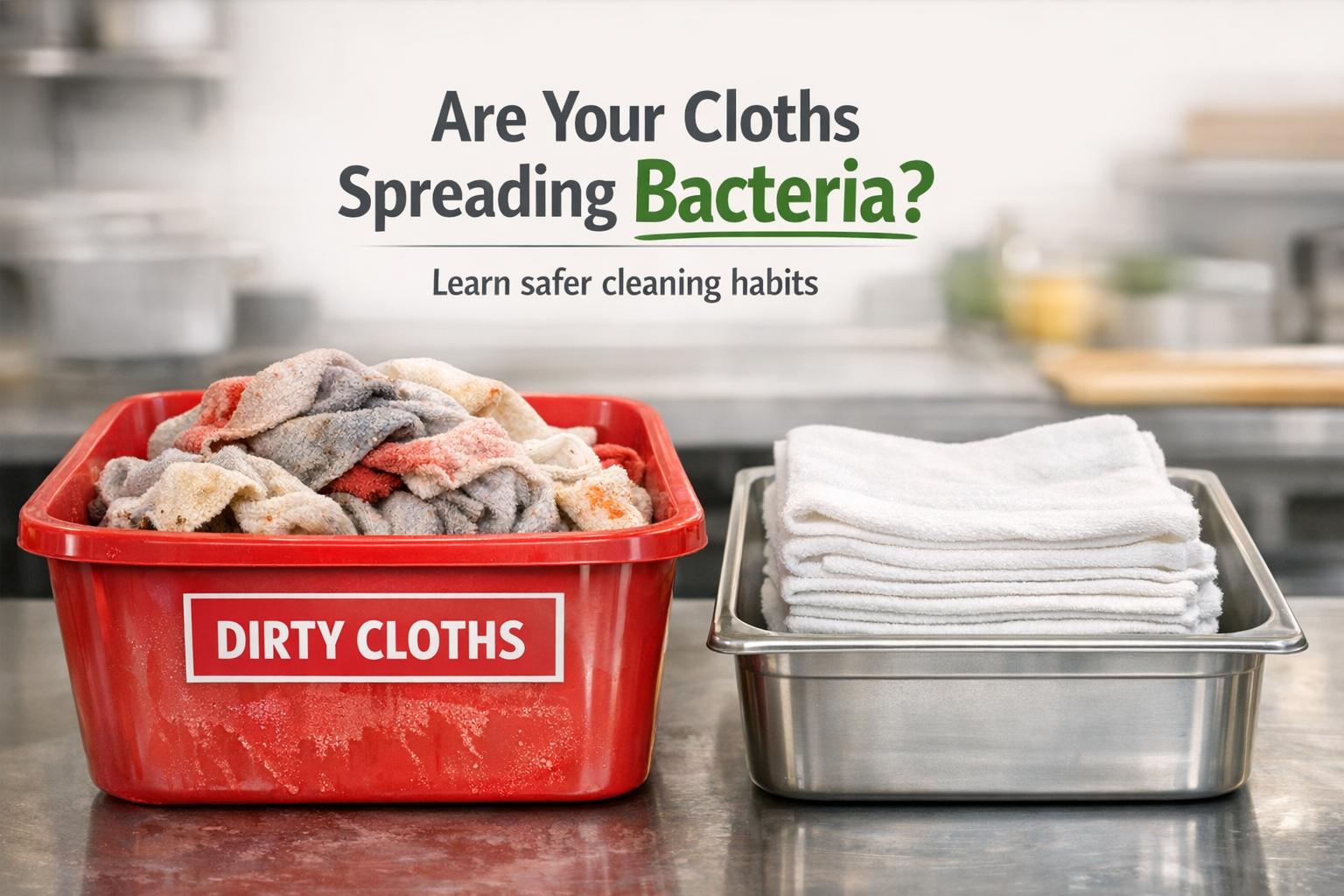
Dirty cloths spreading bacteria in a commercial kitchen create cross‑contamination risks across prep areas, utensils and surfaces during service. This guide explains why cloths become risky, how simple routines and records reduce contamination, and the practical steps you can implement today to protect customers and your bottom line.
Are dirty cloths spreading bacteria in your kitchen
Cloths used for cleaning across a commercial kitchen can become vectors for bacteria if they are reused, damp, or used in multiple zones. The risk increases when towels from raw areas touch ready‑to‑eat zones, or when cloths are left damp in buckets or on benches. Understanding why cloths become risky helps ops plan safer routines that protect customers and the bottom line.
Reusable cloths that are not zone‑specific or that are kept in poor storage conditions can quietly undermine hygiene plans. simple food safety tips for busy kitchens support safer routines and help prevent cross‑contamination during peak service.
Why cloths become risky
Risky cloth practices usually start with simple habits that compound over a shift. HACCP principles are relevant here, as the most common factors include:
- Cloths reused for too long, accumulating soil and grease
- Cloths stored damp, which creates a breeding environment
- Cloths used for multiple zones or tasks without proper washing
- Poor separation between raw and ready‑to‑eat areas
When these habits occur, the unseen threat becomes a routine: a contaminated cloth touches a clean surface, then a food item, then a utensil, and the cycle repeats as service continues.
Common wiping mistakes
Even small missteps can undermine cleaning results. Here are frequent wipe‑down errors observed in busy service environments:
- Wiping multiple surfaces with the same cloth
- Using one cloth for spills and sanitising
- Overloading cloths with dirt and grease
- Not changing cloths often enough
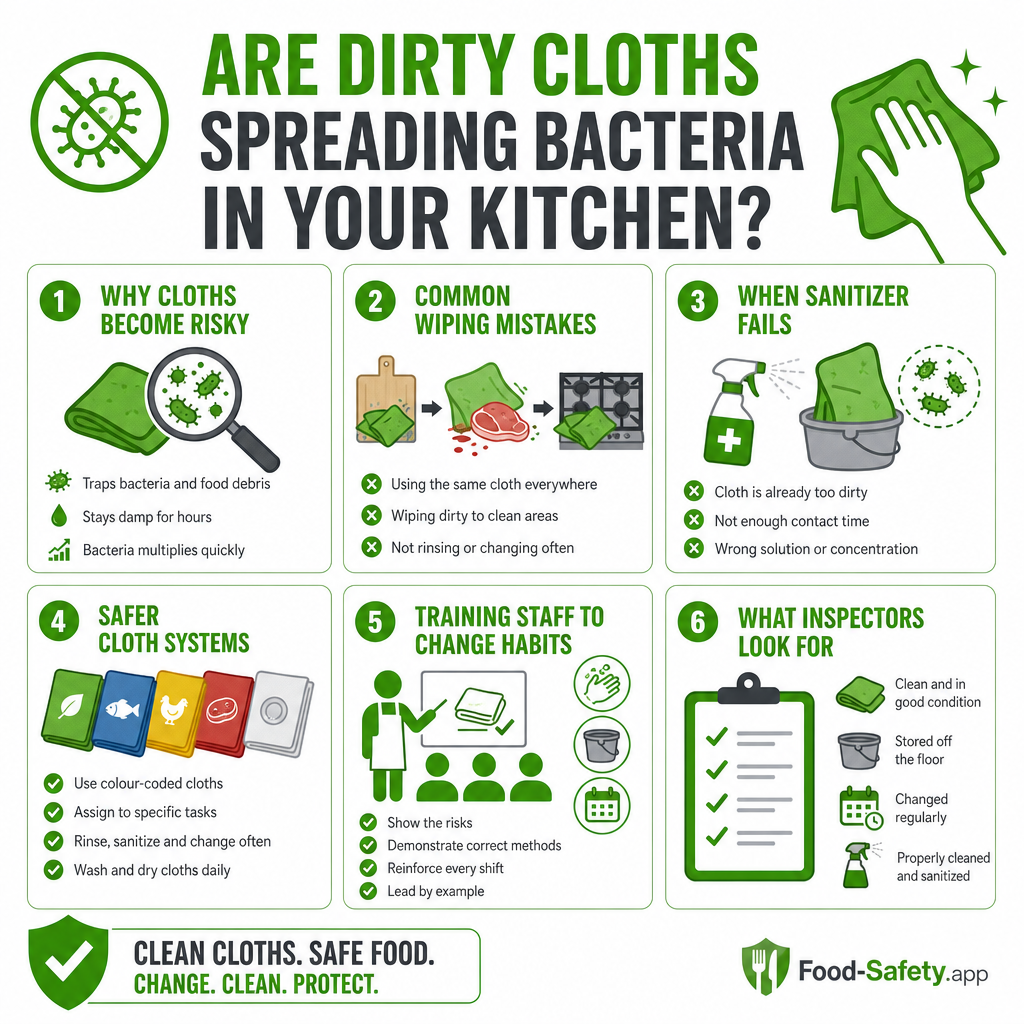
When sanitiser fails
Sanitiser is only effective if cloths are clean and correctly used. Failures often include:
- Cloths already contaminated before cleaning
- Wrong dilution or inadequate contact time
- Dirty buckets that harbour residue
- Grease or heavy soils blocking the sanitiser from contacting surfaces
Safer cloth systems
Safer cloth systems reduce cross contamination by organising cloths for specific tasks and zones, with easy identification and predictable change schedules.
Colour-coded cloths
Assign cloth colours to zones: red for raw, blue for ready‑to‑eat, yellow for general surfaces, green for allergens. This quick visual cue prevents cross‑use and speeds up busy shifts.
Task-specific cloths
Have cloths dedicated to wiping benches, equipment, and drains. Never reuse a bench cloth for a sanitising wipe on a different surface without a proper wash.
Clear change schedules
Set daily change intervals tied to shift timing and task type. Use a simple log to mark who changed which cloth and when.
Clean storage between uses
Store cloths in clean, covered containers or racks between uses. Allow adequate drying to reduce damp storage risks.
Separate cloths for allergens and high‑risk areas
Allocate dedicated cloths for allergen‑sensitive zones and high‑risk tasks to reduce cross‑contact opportunities.
| Task | Cloth colour | Change frequency |
|---|---|---|
| Raw area wiping | Red | Between shifts |
| Ready‑to‑eat surfaces | Blue | As needed |
| General surfaces | Green | Daily |
What inspectors look for
Inspectors assess whether controls are in place and whether staff understand how to prevent cross-contamination with cloths.
Evidence of cleaning controls
Records showing cloth changes, zone segregation and adherence to schedules.
Task completion
Clear demonstration that tasks were completed and verified during service.
Staff understanding
Staff can explain why cloths are colour-coded and how change schedules work.
Cross-contamination prevention
Observe actual practice: cloths used in the correct zone and properly stored between uses. what counts as a CCP in a small kitchen is part of inspectors’ expectations.
Documented corrective actions
When a lapse occurs, there is a documented action plan and a follow‑up check.
For official guidance, see Food Standards Agency.
Practical examples and scenarios
- A cloth used on a raw chicken prep area then left on the counter and later used on a salad station.
- A cloth bucket left overnight and reused the next morning.
- A wipe-down after a spill that spreads grease and food residue instead of removing it.
- A busy lunch rush where staff rely on one cloth for speed and miss changing it.
Food-Safety.app, a food safety management system for catering businesses, helps you record cleaning checks, log corrective actions, store staff training and maintain an audit trail that proves cloth controls are working day to day.
Learn more about cloth safety controls
Learn how to implement safer cloth systems, track compliance, and protect customers with practical tools and records from Food-Safety.app today.