Introduction
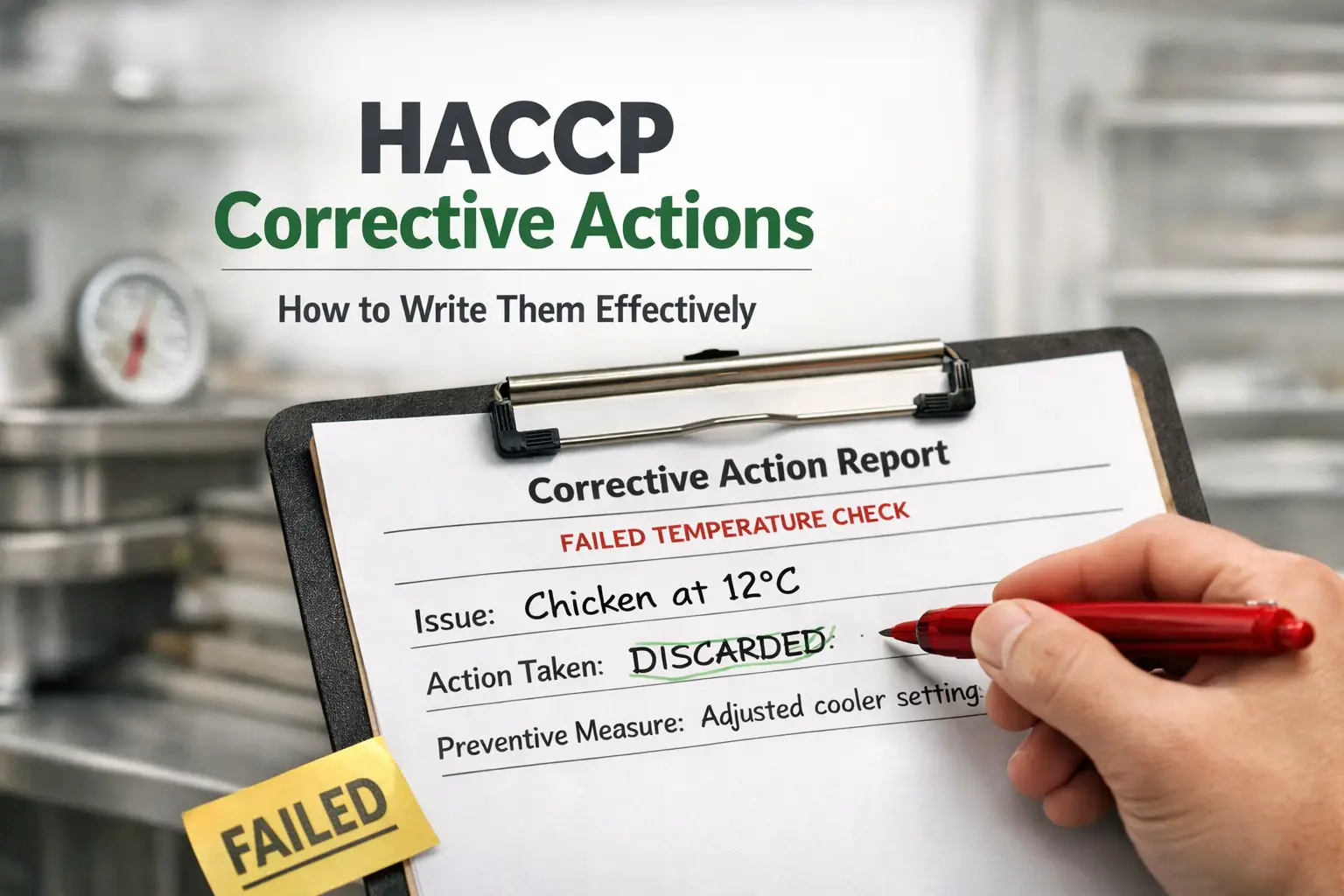
Write corrective actions that show real control not box ticking. Learn how to explain what went wrong what you did and how you stopped it happening again.
Why HACCP corrective actions matter in busy service
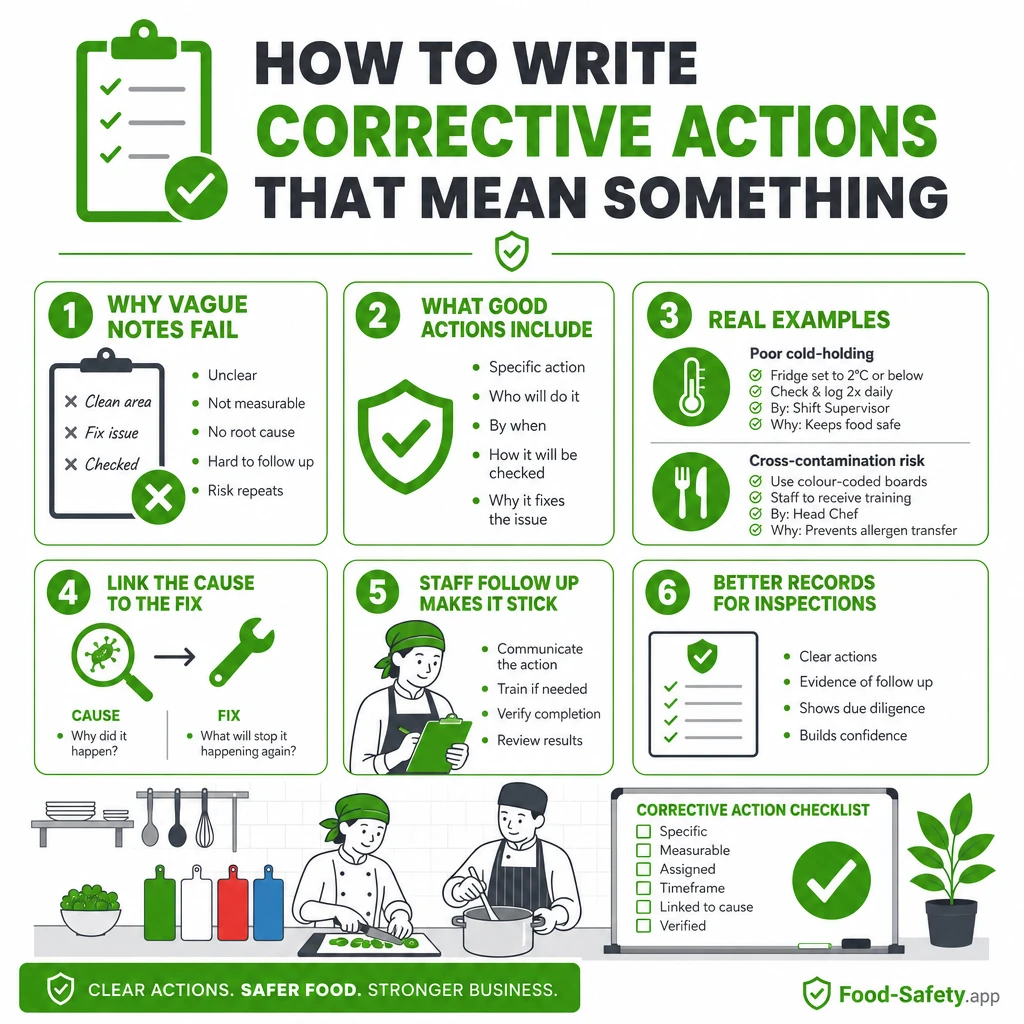
In a commercial kitchen, a single missed corrective action can affect product safety, waste valuable ingredients, and undermine customer trust. Corrective actions demonstrate control after a deviation, prove due diligence, and support ongoing compliance with HACCP principles. When service is hectic, clear, dated notes that state what happened, why it happened, what was done immediately, and what comes next are essential for keeping records trustworthy and actionable.
Without precise records, inspectors may question whether a fault was truly addressed, whether a preventive measure exists, or whether staff understood the actions required. The aim is not only to fix the immediate issue but to prevent recurrence and to show a deliberate, repeatable process for handling faults across shifts and teams.
What a good corrective action record includes
A well-crafted corrective action record should be concise yet complete. The following data points help you capture the essential information without ambiguity:
| Field | What to capture |
|---|---|
| Issue observed | Describe what was detected, where, and when it was noticed. Include readings or visual cues if relevant. |
| Cause | State the root cause or probable cause as it relates to the deviation, not just the symptom. |
| Immediate fix | What was done right away to contain or correct the issue (e.g., discard, adjust, isolate). |
| Follow-up actions | Steps required to restore full control and prevent recurrence (adjust procedures, retraining, calibrations). |
| Person responsible | Name or role responsible for carrying out the action. |
| Date/time | When the action was taken and when the follow-up check is due, with clear timestamps. |
For guidance on how long to keep records, see how long should you keep food safety records.
Root cause versus symptom
A common trap is treating the symptom rather than the root cause. For example, a fridge reading of 8°C might be the symptom of a door seal issue, defrost schedule misalignment, or overloading. Record both the symptom and the suspected root cause, then document the investigation steps that confirm or refute each possibility. Linking the problem to the root cause demonstrates proactive risk reduction rather than a one-off fix.
When to escalate faults
- Repeat faults or repeated deviations
- Unsafe temperatures that persist after initial action
- Cleaning failures that could lead to cross-contamination or allergen risks
- Allergen handling errors or mislabelling
- Pest sightings or signs of infestation
For inspection considerations, see what affects your food hygiene rating.
Recording follow-up and completion
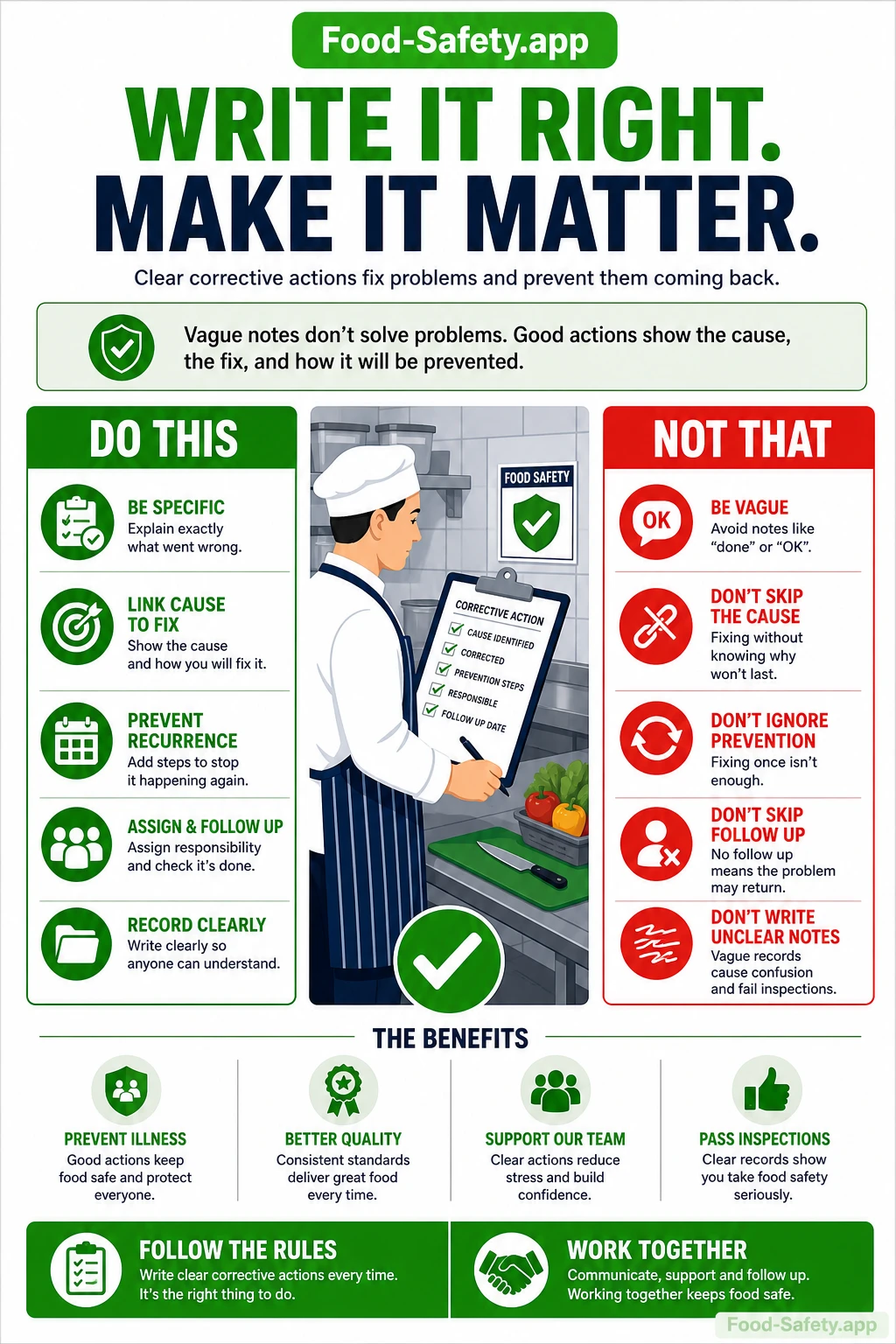
Clear follow-up is essential to ensure actions aren’t forgotten. Use a simple cycle: assign, act, recheck, sign off. Include a due date for the recheck, and document the result. If the issue recurs, escalate to a supervisor or a higher level of management and re-evaluate the root cause. A completed log entry should show that the issue is closed with a verified outcome.
Guidance on HACCP records and due diligence: how HACCP records support due diligence.
Linking corrective actions to HACCP and procedures
Corrective actions should feed into broader HACCP documentation and daily routines. Tie records to opening checks, closing checks, cleaning schedules, temperature logs, and defect reports so that every deviation has an appropriate preventive action. Consistency in language across shifts helps staff understand expectations and reduces confusion during busy service.
Foundational HACCP guidance: what is HACCP in food safety management.
For practical guidance on HACCP governance, consult official guidance when available. See the Food Standards Agency guidance linked here for authoritative context: official HACCP guidance.
How records help during inspections
Well-structured corrective action records provide inspectors with a clear narrative of how deviations were detected, investigated, and resolved. They support opening and closing checks, show trend data over time, and demonstrate that corrective actions are timely and effective. Micro-level details—who did what, when, and with what result—build trust and facilitate smooth audits.
Learn more about improving your rating: food hygiene ratings.
Practical scenarios
Fridge temperature too high
Note the reading, location, and time of the measurement. Move affected food to a compliant cooler and review stock safety status. Call engineering if equipment issues are suspected; log any service visit and outcomes. Record the recheck result after adjustments and any subsequent temperature checks.
Cleaning task missed
Explain why the task was missed and what immediate action fixed risk (e.g., targeted cleaning, sanitation check). Complete the task, retrain staff if necessary, and set a check for the next shift. Document the verification step and closure time.
Delivery arrived warm
Reject or segregate the affected portion; log condition and outcome with supplier contact if required. Quarantine and assess potential impact on other items. Record follow-up actions: supplier notification, revised delivery handling, and re-checks on incoming goods.
Probe out of calibration
Stop use of the probe until recalibrated or replaced. Record calibration status, replacement, or recalibration date, and affected checks. Review any checks performed with the out-of-calibration instrument and document corrective steps.
Pest sighting
Record location and time; initiate monitoring and pest control actions. Log follow-up monitoring results and any closures of the issue. Document staff awareness and any procedural changes to reduce risk.
Compliance and operational focus
- Keep entries factual, dated, and timed.
- Show evidence of control and follow-up.
- Ensure actions are signed off or reviewed by a supervisor.
- Link records to HACCP and business procedures.
- Use consistent wording across the team to avoid misinterpretation.
Conclusion and next steps
Maintaining clear, actionable corrective action records is a cornerstone of practical food safety in catering. By documenting issues, root causes, immediate fixes, and follow-up with accountability, you strengthen operational discipline and inspection readiness. Food-Safety.app is a food safety management system for catering businesses.
Improve your food safety record keeping
Improve your food safety record keeping with practical corrective action workflows that support compliance and confident inspections in busy kitchens.