Introduction
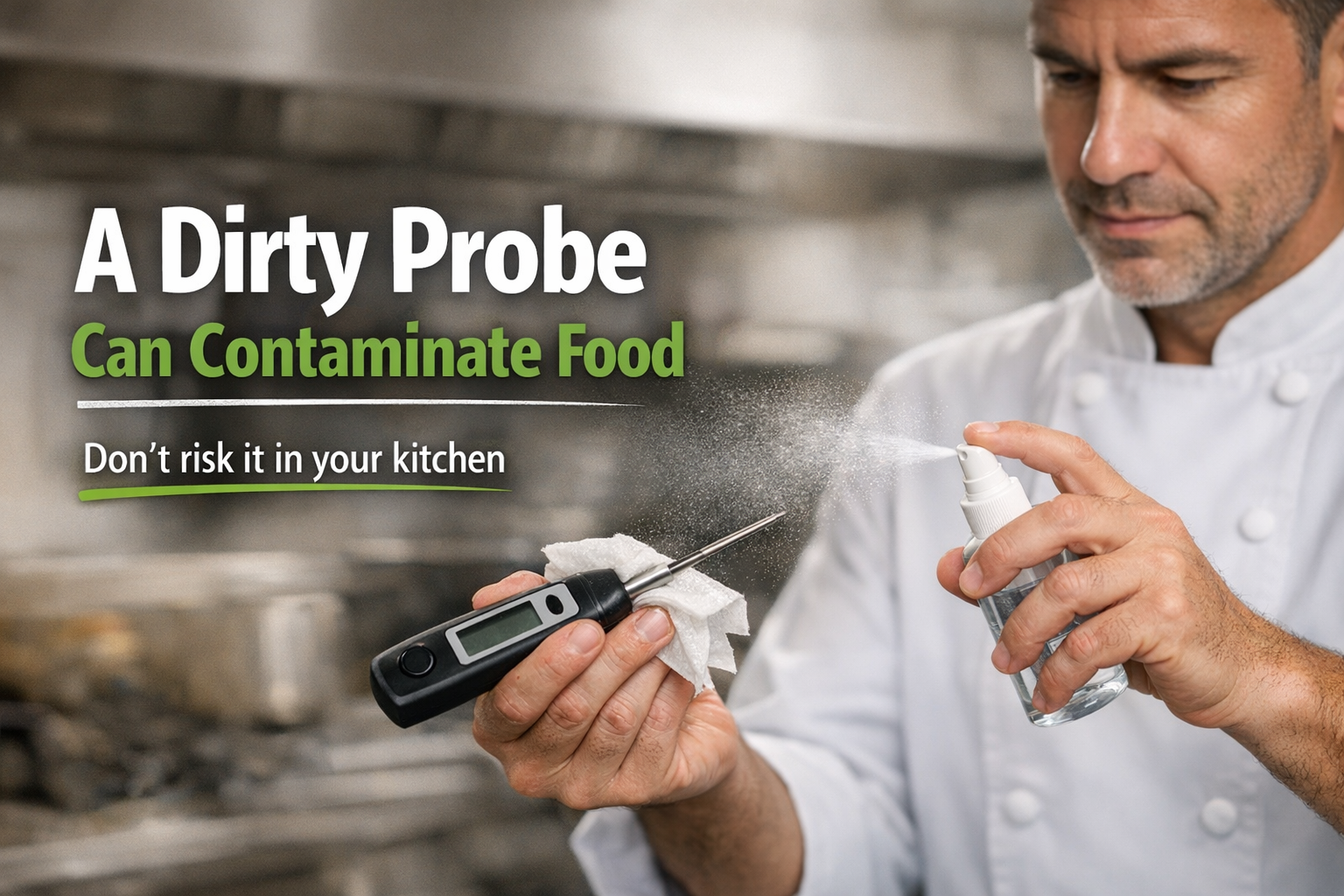
Clean food probes: this guide explains why probes pose a cross-contamination risk and how to clean, sanitise, and store them safely between checks in a busy catering operation. With repeatable routines, clear handoffs, and practical records, you can reduce errors during service, protect customers, and support smooth inspections without slowing workflow. Cross-contamination prevention and proper cleaning are essential.
- Why clean food probes matter
- What makes probes high risk
- Common cleaning mistakes
- Safe cleaning and sanitising steps for food probes
- When to clean food probes between checks
- Storage after cleaning
- Probe checks and records by staff
- Practical scenarios in busy service
- Practical daily routines for probe hygiene
Why clean food probes matter
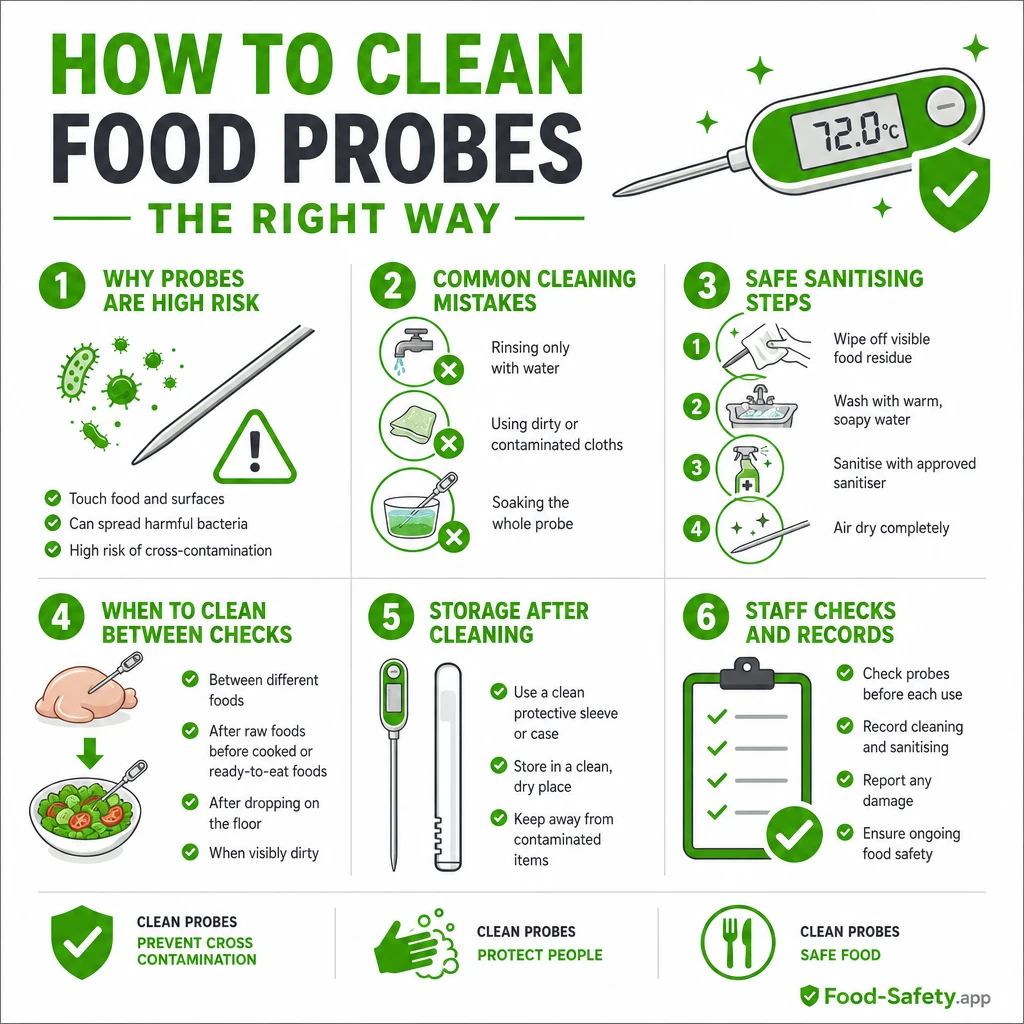
Food probes are high risk because they touch diverse foods across the service window—raw meat, cooked dishes, cooling products, and reheated portions. A single probe can pick up harmful bacteria from one item and transfer it to another, compromising safety and the integrity of HACCP records. In a busy kitchen, probes move quickly from raw to ready-to-eat tasks unless you have a disciplined cleaning routine. Cross-contamination prevention and proper cleaning are essential.
What makes probes high risk
- Raw meat contact: a probe used on poultry or red meat can carry pathogens to cooked or ready-to-eat foods.
- Cooked and cooling foods: probes used on hot dishes can spread microbes when not sanitised between steps.
- Cooling and reheat checks: repeated use without cleaning allows contaminants to accumulate.
- Reuse without cleaning: hurried shifts encourage skipping or delaying cleaning, increasing risk.
Common cleaning mistakes
- Wiping on a cloth instead of sanitising properly.
- Using one probe for all checks without sanitising between uses.
- Missing the stem or tip where contamination persists.
- Storing dirty probes in drawers or with utensils, increasing contact with surfaces.
- Skipping drying, which can transfer moisture and microbes to subsequent foods.
Safe cleaning and sanitising steps for food probes
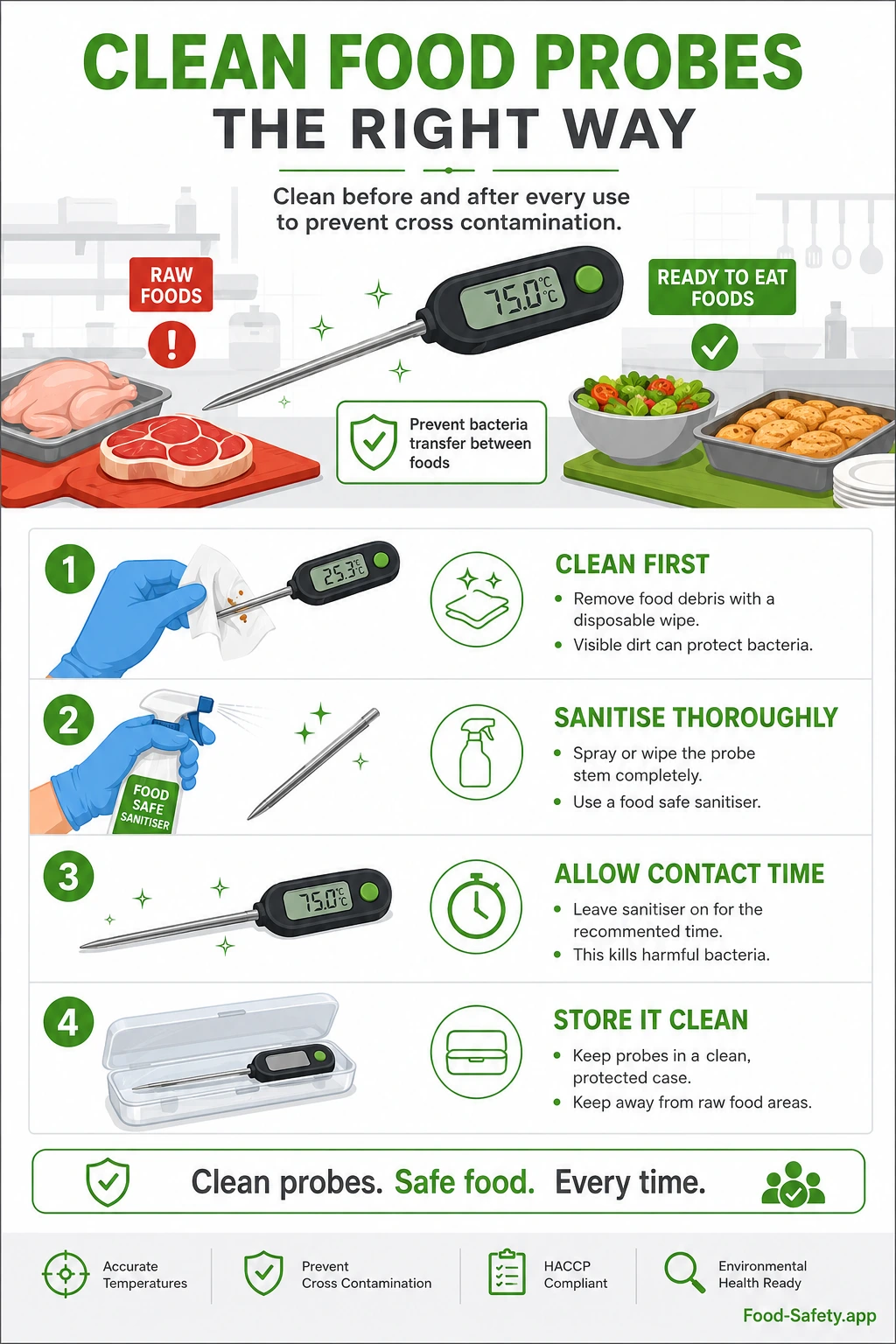
- Pre-clean: wipe off soil with a clean cloth, then rinse under warm running water to remove visible residues.
- Clean thoroughly: wash with a recognised dish detergent, paying attention to the stem and tip; use a soft brush if needed.
- Rinse again: ensure all detergent is removed to prevent chemical residue on foods.
- Sanitise: use an approved wipe or alcohol swab and follow the product’s contact time exactly.
- Dry completely: allow the probe to air-dry in a clean holder away from contaminants.
- Between checks: if you must reuse the same probe, sanitise again after any transfer between raw and ready-to-eat items and ensure it is fully dry before the next use.
| Step | What to do | Notes |
|---|---|---|
| 1 | Pre-clean | Wipe away soil, rinse under warm water |
| 2 | Wash | Detergent wash; clean stem and tip |
| 3 | Rinse | Thorough rinse to remove detergent |
| 4 | Sanitise | Use a sanitising wipe or alcohol swab; observe contact time |
| 5 | Dry | Air dry in a clean holder |
When to clean food probes between checks
- After handling raw meat and before checking cooked or ready-to-eat foods.
- After damaged or leaking packaging that may contaminate surfaces or probes.
- Between allergen checks to prevent cross-contact failures.
- After any visible contamination or soil on a probe.
- Before moving from raw or contaminated work to ready-to-eat food areas.
Storage after cleaning
- Keep probes in a clean holder or designated container, not mixed with utensils or tools.
- Avoid storing probes with dirty equipment or in unsealed drawers where dust and pests could contact them.
- Label stored probes if you use multiple types or sizes, and train staff to return probes to the same storage spot after use.
- Inspect storage areas regularly to ensure cleanliness and easy access during service.
Probe checks and records by staff
Structured records help you demonstrate control during inspections and support HACCP compliance. Training records should be kept up to date as part of routine checks.
- Daily probe check: confirm function, articulation, and visual cleanliness at the start of each shift.
- Cleaning log: record when a probe was cleaned and by whom.
- Calibration or accuracy record: note any calibration checks or probe accuracy observations if you use calibrated thermocouples or digital probes.
- Defect reporting: provide a clear process to flag broken or inaccurate probes and arrange replacement promptly.
Practical scenarios in busy service
- Checking raw chicken, then a roast: the probe must be cleaned and sanitised before the second check to avoid cross-contamination.
- Taking a delivery temperature in a leaking crate: sanitize the probe before reuse to prevent contamination of the next item.
- End-of-shift cleaning routine for a busy kitchen pass or prep area: incorporate probe cleaning into the closing checklist so no item is left unchecked.
- What to do if a probe is dropped on the floor during service: stop using it, clean and sanitise if you can, or replace with a clean spare; document the incident in the defect log.
Practical daily routines for probe hygiene
- Opening checks: verify all probes are clean, charged (if digital), and stored properly.
- During service: clean and sanitise probes between tasks that involve different food types or after any contamination risk.
- End-of-service: perform a final cleaning of all probes, dry thoroughly, and place them in their designated storage.
- Weekly review: audit cleaning logs and probe condition, replacing any damaged items.
Food-Safety.app, a food safety management system for catering businesses.
Learn more about probe hygiene
Discover practical tips and validated practices to strengthen your kitchen hygiene program and ensure consistent safe serving through clear procedures and records.