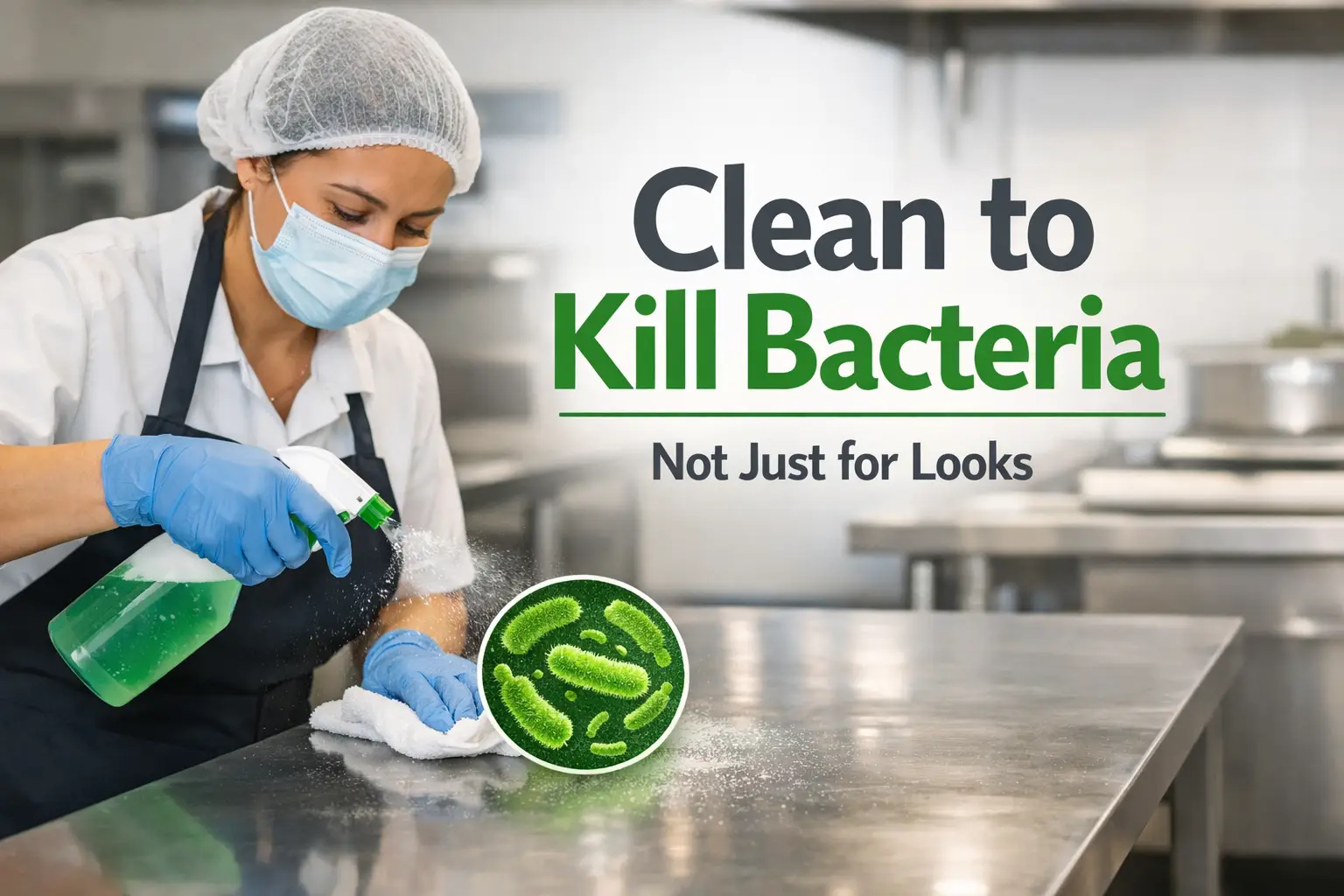
This guide shows how to clean for bacteria control not just appearance with clearer methods better routines and checks that make kitchen cleaning more effective.
Table of contents
- Why looks clean isn’t enough for safe operations
- High-risk touchpoints in a commercial kitchen
- Cleaning vs disinfecting: when to apply each stage
- Two-stage routine
- Contact time basics: why dwell matters
- Verifying the result: checks that prove hygiene work
- Building a simple routine that sticks
- Practical scenarios you can learn from
- Compliance and records for inspection readiness
- Practical tools and final thoughts
Why looks clean isn’t enough for safe operations
In many busy kitchens, staff focus on visible cleanliness: clean surfaces, spotless floors. But bacteria control requires more. Residual food debris, grease and biofilm can persist on knives, boards, taps and fridges, creating protected niches for pathogens. A good routine targets both removal of soil and inactivation of contaminants. The aim is not perfection, but consistent, documented hygiene that meets HACCP controls.
What this means in practice
Good practice means scanning for hidden soil, not just shiny surfaces. Use two‑step checks: detergent clean plus indicator of cleanliness (smell, residue). Schedule more frequent cleaning on high‑risk zones.
High-risk touchpoints in a commercial kitchen
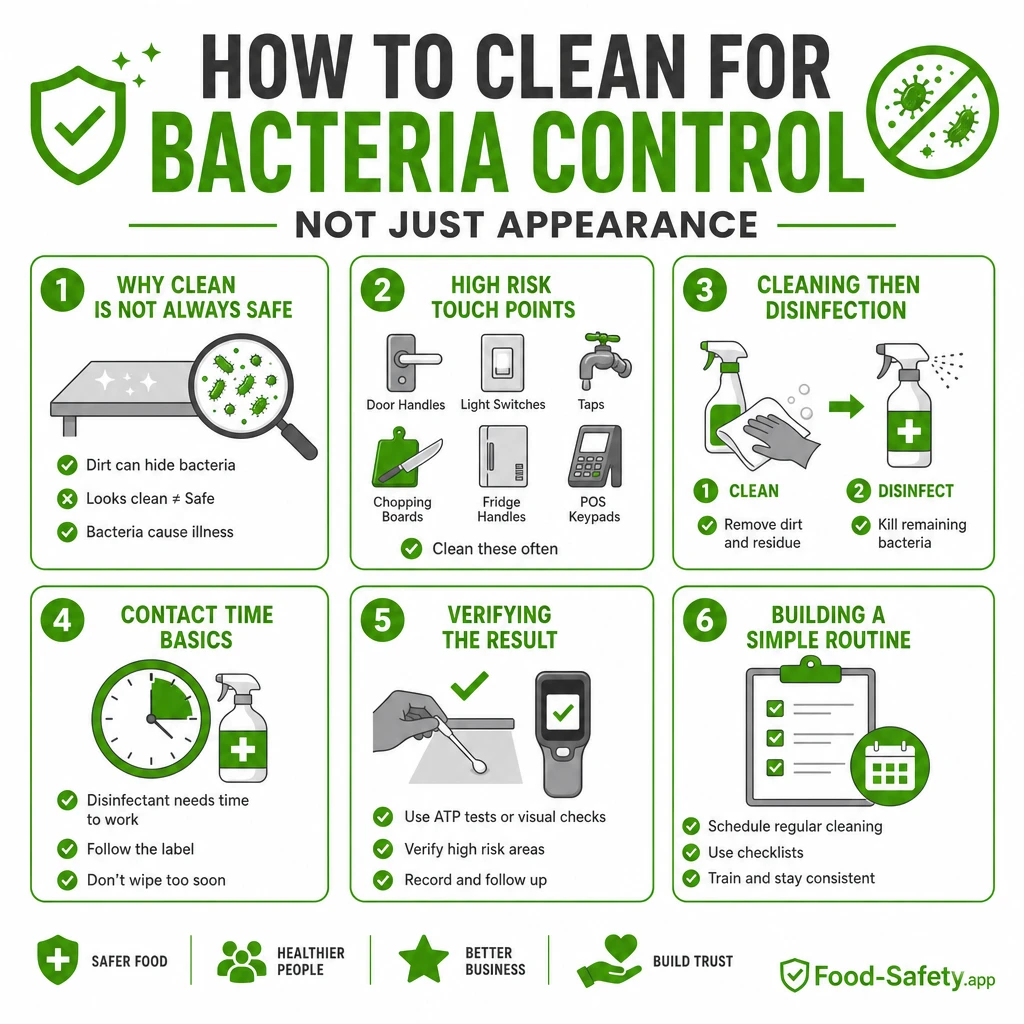
These points frequently transfer contaminants if neglected. Prioritise them in daily routines.
- Fridge handles and seals: Frequent contact; oils and proteins cling to gaskets; clean and disinfect seals daily.
- Chopping boards and knife handles: Cross‑contamination risk from raw to ready‑to‑eat items; designate boards by use and clean thoroughly.
- Taps and sink areas: Biofilm can form where water pools; ensure handles are cleaned and limescale controlled.
- Door push plates and work surfaces
- Probe thermometers and temperature probes
- Cloth buckets and cloths
Cleaning vs disinfecting: when to apply each stage
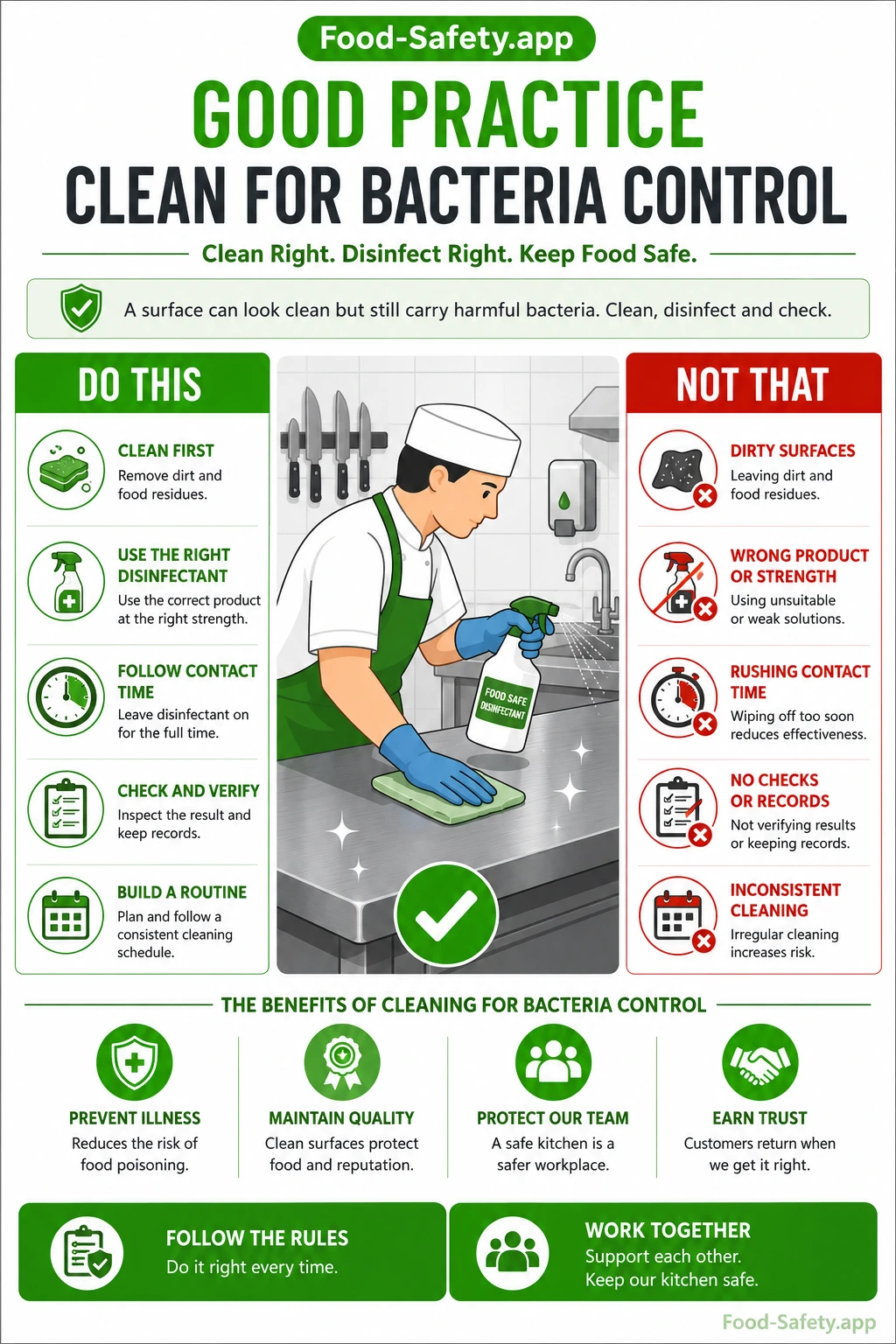
Cleaning with detergent removes soils and fats; disinfection reduces microbial load. Use detergent first on all high‑touch areas, then apply a disinfectant where required, particularly after raw meat handling or when a surface is visibly soiled or in contact with raw foods.
Two-stage routine
Stage 1: detergent clean with hot water and mechanical action. Stage 2: apply disinfectant according to the product label; ensure surface remains wet for the stated contact time.
Contact time basics: why dwell matters
Disinfectants need time to work. If you wipe off too quickly, you’ll leave live microbes behind. Plan for contact times of 30 seconds to 5 minutes depending on product and soil level. Always observe the label for mixing, contact time and any rinse requirements.
| Product category | Typical contact time | Notes |
|---|---|---|
| Quaternary ammonium | 1–5 minutes | Keep surfaces wet; avoid drying. |
| Chlorine‑based | 0.5–2 minutes | Rinse if food contact surfaces are not rinse‑safe. |
| Hydrogen peroxide | 1–3 minutes | Follow label for concentrations. |
Verifying the result: checks that prove hygiene work
Verifications combine visual checks with simple tests and manager sign‑off.
- Visual check: surfaces appear clean, with no smear or residue.
- Smell: no lingering odours indicating spoilage or improper cleaning.
- Wipe tests: use a clean, dry cloth to sample surfaces and observe colour transfer or residue.
- Schedule: ensure tasks appear on daily and weekly plans.
- Manager sign‑off: open and close checks documented with initials and time.
Building a simple routine defines the task, frequency, product, method, responsible person and how you record completion. The following framework is easy to adopt.
- Define the task: e.g., clean fridge handles, wipe door plates, scrub prep boards.
- Frequency: daily, per shift, post‑service, or weekly as required.
- Product: detergent and disinfectant choices aligned to make and model.
- Method: steps to follow, including wetting time and mechanical action.
- Responsible person: who performs the task.
- Record completion: sign‑off log or printed checklist.
- Raw poultry prep area cleaned after service, then disinfected before salad prep starts.
- Fridge handles and seals missed during end‑of-day cleaning and becoming a cross‑contamination route.
- Cloths reused across surfaces spreading contamination instead of removing it.
- A cleaner spray wiped off too quickly, reducing disinfectant effectiveness.
- Supervisor checks high‑risk points during opening and closing checks.
Compliance and records for inspection readiness
Link cleaning routines to HACCP controls and ensure documented evidence. Use structured cleaning records to show what was done, when and by whom. Include cleaning of touch points in opening and closing checks, record corrective actions when standards are missed, and keep equipment‑specific cleaning tasks clear for fridges, prep tables and utensils. Exportable records support inspections.
Practical tools and final thoughts
Operational hygiene is built on routine, discipline and visibility. A simple approach to cleaning, recorded and reviewed, reduces risk and saves time during service. For easier evidence and audit trails, consider Food-Safety.app, a food safety management system for catering businesses.
Learn more about food safety management
Discover how to streamline hygiene records, inspections and daily checks with our food safety management platform designed for catering businesses.