Introduction
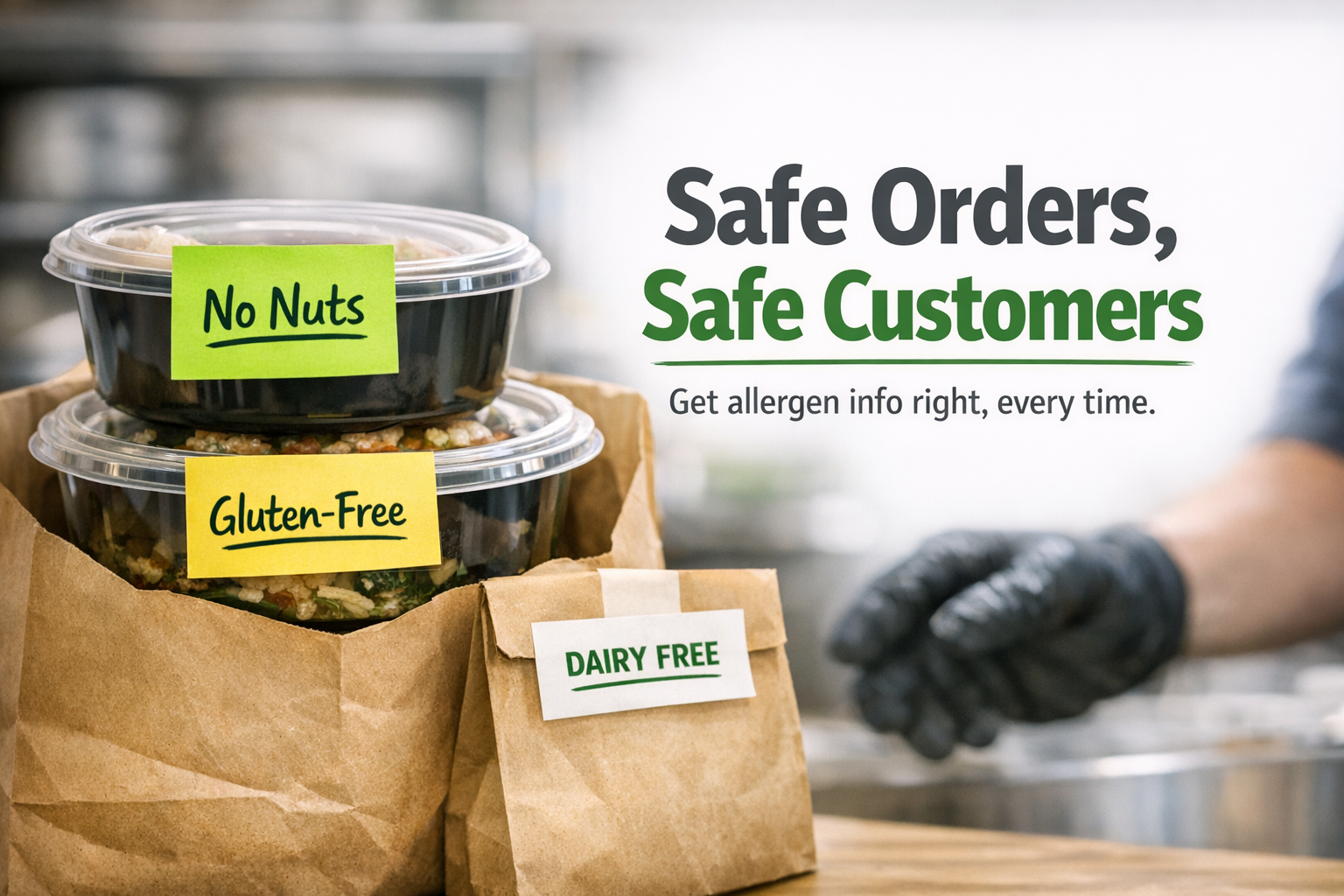
Allergen management in takeaway orders is essential for safety, compliance, and smooth service. This guide shows practical kitchen‑level controls from order to delivery, helping teams reduce mistakes, improve records, and stay audit‑ready for every takeaway shift, for takeaway operations of all sizes.
Table of contents
Why allergen management matters in takeaway service
In a fast‑moving catering operation, a single misstep can put a guest at risk and damage reputation. Allergen management in takeaway orders matters not only for compliance but for service reliability. When teams consistently capture the right details, communicate them clearly, and verify packaging, the risk of cross‑contact falls and audit scores improve. This section explains the practical reasons to invest in a robust process, from menu clarity to training discipline.
- Compliance and duty of care: identify key allergens, confirm customer preferences, and document decisions.
- Operational consistency: build repeatable steps that work under pressure, not ad hoc checks at peak service.
- Inspection readiness: maintain a clear trail from order receipt to delivery handover.
- Customer trust: provide confident, accurate responses at the counter and on delivery.
Where customers ask about allergens
At the point of order
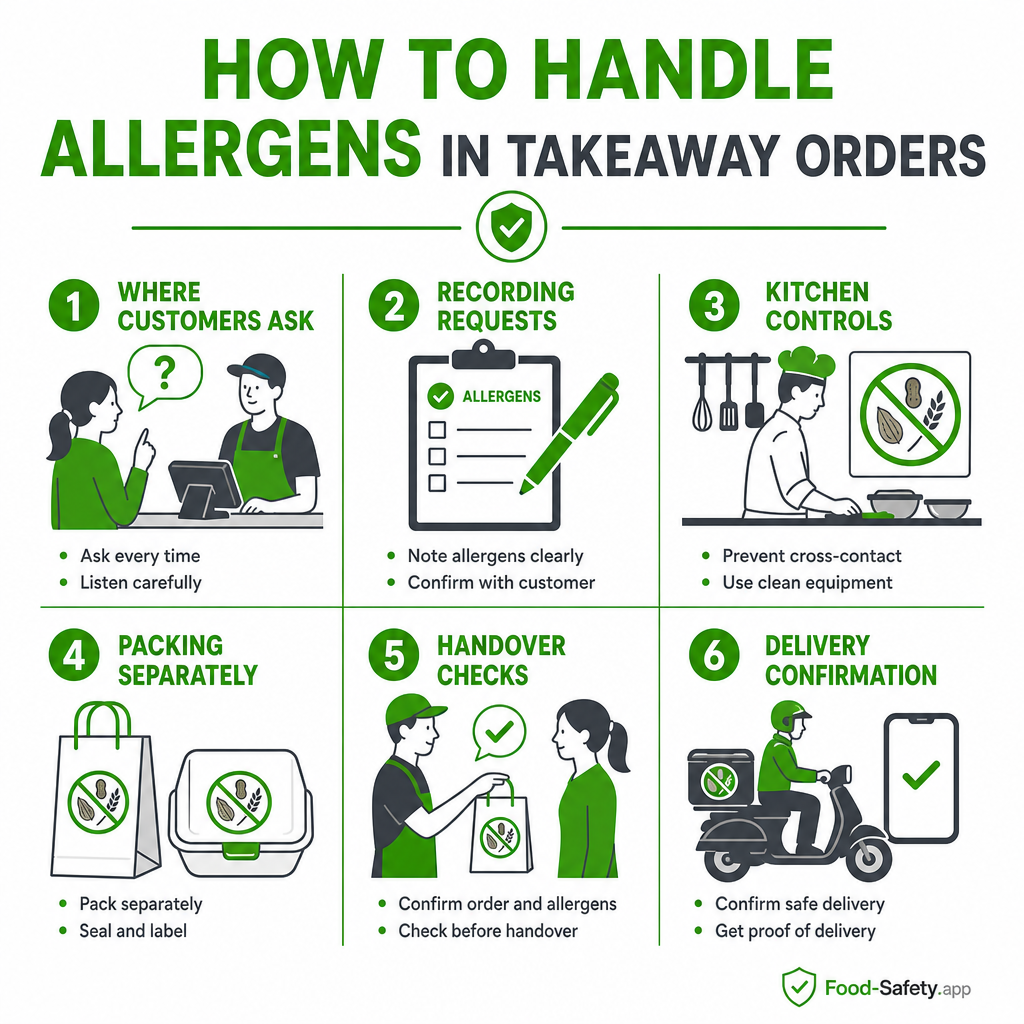
Many customers declare allergies when placing the order in person. Capture the exact allergen, any exclusions, and substitutions. A clear note visible to the kitchen reduces misinterpretation and speeds the process during busy service.
Over the phone or online
Phone and online orders should trigger a structured allergen inquiry. Ask for the specific allergen, the level of risk, and whether cross‑contact is acceptable. Record sauces, garnishes, and potential cross‑contact in the order notes so the kitchen sees the full picture before cooking begins.
Via delivery platforms
Delivery partners may display allergen information, but gaps happen. Confirm any special handling, and if the platform lacks detail, call the customer back to verify. Ensure the platform label and kitchen log align before packing.
Recording requests for clarity
The foundation of allergen safety is a clear, accessible record. Each order should document the allergen, the menu item, customer instructions, and any agreed changes so the kitchen sees the full picture before cooking starts. A digital safety records system helps preserve the audit trail for compliance.
| Order | Menu item | Allergen | Customer instructions | Agreed changes |
|---|---|---|---|---|
| 12345 | Beef curry | Peanuts | Exclude peanuts from garnishes | Peanuts removed; serve with separate spoon |
| 12346 | Chicken balti | Gluten | Gluten-free sauce only | Gluten-free version prepared in separate pan |
Staff should log the time and the name of the person who entered the request, and the system should preserve the record for audit purposes. For added reliability, confirm the entry with a quick verbal check when the order moves from preparation to packing.
Kitchen controls to prevent cross-contact
Cross‑contact is often the hidden risk in busy service. Implement simple, practical controls that can be followed by the entire team:
- Designate separate prep areas or dedicated stations for allergen‑free items where possible.
- Use separate utensils, chopping boards, pans, and containers; clearly label all tools as allergen‑free where relevant.
- Verify ingredients for each item, including sauces, garnishes, and add‑ins, before cooking starts.
- Communicate any changes to the line quickly, using a standard handover process at the start of the shift.
- Implement a pre‑cook confirmation step to ensure the order details match the kitchen plan before heating.
Cross‑contact is often the hidden risk in busy service. Implement simple, practical controls that can be followed by the entire team.
Packing and labeling for safety
Packaging is the final barrier between allergen exposure and the guest. Use clear, consistent labeling and separation during packing:
- Label each bag with the allergen note and any required handling instructions.
- Use sealed packaging to prevent leaks and cross‑contamination between items.
- Keep allergen‑free orders on a separate shelf or zone during packing to avoid accidental swaps.
- Double‑check the label text, the order number, and that the correct item is bagged before sealing.
In practice, a gluten‑free meal should be packed in a dedicated bag with a prominent gluten‑free label and separate cutlery to prevent cross‑contact in transit.
Handover checks and delivery readiness
Before dispatch, perform a final review to confirm the right meal, the allergen notes, and the packaging integrity. This step is essential for both collection and delivery orders.
Cross‑check the bag against the order details and customer instructions.
Ensure the label is legible, and packaging is intact and sealed.
Communicate any special handling to the driver or front‑of‑house team so the customer receives the correct service at handover.
Practical scenarios and common mistakes
Realistic scenarios help teams anticipate risk and act decisively. Avoid common missteps by using simple checks and clear labels:
A customer orders a curry without peanuts: note the request, check sauces and garnishes, and pack separately with a clear label.
A mixed takeaway order includes one gluten‑free meal: use a dedicated check step before sealing the bag.
A delivery shift rushes several orders at once: use a simple handover checklist to avoid swapping bags or missing allergen labels.
common mistakes to watch for include misreading notes, cross‑contact during prep, and mislabeling during packing.
Building a compliant routine and continuous improvement
Adopt a simple, repeatable workflow for allergen management in takeaway orders that can be audited and improved over time. Start with a single allergen record per menu item, then expand to multi‑allergen scenarios. Train staff to stop and check rather than guess, and build in a final verification step for collection and delivery orders. Natasha’s Law provides essential context for compliant routines.
For authoritative guidance on best practices, see the NHS guidance on food safety and allergies: NHS guidance on food safety and allergies.
If you are looking for practical digital support, consider a tool like Food-Safety.app, a food safety management system for catering businesses.
Take allergen safety further
Learn practical allergen safety controls and digital records to stay audit ready while protecting guests and supporting consistent service every shift