Struggling to control foodborne viruses in your food safety management? This guide explains practical steps for UK kitchens using Food-Safety.app.
Table of Contents
- What are foodborne viruses?
- Why do viruses matter in food safety management?
- How do viruses spread in kitchens?
- What does UK food safety management law require?
- Practical steps to control viruses (SFBB & HACCP records)
- Common mistakes and risks
- How digital food safety records can help
What are foodborne viruses?
Foodborne viruses are infectious agents that can be passed on through food, usually because of poor hygiene or contaminated water.
Unlike bacteria, they don’t grow in food. Instead, they survive long enough to infect someone when the food is eaten.
In UK catering settings, the most relevant viruses include:
- Norovirus (the most common cause of outbreaks)
- Hepatitis A (less common but more serious)
Others like rotavirus and astrovirus exist, but they’re less central to everyday food business controls.
The key point for any kitchen is simple: viruses are a contamination problem, not a cooking problem.
Why do viruses matter in food safety management?
Viruses are a major risk in food safety management because they spread easily and need very little to cause illness.
For example, norovirus has a very low infectious dose. That means even tiny traces on hands or surfaces can contaminate food.
They’re especially linked to:
- Ready-to-eat foods like salads, sandwiches, and desserts
- Foods handled after cooking
- Shellfish such as oysters
According to the Food Standards Agency, hundreds of thousands of foodborne norovirus cases occur in the UK each year.
This is why controls like hand washing and preventing contamination are critical.
How do viruses spread in kitchens?
In most cases, viruses enter food businesses through people, not ingredients.
Common routes include:
- Food handlers working while ill
- Poor handwashing after using the toilet
- Contaminated surfaces and equipment
- Dirty cloths or shared utensils
- Contaminated water or raw ingredients
This is why cross-contamination control is so important.
A typical example:
A chef returns to work too soon after a stomach bug, prepares sandwiches, and handles salad without proper hand hygiene. The food looks fine, but it can still make customers ill.
What does UK food safety management law require?
UK food hygiene law requires all food businesses to put in place effective food safety management procedures based on HACCP principles.
This includes:
- Preventing contamination from staff, surfaces, and water
- Ensuring food handlers maintain high personal hygiene
- Excluding staff with symptoms like vomiting or diarrhoea
- Keeping food safe from contamination after cooking
In practice, this is often managed through systems like SFBB (Safer Food Better Business) and documented HACCP records.
For viral risks, one of the most important rules is:
- Staff must not handle food until 48 hours after symptoms stop
Guidance on staff illness and hygiene can be supported with strong personal hygiene practices.
Practical steps to control viruses (SFBB & HACCP records)
Controlling viruses doesn’t require complex science, but it does require consistency.
Here are the key actions every kitchen should follow:
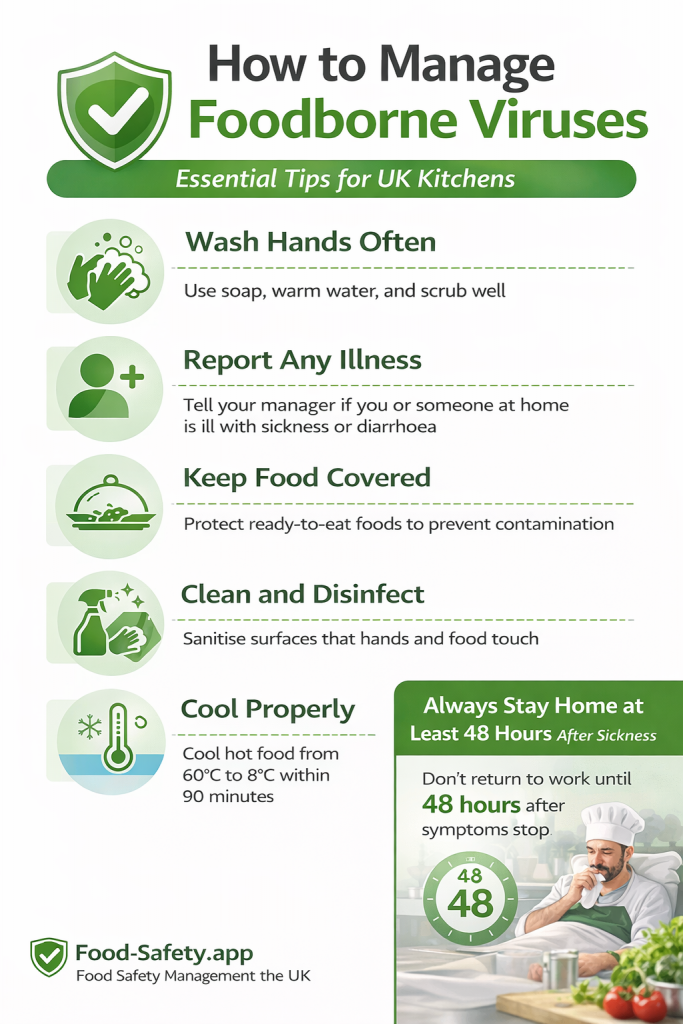
1. Strict hand hygiene
Wash hands thoroughly with soap and warm water:
- Before handling ready-to-eat food
- After using the toilet
- After handling waste or raw food
2. Clear illness reporting rules
Staff must report symptoms immediately, including:
- Vomiting
- Diarrhoea
- Nausea
- Jaundice
Keep this documented in your HACCP records.
3. Protect ready-to-eat foods
Avoid bare-hand contact where possible and keep foods covered.
This aligns with guidance on high-risk foods.
4. Effective cleaning and disinfection
Focus on high-touch areas:
- Door handles
- Fridge handles
- Prep surfaces
5. Separate raw and ready-to-eat foods
Use separate equipment or clean thoroughly between tasks.
Common mistakes and risks
Even well-run kitchens can slip up with virus control.
Typical issues include:
- Letting staff return to work too soon after illness
- Relying on gloves instead of proper handwashing
- Assuming cooking removes all risk
- Poor cleaning of shared surfaces
- Not documenting illness controls in SFBB or HACCP records
Another key risk is underestimating viruses because food looks and smells fine. As explained in invisible food safety risks, contamination isn’t always visible.
How digital food safety records can help
Managing virus risks consistently can be difficult, especially in busy kitchens.
This is where digital food safety records make a real difference.
Food-Safety.app is a food safety management system for UK catering businesses. It helps teams:
- Record staff illness and return-to-work checks
- Keep HACCP records organised and up to date
- Maintain consistent hygiene routines
- Stay aligned with SFBB requirements
Instead of relying on memory or paper records, everything is structured and easy to track.
Conclusion
Foodborne viruses are a real and ongoing risk in UK kitchens, but they’re also preventable with the right controls.
The key is focusing on hygiene, staff illness management, and protecting ready-to-eat food — not just cooking temperatures.
By building these controls into your daily routines and keeping clear records, you reduce risk and improve consistency.
For many businesses, using a digital system like Food-Safety.app is a practical way to stay on top of food safety management and make compliance easier to manage day to day.