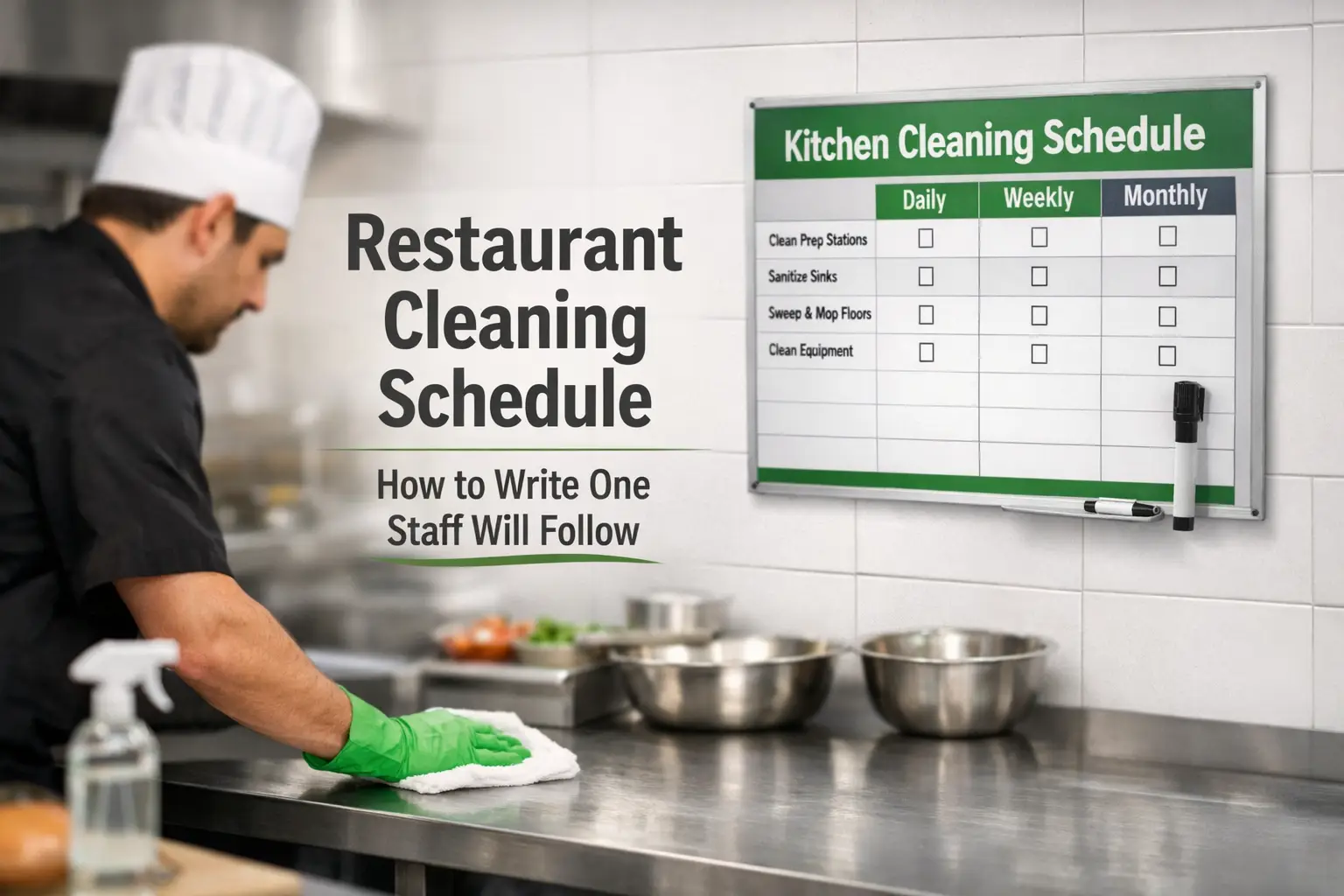
Create a cleaning schedule that works in real kitchens by setting clear tasks frequencies chemicals and sign off checks staff can follow.
Why cleaning schedules get ignored
In fast service, lengthy documents lose meaning. Schedules become ignored when they are overly long, vague, poorly timed, or have no clear owner. When staff cannot see the link between a task and shift outcomes, hygiene slips happen at the point of service. The problem isn’t intent; it’s practicality. cross-contamination in food safety explained.
What good practice looks like is concise tasks tied to specific times, with a named person accountable for completion. A realistic schedule reflects actual workflow, not an idealised checklist. For example, cleaning tasks should align with service breaks, handovers, and end-of-day routines so staff can sign off within a predictable window.
Identify every touch point
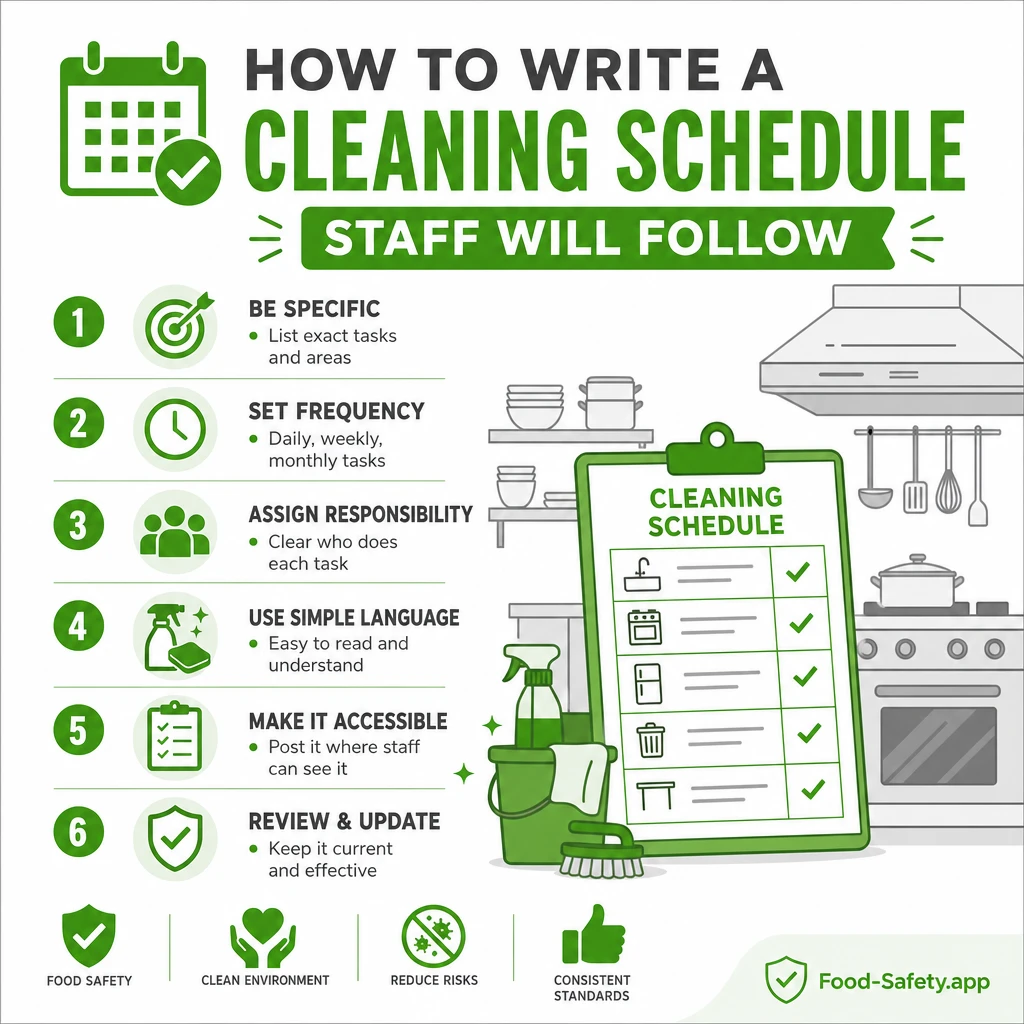
A robust cleaning schedule must cover every touch point that transfers contaminants. This includes doors, handles, taps, switches, probes, fridge seals, fridge shelves, prep benches, slicers, bain maries, sinks, bins, cloths, and high‑risk contact areas. Missing items become weak links that undermine the whole system. allergen cross-contact guidance.
What to capture
- Door and drawer handles
- Taps, switches, and thermocouples
- Probes and calibration dials
- Fridge seals and shelves
- Prep surfaces and cutting boards
- Slicers and mandolins
- Bain maries and hot holding units
- Sinks, drains, and waste areas
- Cleaning cloths, cloth dispensers, and mops
- High‑risk contact zones (near hot lines, pastry stations, service counters)
Cleaning versus disinfecting
Cleaning removes visible soils; disinfecting reduces microbial load. A good schedule clearly states when to clean, when to disinfect, and which product or method to use. In busy environments, cleaning often precedes disinfection on shared surfaces, equipment, and high‑touch zones to maximise effectiveness. 4 Cs of food hygiene.
Practical guidance includes pairing each task with the appropriate product, contact time, and method. For example, wipe benches with an approved cleaner, then apply a disinfectant to contact surfaces that touch food. Avoid vague notes such as “sanitise” without specifying product and technique.
Set realistic frequencies
Frequencies should reflect actual use and service patterns. Use a mix of post‑use, hourly, daily, weekly, monthly, and deep‑clean tasks. Too many hourly tasks create fatigue; too few lead to hidden build‑ups. A sensible approach allocates tasks around service gaps, end‑of‑shift handovers, and quieter periods. HACCP-style rating considerations.
- After each use or between service periods: wipe and sanitise high‑touch surfaces
- Hourly during busy service: surfaces and utensils that tolerate frequent cleaning
- Daily: prep benches, sinks, and equipment exteriors
- Weekly: deep clean of shelving, seals, and vent hoods
- Monthly: interior clean of fridges and storage areas
- Deep clean tasks when issues arise or after faults
Assign responsibility clearly
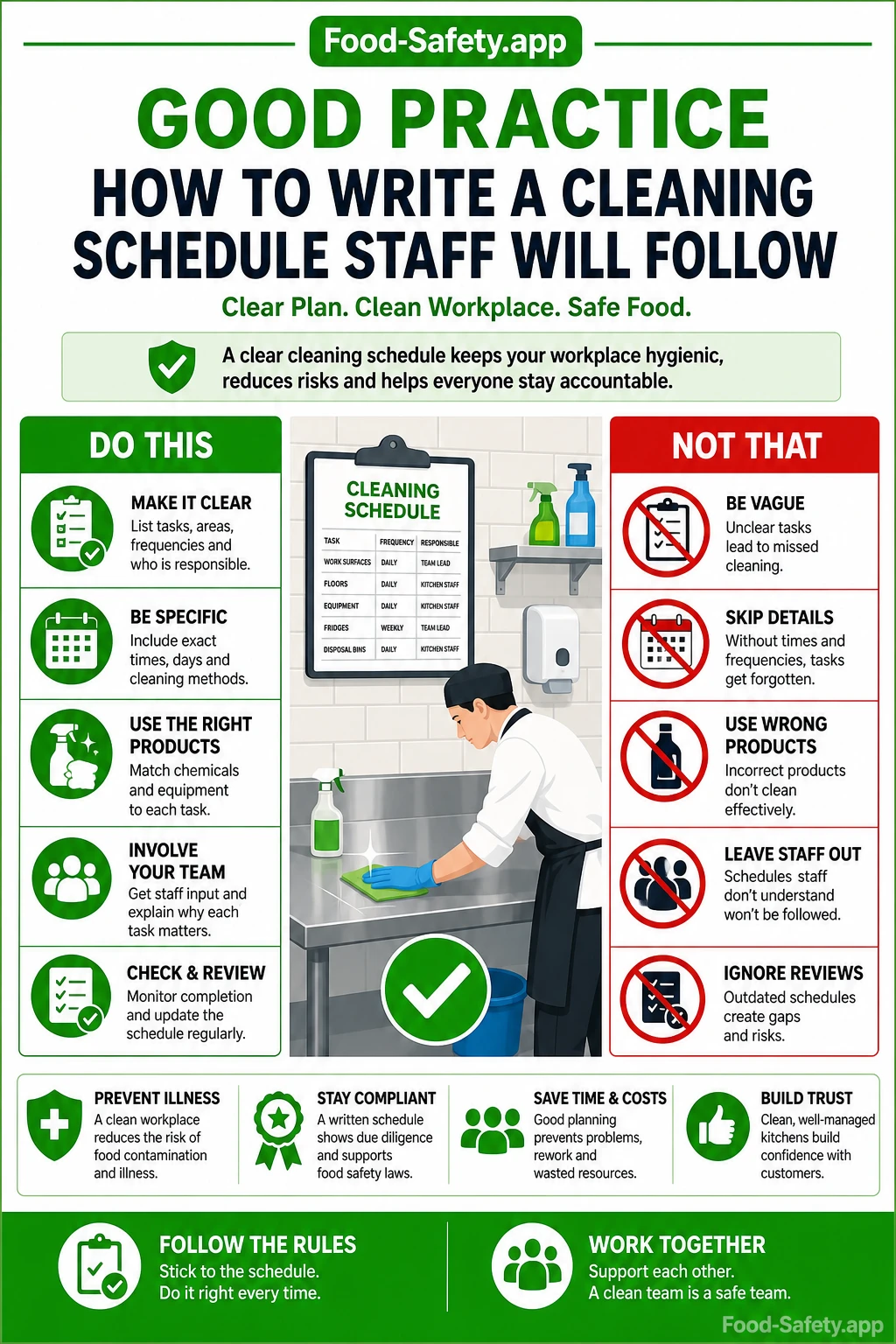
Clear ownership is the hinge of accountability. Assign tasks to a named person, a shift, or a role, and require sign‑off to show completion. A simple approach is to attach a responsible person to each task with a designated time window. When responsibilities are explicit, handovers become checks rather than gaps. staff contamination training reminders.
Good practice includes visible ownership for each area and task, plus a quick corrective action path if a task is missed or a defect is found during verification.
Check and verify
Verification creates traceability and confidence. Use visual checks, supervisor reviews, and recorded completions to confirm that every task is done as planned. A clean record demonstrates due diligence for inspections and HACCP controls. record-keeping basics.
To support traceability, keep a simple log: task, area, responsible person, date, and a brief note if corrective action was required. For external guidance, see the Food Standards Agency.
Practical examples or scenarios
Busy lunch service
Between service periods, perform quick, focused wipes on prep surfaces, door handles, and handwash sinks. Short, frequent checks prevent soil buildup when turnover is rapid and staff are moving between zones.
Fridge management
Daily checks should cover shelves and seals, plus a weekly deep clean of interior surfaces. Record any worn gaskets or cold spots and action repairs promptly to preserve temperatures and cleanliness.
Front‑of‑house and kitchen split
Separate cleaning tasks for customer areas, toilets, and production spaces. Public areas require higher frequency on touch points; kitchen zones prioritise equipment cleanliness and food contact surfaces.
High‑risk equipment
Slicers, thermometers, ice machines, and chopping boards need tighter schedules. Include calibration checks, blade sanitation, and interior cleaning at defined intervals with explicit products and contact times.
Compliance and operational focus
- Evidence for food hygiene inspections: keep clear records of tasks completed and sign‑offs
- HACCP‑style control of hygiene risks: tie cleaning to critical control points
- Structured records showing cleaning was done, not just planned
- Open and close checks, defect reporting, and corrective actions when issues are found
Conclusion and call to action
Writing a cleaning schedule that staff will actually follow starts with clarity, practicality, and real service rhythms. Prioritise concrete tasks, defined frequencies, and clear ownership. Build in simple verification to create a trustworthy hygiene culture that supports inspections and day‑to‑day performance.
Food-Safety.app, a food safety management system for catering businesses.
Improve kitchen hygiene with a practical cleaning plan
Discover how a practical cleaning schedule tailored to real service rhythms can improve hygiene, simplify inspections, and empower staff to maintain consistent kitchen cleanliness every day.