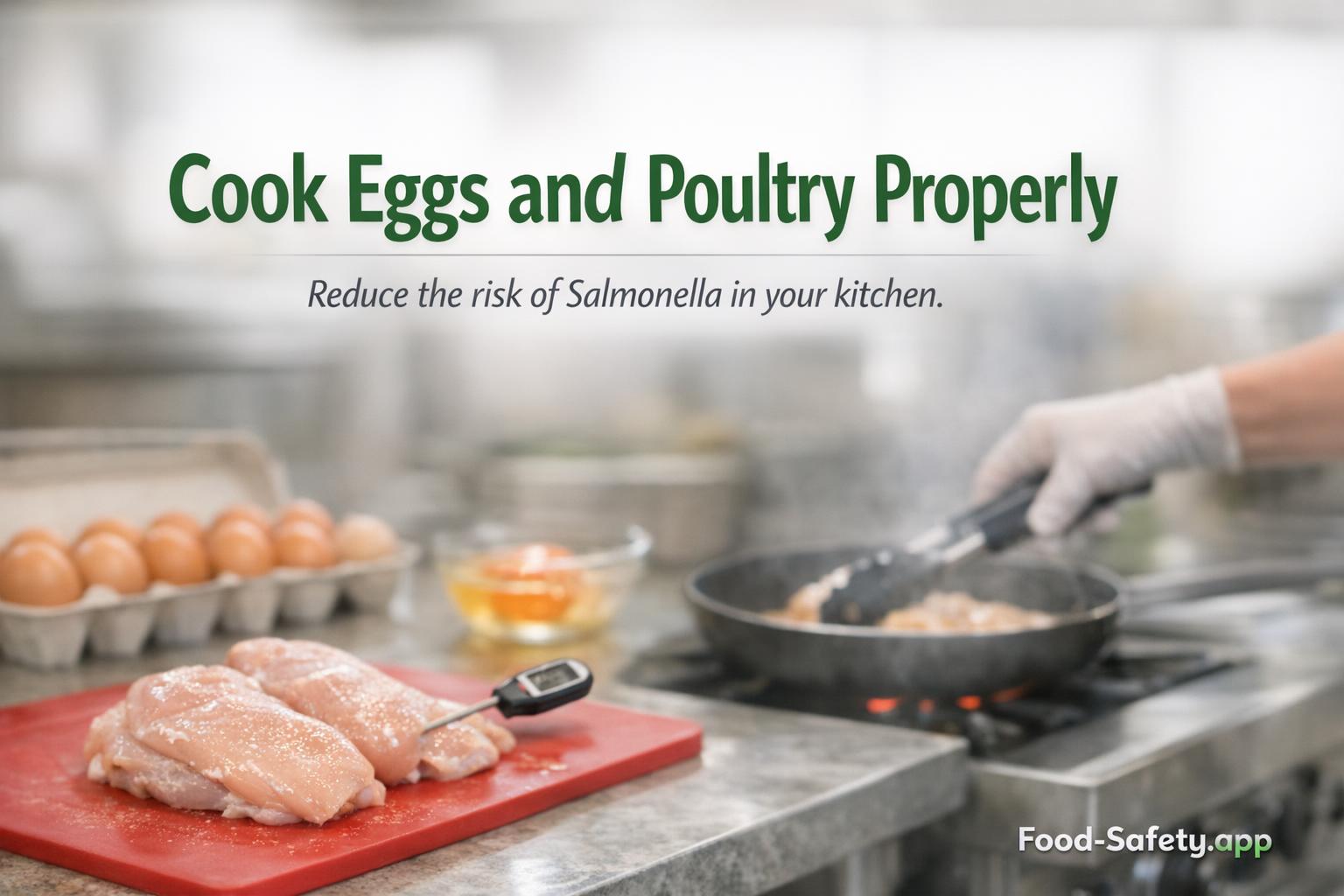
Salmonella risk can show up in the smallest of places in a busy kitchen: a dodgy egg wash, a drip from raw chicken, a cloth that has been used once too often, or a chef who has gone from handling raw poultry straight to sandwich prep without thinking twice. The good news is that most salmonella risks every small kitchen should know about are preventable with tidy routines, clear staff habits, and a bit of discipline when service is in full swing. In the UK, practical food safety advice is broadly consistent, though requirements may vary in other countries, so always check your local guidance. This aligns with HACCP principles explained.
Table of contents
- What Salmonella is and why small kitchens should care
- Where Salmonella risk hides in small kitchens
- The foods most likely to cause problems
- Handling routines that cut the risk
- Cooking, cooling and holding food safely
- Cleaning and cross-contamination control
- Staff training and daily checks
- What to do if something goes wrong
- Practical takeaways
What Salmonella is and why small kitchens should care
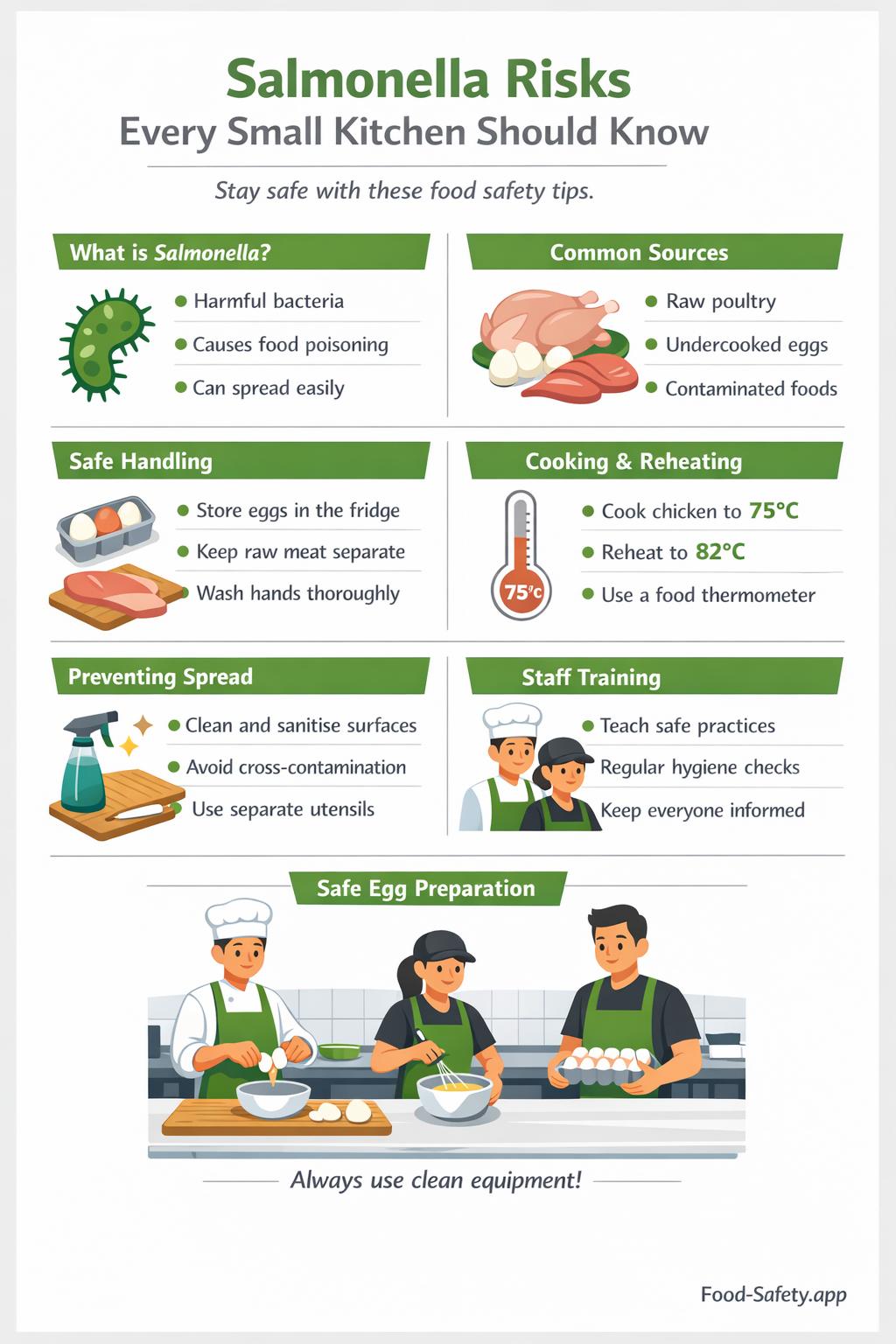
Salmonella is a foodborne bacteria that can cause illness when contaminated food is eaten. For catering and hospitality businesses, the problem is not just one “bad batch” of food. It is the everyday habits that create the opening: poor hand hygiene, undercooked food, cross-contamination, unsafe cooling, and weak cleaning routines.
Small kitchens are especially exposed because space is limited, staff often multitask, and one prep table may need to do the job of three. That can be manageable, but only if the workflow is controlled. If not, Salmonella gets to enjoy the sort of kitchen tour nobody booked.
Where Salmonella risk hides in small kitchens
Raw poultry and raw eggs
Chicken, turkey, duck and dishes made with raw or lightly cooked egg can carry Salmonella. Juice from raw poultry is a common route for spreading contamination to worktops, sinks, taps, cloths and utensils.
Shared equipment
A chopping board used for raw chicken and then for salad garnish is a classic cross-contamination route. The same goes for tongs, knives, trays, scales and even fridge handles touched with contaminated gloves.
Bad hand hygiene
Hands are one of the main vehicles for spreading bacteria. Busy staff may switch from handling raw meat to plating ready-to-eat food, opening packaging, answering the door or taking an order. Unless hands are washed properly at each change of task, contamination spreads fast.
Cleaning cloths and sponges
Dirty cloths can move contamination from one surface to another. If a cloth is used on raw chicken residue, then wiped across a prep table, the risk has not been cleaned away — it has been redistributed.
Fridge clutter
In a cramped commercial kitchen, raw and ready-to-eat foods can end up too close together. A leaking tray of raw poultry above a tray of dressed salad is exactly the sort of thing that causes trouble, usually at the worst possible moment.
The foods most likely to cause problems
Some foods need extra care because they either support bacterial growth or are often eaten without further cooking.
- Raw poultry: one of the most common sources of contamination in food prep.
- Egg dishes: mayonnaise, mousse, tiramisu, hollandaise and other dishes made with raw or lightly cooked egg need careful control.
- Cooked foods left warm for too long: bacteria can multiply if food is not kept hot enough or cooled quickly enough.
- Ready-to-eat foods: salads, sandwiches, desserts and buffet items are vulnerable because there is no final kill step before service.
- Stuffed meats and poultry: they need thorough cooking right through to the centre.
For trusted general food safety advice, many businesses in the UK use the Food Standards Agency as a starting point. For allergen management guidance see our guide on managing allergens safely in a busy kitchen.
Handling routines that cut the risk
Good Salmonella control is about making the safe way the easy way. In small kitchens, that means simple routines that staff can follow even during a lunch rush.
Separate raw and ready-to-eat work
Use separate boards, utensils and containers for raw foods and ready-to-eat foods. If separate stations are not possible, build a strict sequence: raw prep first, thorough clean and sanitise, then ready-to-eat prep. Using colour-coded chopping boards can help enforce this separation.
Wash hands at the right moments
Staff should wash hands:
- before starting food prep
- after handling raw meat, poultry or eggs
- after touching bins, cleaning cloths, phones or face coverings
- after using the toilet
- after taking payment or opening deliveries
- before handling ready-to-eat food
Use gloves properly, or not at all
Gloves are not a magic shield. If they are worn, they must be changed as often as hands should be washed. Gloves touched on raw chicken and then used to assemble sandwiches are just expensive hand-shapes. Proper handwashing is still the main control.
Keep raw food sealed and low in the fridge
Store raw meat and poultry below ready-to-eat items, in sealed containers that will not drip. Label and date everything. In a busy kitchen, “I’ll remember what that tray is” is not a system.
Cooking, cooling and holding food safely
Salmonella risk is reduced when food is cooked properly and held safely after cooking. The key is consistency, not guesswork.
Cook food thoroughly
Food should be cooked fully, especially poultry and stuffed items. Use a clean probe thermometer where appropriate and follow your kitchen’s documented process for checking doneness. Colour alone is not enough; chicken can look convincing and still be unsafe. For more on temperature control in kitchens see temperature control in kitchen.
Keep hot food hot
If food is being held before service, keep it at a safe hot holding temperature according to your approved food safety procedures. Stir stews, soups and sauces regularly, and avoid leaving trays sitting on a counter “just for a minute” that turns into twenty.
Cool food quickly
Leftover cooked food should be cooled fast and safely before refrigeration. Use shallow containers, smaller portions, and good airflow. Large deep pans are slow to cool and can give bacteria the sort of hospitality nobody wants to offer.
Reheat properly
When reheating cooked food, make sure it is piping hot throughout. Reheating should be a one-time process, not a daily hobby.
Cleaning and cross-contamination control
Cleaning is not just about making the kitchen look respectable to the next delivery driver. It is one of the main barriers against Salmonella spreading.
Set a clean-as-you-go routine
Break up contamination as soon as it appears. Wipe spills immediately, replace cloths frequently, and sanitise food contact surfaces after raw food prep and before moving to ready-to-eat tasks. A kitchen cleaning schedule in action can help.
Use colour-coded equipment correctly
Colour coding only works if the team actually follows it. Put the right boards, cloths and brushes in the right places, and make sure new staff know what each colour means from day one.
Clean sinks, taps and drains
These areas are often overlooked, yet they can become hidden contamination points. A clean sink is still part of your food safety system, not just a place to abandon a tea towel and hope for the best.
Manage waste well
Overflowing bins, raw packaging and food waste attract pests and increase contamination risk. Empty bins regularly and keep lids closed.
Staff training and daily checks
Even the best kitchen layout cannot save a team that does not understand why the controls matter. Training should be practical, short and repeated often.
Build habits into the shift
Use quick daily briefs before service. Remind staff about raw and ready-to-eat separation, handwashing, fridge checks and probe use. Five minutes at the start can prevent a very long conversation later.
Use simple checklists
A short opening checklist and closing checklist can cover:
- fridge temperatures checked and recorded
- raw food stored correctly
- clean cloths and sanitiser in place
- probe thermometer sanitised and ready
- waste removed
- surfaces cleaned and reset
Watch for staff illness
Any member of staff with diarrhoea or vomiting should not be handling food. Managers need a clear sickness reporting process so no one feels pressured to “just come in and help out” when they should be at home. A quiet shift is better than a sick team.
What to do if something goes wrong
If you suspect Salmonella contamination in the kitchen, act quickly and calmly:
- stop using the affected food or equipment
- segregate and dispose of contaminated items where needed
- clean and sanitise all affected surfaces and utensils
- check whether any ready-to-eat food may have been exposed
- review the prep steps that led to the issue
- brief the team so the same mistake does not happen again
If contaminated food may already have been served, follow your business’s food incident and customer complaint procedures and take appropriate advice promptly.
Practical takeaways
For small kitchens, controlling Salmonella is not about fancy equipment or overcomplicated rules. It is about repeatable basics: separate raw and ready-to-eat work, wash hands properly, cook thoroughly, cool food quickly, and keep cleaning standards tight throughout service. The kitchens that handle this well are usually not the ones with the biggest pass or the flashiest kit — they are the ones with habits that work when the room is busy and the tickets are stacking up.
If you want a clearer way to keep those habits consistent across shifts, a food safety management system for catering businesses such as Food-Safety.app can help keep checks, records and routines in one place.
Handled well, salmonella risks every small kitchen should know become manageable rather than mysterious. And that is good for customers, good for compliance, and much better than explaining to the manager why the salad prep board now has a second career.
Take your kitchen safety to the next level
Implement clear routines, document checks, and maintain discipline during peak service with a simple system that keeps staff aligned. Food-Safety.app helps you capture critical controls, track corrective actions, and review performance across shifts in one accessible place, so you can focus on food and guests.