Learn the main food safety laws UK food businesses must follow.
The core legal framework
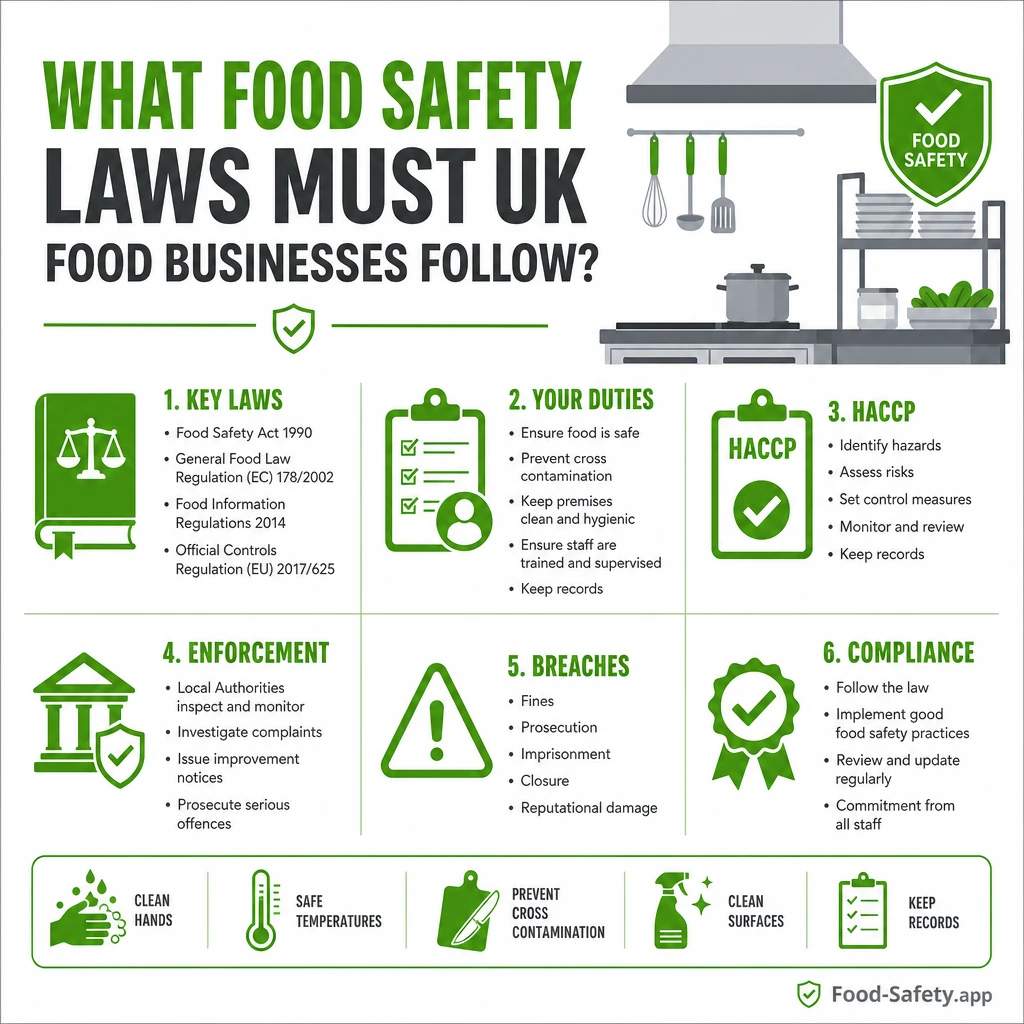
The Food Safety Act 1990 requires food businesses to produce safe food, avoid misleading customers, and apply due diligence to prevent offences. This framework underpins every kitchen decision, from supplier choices to service. The accompanying Food Hygiene Regulations set firm expectations on premises cleanliness, hygienic handling, pest control, waste management, and temperature control, with enforcement by local authorities.
The Food Safety Act 1990 explained
In practice, the Act means you must show you are delivering safe food and not misleading customers about it. Demonstrating due diligence involves documenting checks, staff training, and corrective actions when things go wrong. Build a simple routine to prove you are exercising control at every stage of production and service.
Food hygiene regulations in practice
Hygiene standards cover premises, equipment, and processes. Establish clean-as-you-go habits, routine equipment maintenance, and tidy waste handling. Pest control programs should be formalised, with bite-sized responsibilities assigned to shifts and clear escalation if gaps appear.
For official guidance, see the Food Standards Agency.
Allergen information and information requirements
Allergen management protects customers and reduces the risk of serious reactions. UK rules require accurate allergen information and clear communication across menus and service channels. This is essential for risk reduction and for protecting your brand during busy service.
14 allergens and clear communication
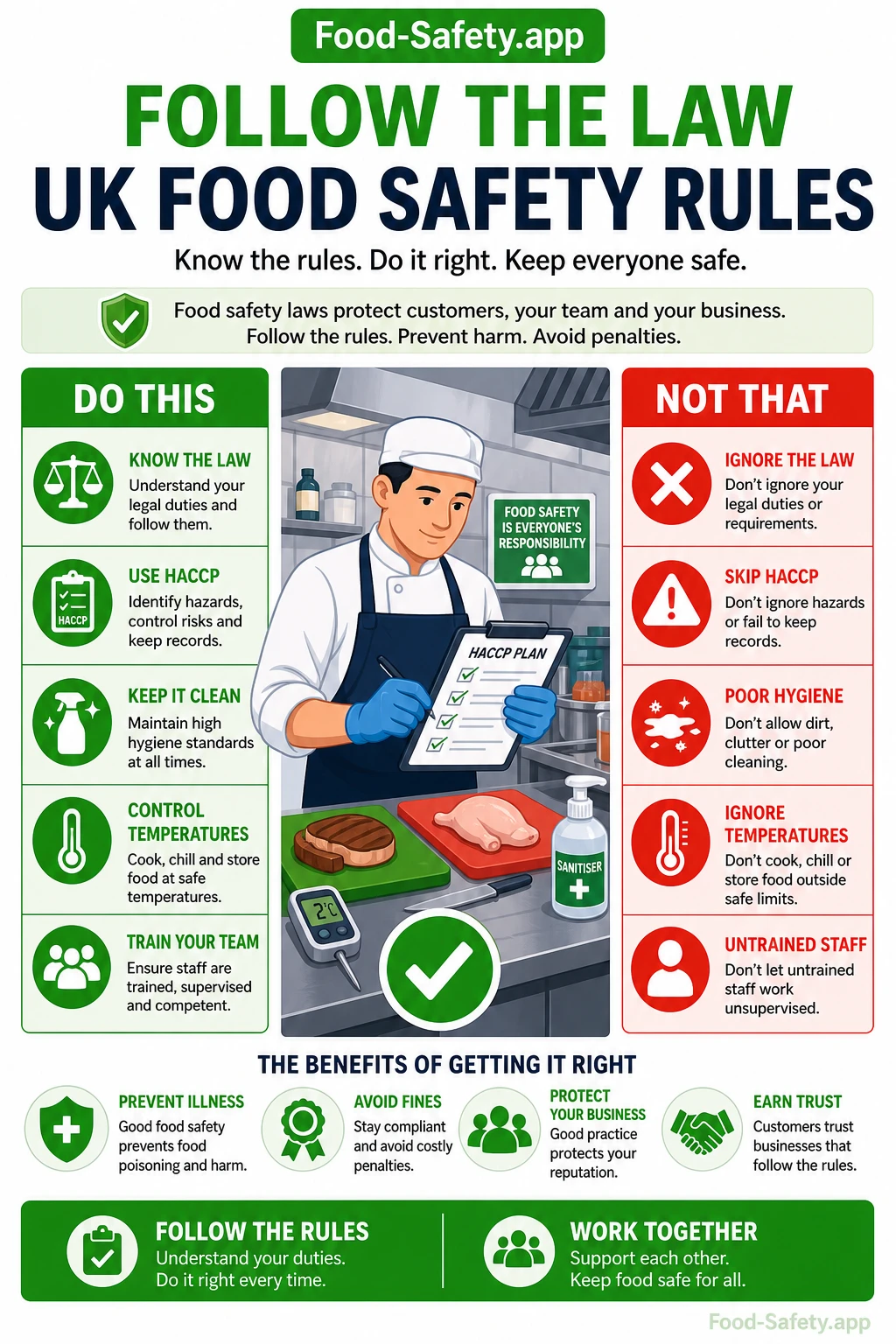
Identify all ingredients that could cause an allergic reaction and ensure the information travels with the dish—from menu card to service counter. Keep allergen information up to date when recipes change, and train staff to answer questions accurately rather than guessing.
Menu labeling and customer communication
Menus should reflect current recipes and allergen content. When changes occur, update printed menus, digital menus, and any display boards promptly. Staff training should confirm key details during order taking and again at service for high-risk dishes.
HACCP and control measures
HACCP-based procedures help kitchens identify hazards, set control measures, and monitor performance. A clear HACCP plan shows inspectors that you understand risks and have effective responses ready when issues arise.
Hazard analysis and control points
List potential hazards at each step—from receiving to hot holding—and define critical controls. Assign responsibility to shifts to ensure redundancy and accountability. HACCP helps structure this approach.
Monitoring and corrective actions
Set simple monitoring routines (for example, daily checks for temperatures, cleaning completion, and equipment function). Define corrective actions for deviations and ensure records show timely resolution and verification.
Record keeping essentials for HACCP
Record keeping should be practical and verifiable. Use dated entries, clear signatures, and straightforward storage of logs for inspections. A consistent approach across shifts builds inspector confidence even in busy periods.
Employer duties and staff training
Employers have a duty to provide safe systems of work, proper supervision, and ongoing staff training. A well-trained team reduces the risk of non-compliance during peak service and supports consistent records.
Training plans and supervision
Establish a core training package covering hygiene, allergen awareness, temperature control, and incident reporting. Schedule regular refreshers and ensure supervision during critical processes, such as opening, closing, and service handovers.
Safe systems of work and maintenance
Document safe systems of work for cleaning, deliveries, and equipment use. Create checklists for opening and closing routines, and implement routine maintenance and calibration schedules for thermometers and probes.
Local authority enforcement
Local authorities conduct inspections to assess compliance and may issue ratings, enforcement notices, or improvement notices if breaches are found. Proactive record-keeping and visible corrective actions help kitchens demonstrate ongoing control.
Inspections, ratings and breaches
Inspections review hygiene, temperature control, allergen information, and HACCP records. Ratings reflect overall compliance and can influence customer trust and supplier relations.
Improvement notices and follow-up
If breaches are identified, an improvement notice may require rapid corrective action. Document the issue, action taken, and verification steps to close the loop with the authority and management teams.
Record keeping and common failures
What to record regularly
- Cleaning schedules and completed checks
- Temperature logs for fridges, freezers, and hot holding
- Delivery checks and supplier confirmations
- Defects, faults, and calibration adjustments
- Staff training dates and competency assessments
Common failures and how to fix them
- Poor fridge logs—introduce digital or simple paper logs with timestamps
- Missed cooling records—establish a clear cooling log tied to service times
- Allergen mix-ups—maintain updated records that match the menu exactly
- Unclean equipment—add quick daily wipe-down checklists and escalation paths
- Unreported faults—empower staff to log faults immediately and trigger maintenance
Consumable routines help teams stay inspection-ready. Build simple opening, cleaning, delivery, and temperature-check routines that are dated, automatic where possible, and easy to locate across shifts. With consistent evidence, you show control rather than relying on paperwork alone.
Food-Safety.app is a food safety management system for catering businesses.
For guidance on recording requirements, see What food safety records a small business should keep.
Practical scenarios and routines
Develop practical routines that cover opening, cleaning, deliveries, and temperature checks across shifts to support consistent compliance.
Enhance your food safety knowledge
Discover practical guidance and tools to keep your kitchen compliant, improve records, and train staff effectively with food safety best practices.