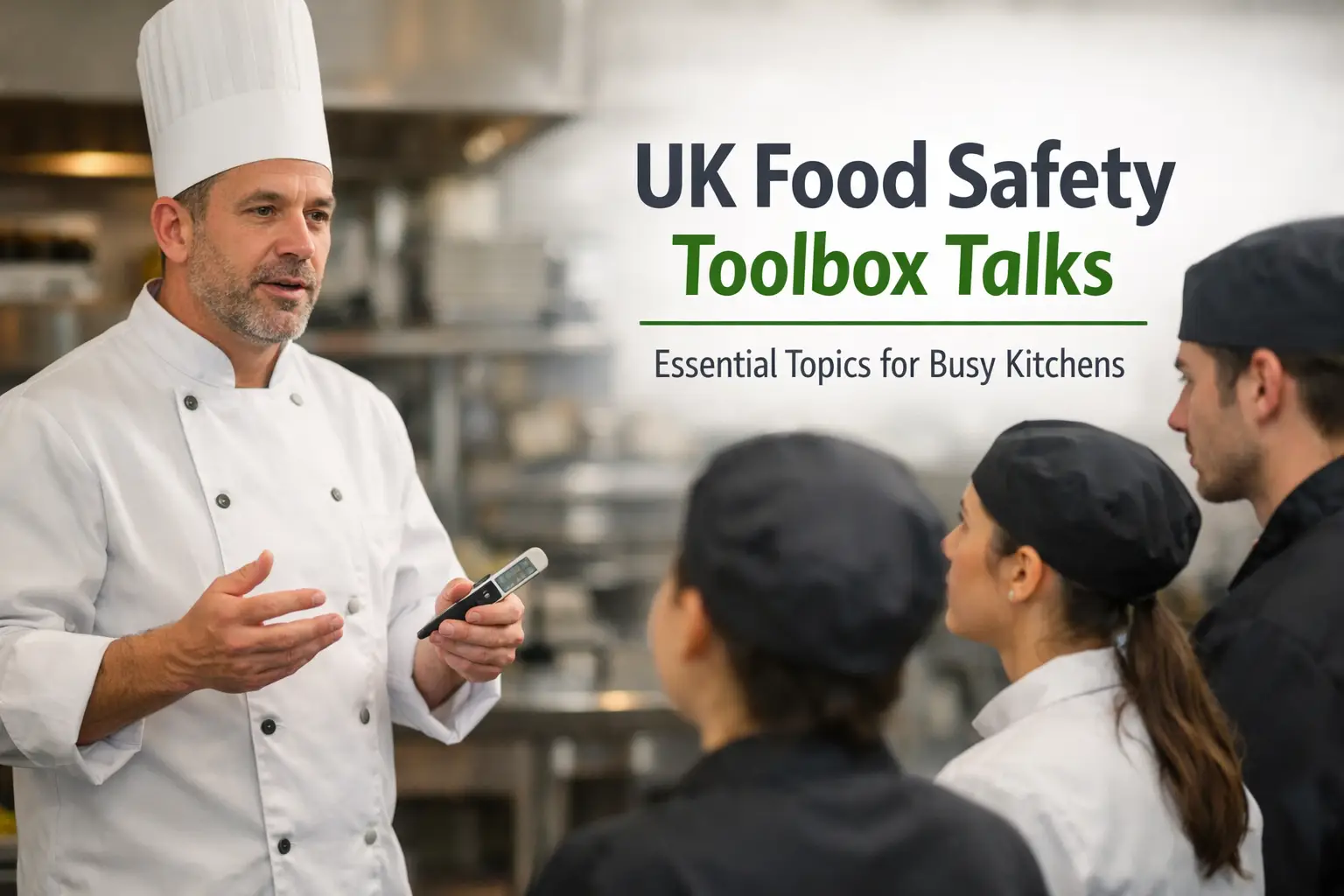
Short food safety toolbox talks can improve habits quickly. Learn which topics work best and how to run them without wasting time.
Table of contents
- Why short training works in a busy kitchen
- Time pressure and attention spans
- Reinforcing daily routines
- Consistency over intensity
- Weekly toolbox talk topics worth covering
- Keeping talks relevant and practical
- Linking talks to current risks, menu changes, and busy periods
- Using mistakes and near misses as lessons without blame
- A constructive, non-blaming approach
- Examples that drive learning
- Getting staff involved in toolbox talks
- Practical engagement strategies
- Recording toolbox talks and creating a training trail
- Practical scenarios and quick templates
- Conclusion and next steps
Why short training works in a busy kitchen
Time pressure and attention spans
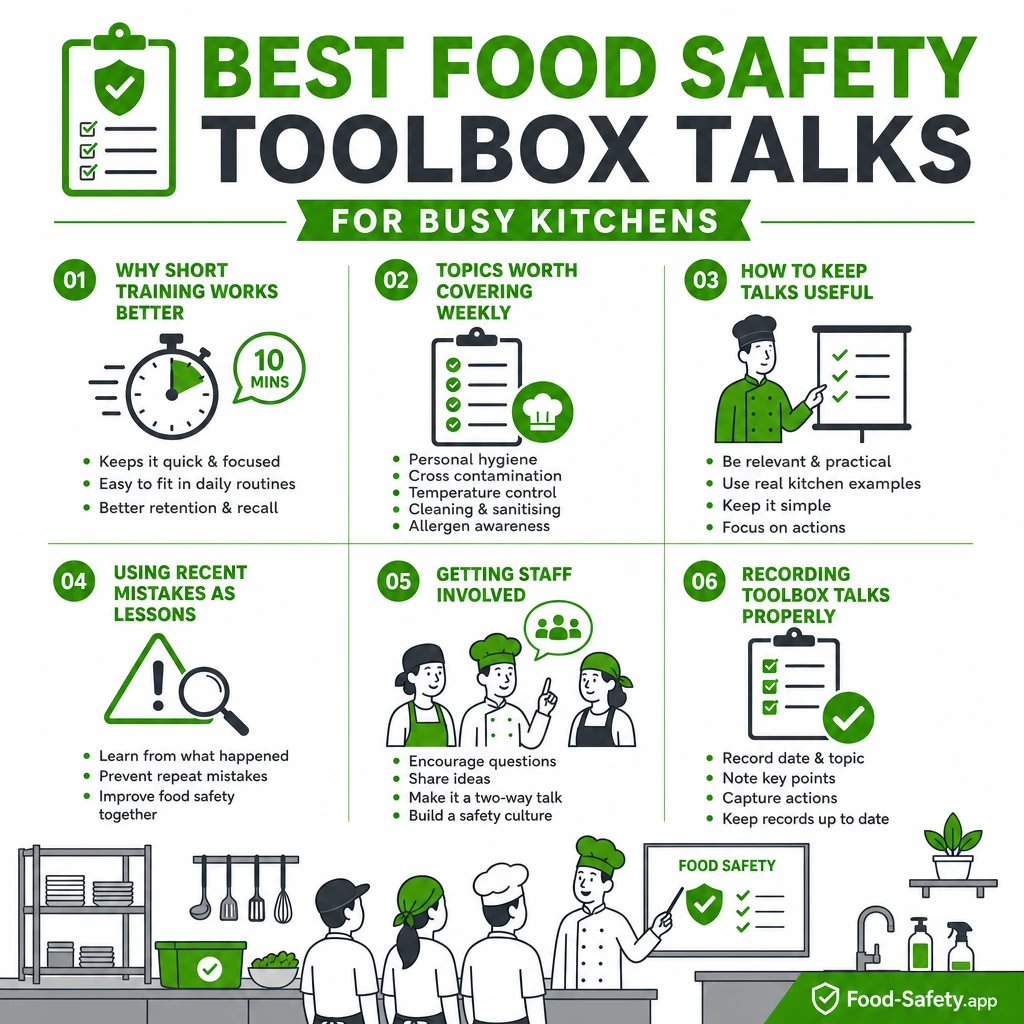
In a busy service, staff have limited time to absorb training. Five-minute toolbox talks keep information actionable and memorable. Focusing on one practical point per session makes recall easier and reduces cognitive load during service. Short talks also fit naturally into shift handovers and before peak periods, so risk awareness is built into the daily workflow rather than added on after hours. Toolbox talks that actually help staff learn food safety.
Reinforcing daily routines
Regular, short conversations reinforce standard operating procedures. When temperature checks, cleaning steps, or allergen handling are referenced weekly, these tasks become routine. The aim is to translate policy into day-to-day habits that survive the pressure of service and the variability of busy periods. For practical guidance on what small food businesses need, see what small food businesses need.
Consistency over intensity
Consistency in messaging matters more than the length of any single session. A predictable rhythm—same time, same duration, same format—helps staff anticipate reviews and prepares supervisors to capture learning. The result: fewer gaps in knowledge and fewer slips during inspections.
Weekly toolbox talk topics worth covering
Use a rotating schedule to cover essential safety areas. The following topics are quick to cover and align with HACCP controls: HACCP controls.
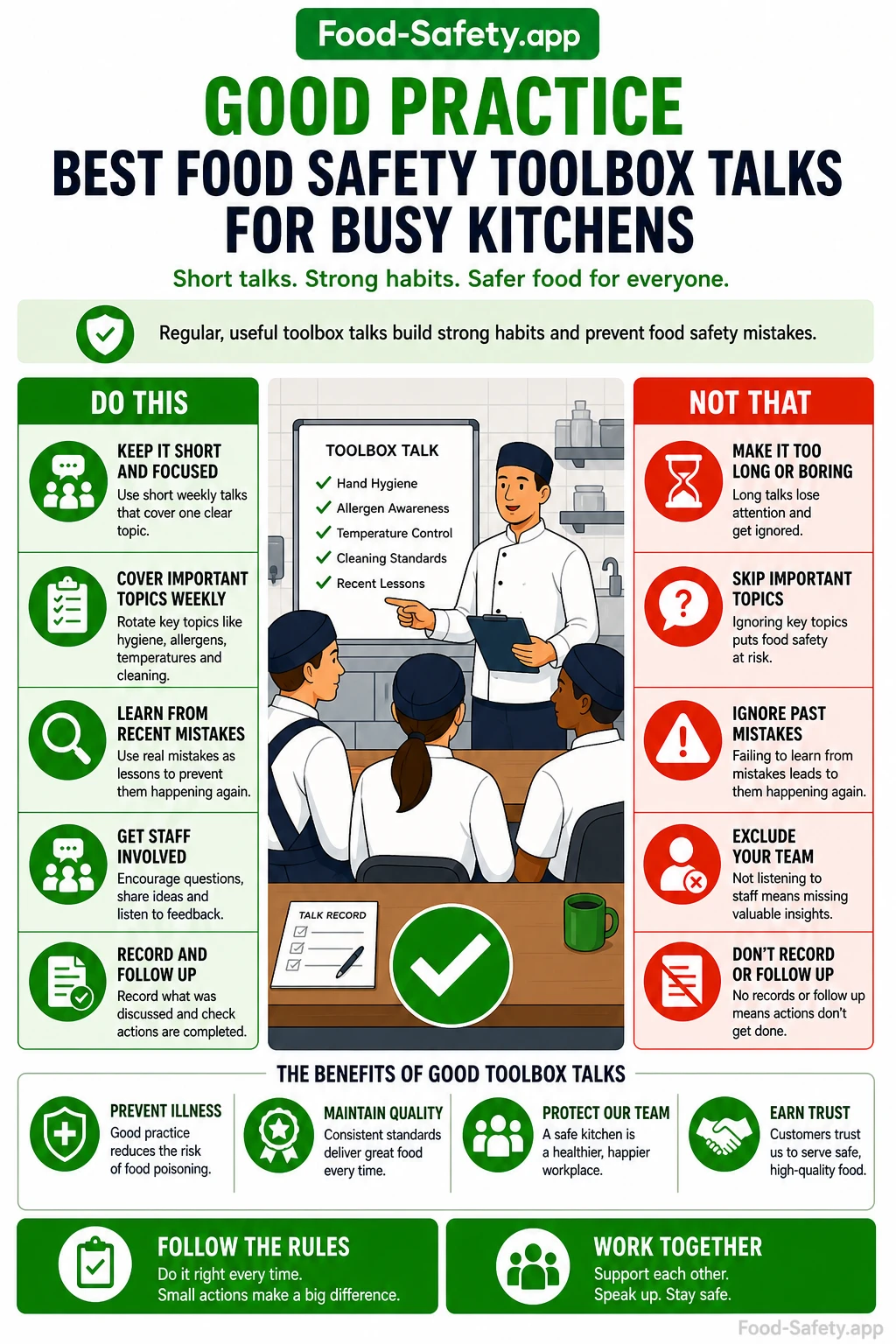
- Temperature control
- Cross-contamination
- Allergen handling
- Cleaning standards
- Delivery checks
- Probe use
- Pest awareness
- Reporting defects
Go beyond the topic title with a 60–90 second practical prompt and a short checklist that staff can tick off during service. For example, with temperature control, remind teams to check fridge temperatures before service and at closing, noting any drift and actions taken. what small food businesses need.
Keeping talks relevant and practical
Linking talks to current risks, menu changes, and busy periods
Make talks contextual by tying them to what is happening in the kitchen: a new menu item, a forecasted weekend rush, or a recent near miss. If a new allergen is added to the menu, schedule a quick refresher on separation and labelling.
For official guidance on temperature control and safe handling, consult the Food Standards Agency:
Using mistakes and near misses as lessons without blame
A constructive, non-blaming approach
Record near misses and mistakes as learning opportunities, not as blame. A simple debrief should identify what happened, why it happened, and what to change in process or training. Emphasise system improvements—adjust procedures, update checklists, and verify through a short follow-up talk. This approach protects morale while driving real risk reduction.
Examples that drive learning
A fridge left warm overnight should trigger a five-minute topic on cold holding and checks. See prepared-fruit recall lessons to illustrate concrete takeaways from real incidents.
Getting staff involved in toolbox talks
Practical engagement strategies
- Ask questions during the talk to gauge understanding
- Rotate who leads the talk to share responsibility
- Use real kitchen examples rather than theory
- Check understanding with a quick recap or a short sign-off
- Link talks to shift handovers for continuity
Recording toolbox talks and creating a training trail
Keep a simple, auditable record of every toolbox talk: date, topic, attendees, and follow-up actions. Tie each talk to your HACCP controls, cleaning schedules, and opening/closing checks. Ensure actions are assigned and reviewed at the next shift meeting. Regularly reviewing the training trail supports traceability and demonstrates active management during inspections. For practical guidance on what small food businesses need, see what small food businesses need.
Practical scenarios and quick templates
Use bite-sized scenarios to prompt quick, practical responses. For each scenario, pose a 60–90 second discussion prompt and a short checklist to close the loop:
- A fridge left too warm overnight: discuss cold holding and checks
- A delivery arrives with damaged packaging: discuss goods in checks and supplier control
- An allergen near-miss on service: discuss separation, labelling, and communication
- A cleaning task missed at close: discuss closing checks and responsibility
Short, regular toolbox talks can transform daily operations by building staff awareness, improving routine reliability, and strengthening inspection readiness. They are easy to implement, quick to maintain, and scalable across venues from cafés to school catering. Start with a small weekly plan, keep a simple record, and iterate based on risk and incident feedback.
For easier management of your toolbox talks and training records, consider Food-Safety.app, a food safety management system for catering businesses.
Next steps for toolbox talks
Implement small weekly toolbox plans, keep basic records, and iterate based on risk and feedback to strengthen staff learning and inspection readiness.