Due diligence in a busy kitchen means verifiable proof, not promises. It rests on dated, clear records of every safety check, temperature control, and corrective action. This article explains how daily documentation shows real control in professional kitchens, helps spot issues early, and keeps you inspection-ready—demonstrating practical steps any small catering operation can implement.
What due diligence means in practice
In practice, due diligence is about showing control rather than merely asserting it. It isn’t a policy file sitting on a shelf; it’s a live trail of activity that answers questions like who completed a task, when it was done, and why the action was taken. A strong routine makes safety visible to the team, the manager, and any inspector who asks for proof.
Records over promises
Promises about food safety are useful, but records demonstrate delivery. A kitchen that records each check with a dated entry shows the system is actively managed, not just talked about. This creates accountability and reduces ambiguity during audits or investigations.
Consistency across shifts
A robust approach requires continuity. If every shift records checks in the same way, managers can spot drift quickly and act before service is affected. A clear handover trail helps staff understand expectations and keeps the safety routine intact during busy periods.
Daily proof not promises
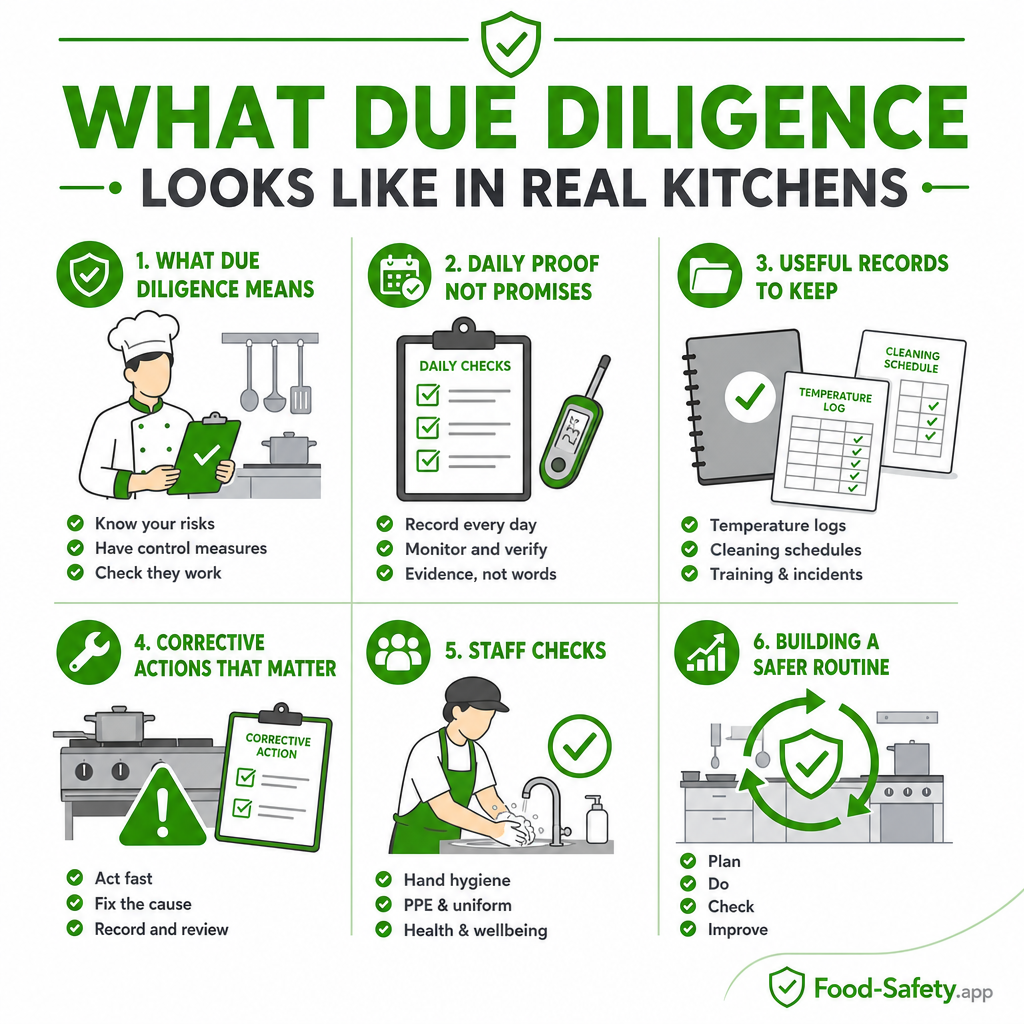
The backbone of due diligence is daily proof: routine checks performed as part of the shift, not as an afterthought. When records exist for every day, gaps become obvious and corrective action follows swiftly.
Why routine records matter
Daily records reduce the chance of miscommunication and missing steps. They enable quick audits, reveal shortfalls early, and provide a reliable history that supports HACCP principles and environmental health requirements.
Useful records to keep
A typical record set in a catering operation includes the following essential items. Keeping clear, time-stamped entries helps prove control and traceability. For digital approaches, see digital food safety records.
- Temperature logs
- Opening and closing checks
- Cleaning tasks
- Delivery checks
- Allergen records
- Calibration
- Pest sightings
- Defects
- Training
- Corrective actions
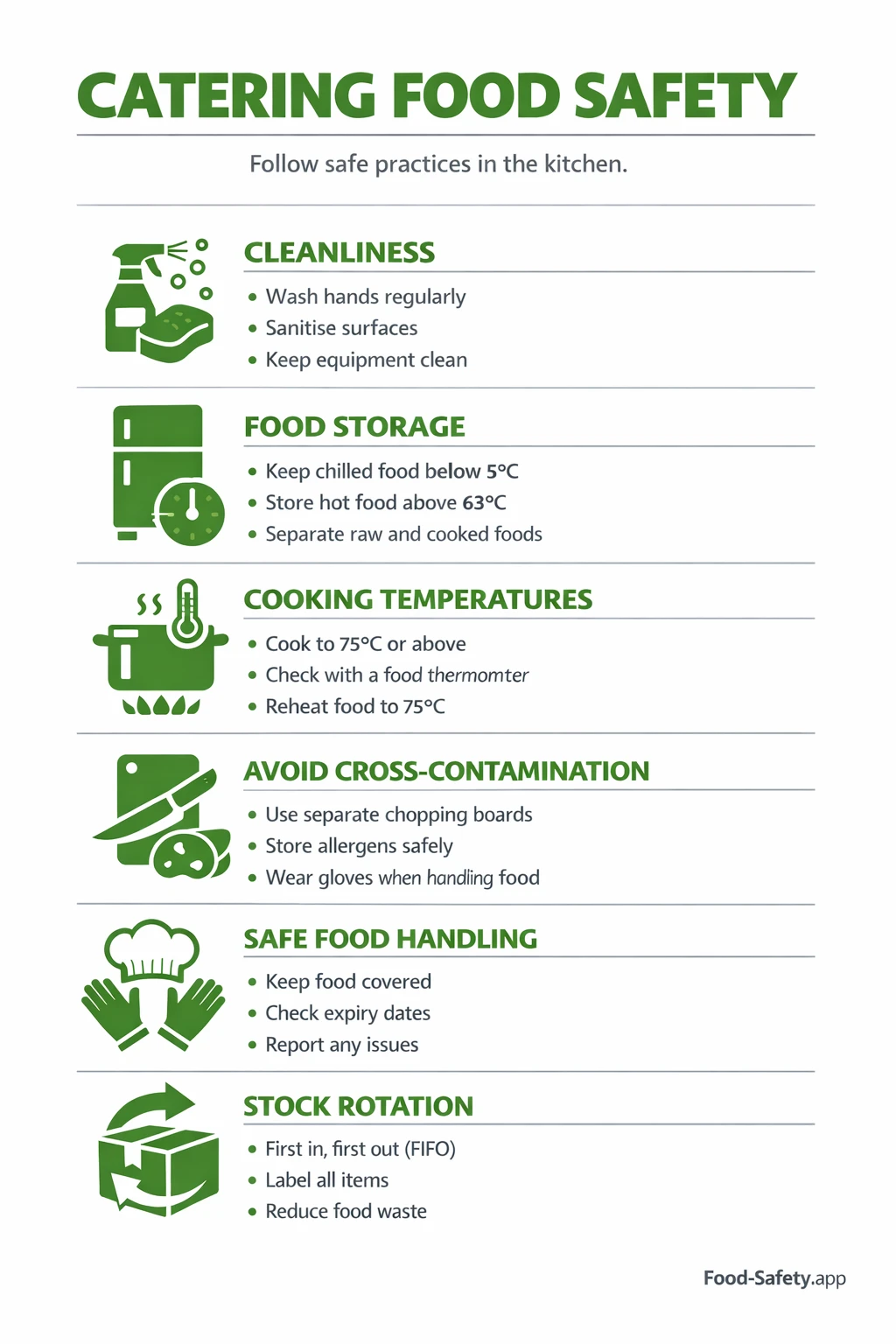
For official guidance on temperatures and hygiene, see the Food Standards Agency.
Corrective actions that matter
When something goes wrong, capture three things clearly: what happened, what was done immediately, and what change is put in place to stop it happening again. The emphasis is on actionable detail rather than vague statements.
- Describe what went wrong and the risk it created
- Record the immediate action taken
- Document the root cause and the preventive action
Staff checks and accountability
Clear accountability strengthens the safety net. Every task should show who completed it, when it was done, and how it was reviewed. This creates a transparent trail that managers can follow and inspectors can understand quickly.
- Task completed by
- Timestamp or shift
- Manager review notes
Building a safer routine
Make checks an integral part of the shift. Build a simple, repeatable routine that fits into service rather than adding end-of-day chores. Over time, staff will complete checks as a natural step in the workflow, which improves consistency and reduces the risk of missed actions. Embed checks into the service rhythm with simple safety tips.
Practical examples or scenarios
- Fridge found running warm during prep: record the reading, move food, call maintenance, and note follow-up action
- Delivery arrives too warm: reject or isolate the goods, log supplier details, and keep a clear record
- Opening checks missed one day: show how the gap was identified and corrected before service
- Cleaning task not completed on time: record the issue and reassign responsibility
- Allergy menu updated after recipe change: link the dish to allergen information and keep the review trail
Compliance and operational focus
- Inspection readiness
- HACCP support
- Traceability
- Evidence for environmental health officers
- Safer staff routines
- Consistent management oversight
Conclusion
Implementing a culture of daily, verifiable checks creates real protection for customers and real confidence for managers. When the kitchen team understands what to record and why it matters, the entire operation runs more smoothly and audits become routine rather than exceptional. Food-Safety.app, a food safety management system for catering businesses. See Natasha’s Law guidance for compliance considerations.
Further food safety guidance
Discover practical tips and tools to strengthen daily checks, keep records, and stay inspection ready across catering operations for small kitchens.