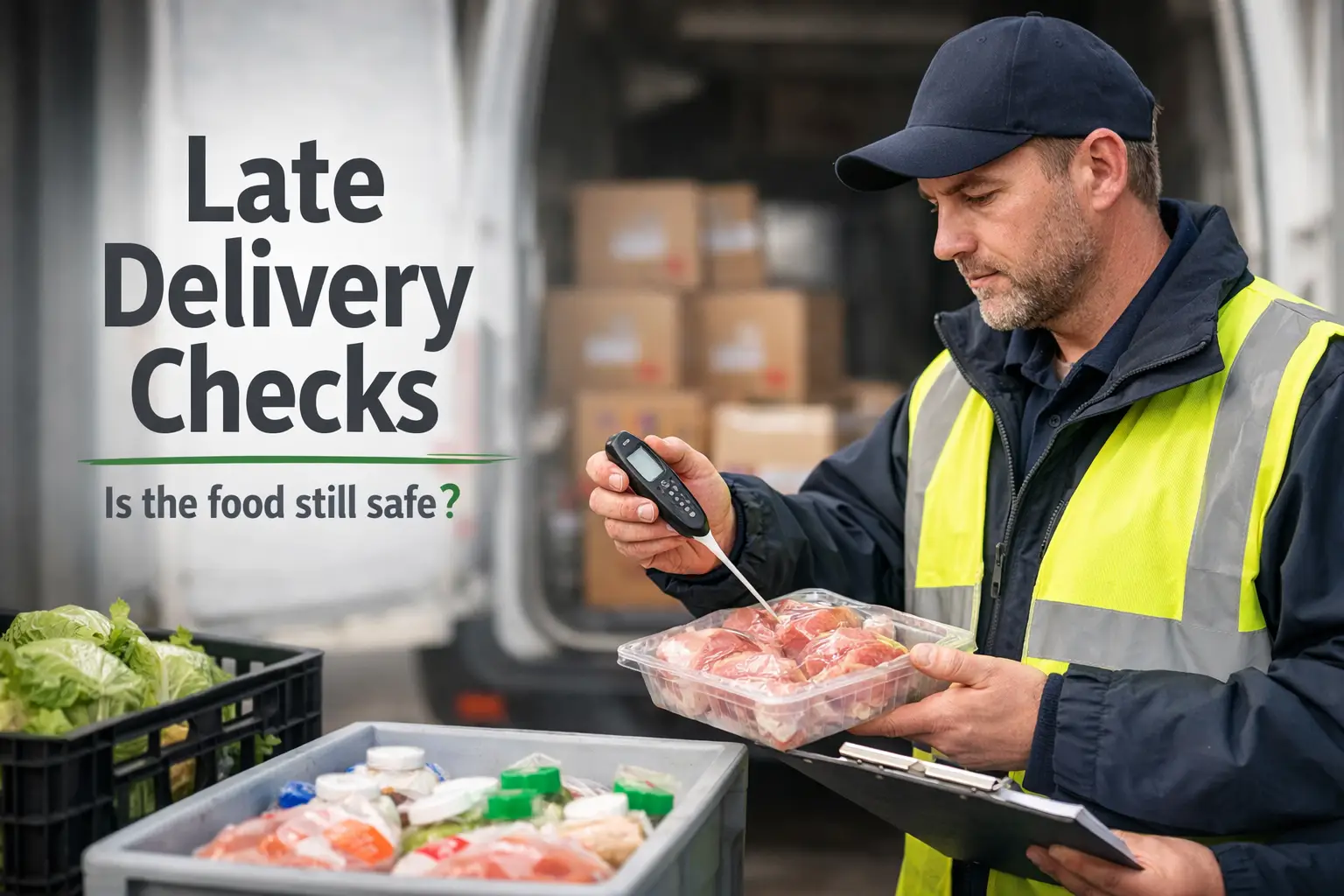
Learn what to inspect when deliveries arrive late so you can protect chilled food standards reject unsafe stock and keep clear proof.
Table of contents
- Why late deliveries matter
- Check the delivery time against orders and paperwork
- Temperature checks: chilled, frozen, and ready-to-eat foods
- Inspect packaging for damage and signs of thawing
- Prioritise high-risk foods and quick decisions
- Record keeping and supplier evidence
- Practical scenarios
- Closing thoughts
Why late deliveries matter
Late deliveries can be more than an inconvenience; they challenge food safety and service quality. When cold items arrive late, there is a risk of temperature abuse; late arrivals can push time-out-of-temperature windows and complicate stock control. For high-risk items, even short delays can compromise safety and lead to waste and compliance issues in a busy commercial kitchen. 4 Cs of food hygiene provide practical guidance.
Impact on temperature control
Out-of-temperature exposure erodes product safety and increases pathogen growth risk. If chilled products stay above 5°C for too long, or frozen goods begin to thaw, you may need to reject or segregate items and act quickly to re-establish safe storage.
Impact on stock and compliance
Delays disrupt stock rotation and traceability. You must be able to show when goods arrived, what temperatures were recorded, and what action was taken. This helps with audits, supplier communications, and any investigation into a near-miss or incident.
Check the delivery time against orders and paperwork
Start with time and paperwork. Compare the actual delivery time with the agreed delivery window and check the supplier packing note against the purchase order. If the delivery is late, note the discrepancy and whether temperature data is available from the driver or supplier. This is the baseline for any decision you make. SFBB diary properly.
What to verify
- Confirm the delivery time against the order confirmation and the supplier paperwork.
- Verify item counts, lot numbers, and expiry dates where available.
- Record any deviations and prepare to communicate with the supplier if needed.
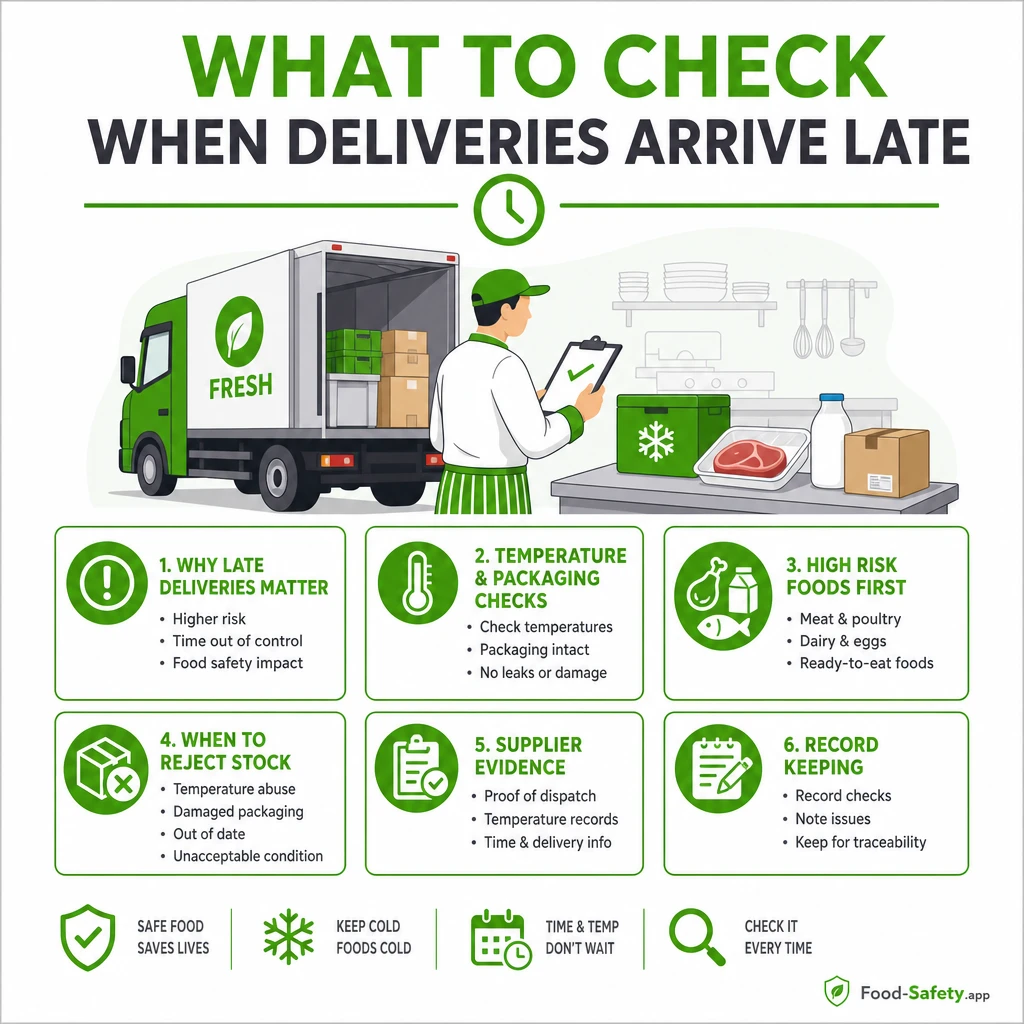
Temperature checks: chilled, frozen, and ready-to-eat foods
Temperature checks should be the first line of assessment after a late delivery. Use calibrated probes and document the reading. If items are outside your policy, isolate them promptly. Check fridge temperatures properly.
Inspect packaging for damage and signs of thawing
Packaging tells a story. Inspect for leaks, swelling, punctures, broken seals, or signs that the product has thawed and refrozen. Damaged packaging can indicate compromised integrity and potential contamination, especially for high-risk foods.
What to look for
- Leaks or damp packaging suggesting leakage during transit
- Swelling, puffed packaging, or bulging seals
- Cracks, tears, or compromised cartons
- Condensation or thaw rings on ready-to-eat items
If packaging is damaged or there are signs of thawing, segregate these items, document, and decide whether they can be used or must be rejected.
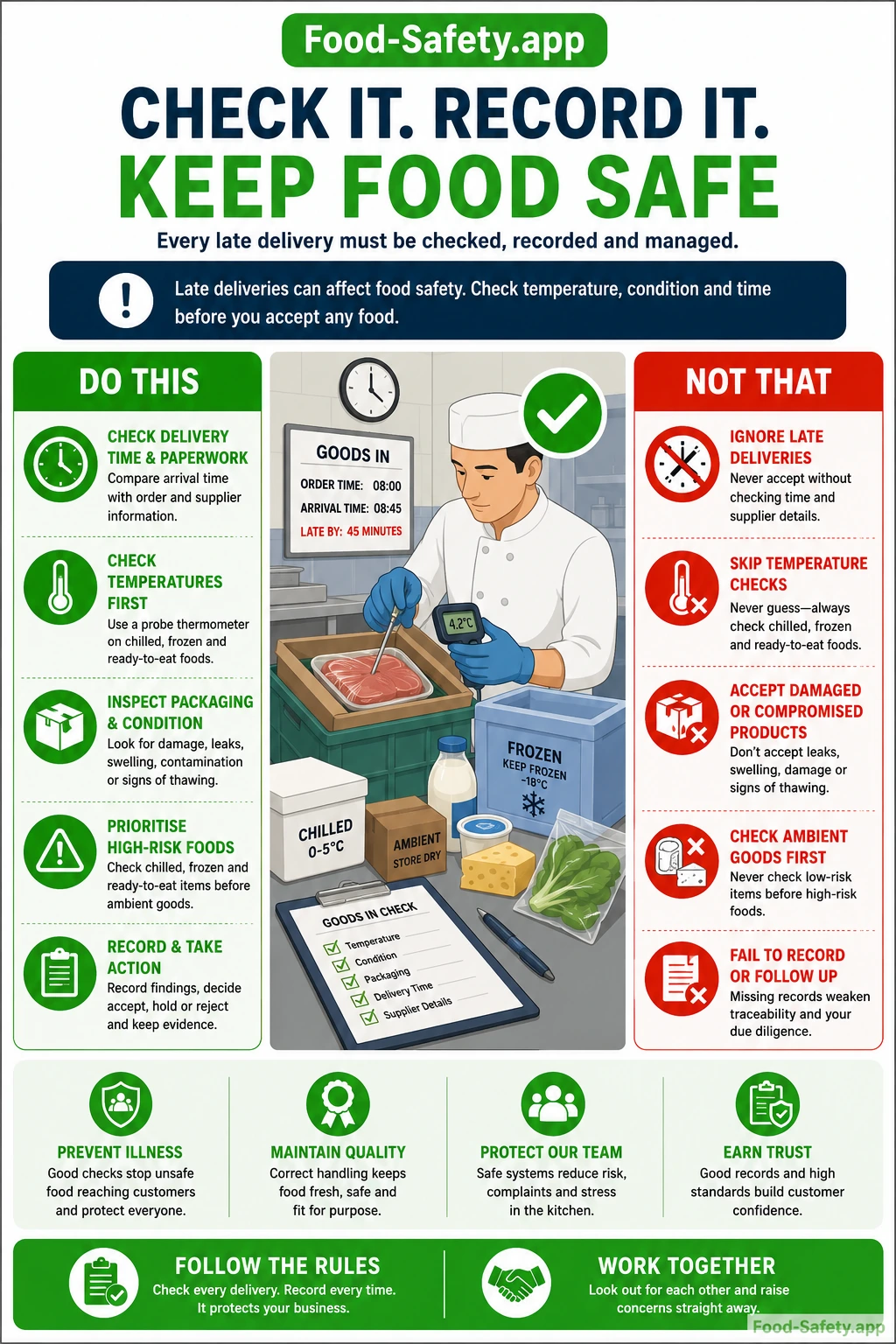
Prioritise high-risk foods and quick decisions
Not all items carry the same risk. Prioritising high-risk foods helps you limit the potential impact of late deliveries and keep service safe. High-risk foods include raw or partially cooked meats, dairy, poultry, fish, and ready-to-eat foods that require strict temperature control.
Decision framework
- Identify items by risk category and time-out situation.
- For high-risk items, apply a stricter standard: accept if the temperature is within policy and packaging is intact; otherwise hold or reject.
- For ambient goods: they can often be accepted if packaging and temps are acceptable, with separate storage for affected items pending checks.
- Record the decision and actions taken, and communicate with the supplier as needed.
Natasha’s Law for Small Food Businesses provides regulatory context for risk-based decisions.
Record keeping and supplier evidence
Documentation is your defence and your learning loop. Keep clear records of supplier details, delivery times, temperatures, condition notes, and the actions taken. These records support audits, correctives, and supplier negotiations.
What to record
- Supplier name and delivery reference
- Actual arrival time and the agreed delivery window
- Temperature readings, testing method, and tester name
- Packaging condition and any anomalies
- Action taken (accept, hold, or reject) and rationale
- Follow-up communications with the supplier
Consider digital records to support audits; see digital food safety records.
Practical scenarios
- A chilled dairy delivery arrives 45 minutes late: check probe temperature, packaging integrity, and whether the stock can go straight into cold storage.
- A frozen delivery has soft edges and wet outer boxes: reject if temperature or condition suggests partial thawing.
- A mixed order arrives late but ambient goods are intact: accept ambient items separately and reject only affected chilled products.
- A sandwich or salad delivery arrives after opening time: check whether the supplier can prove safe transport conditions.
Closing thoughts
Effective late-delivery checks rely on clear routines, rapid decision-making, and good records. Aligning these steps with your food safety plan reduces waste, protects guests, and keeps service on track even under pressure.
Food-Safety.app is a food safety management system for catering businesses.
More on late deliveries
Maintain safety with simple late-delivery checks; ensure temperature control, clear records, and timely supplier communication to protect guests and your service standards.