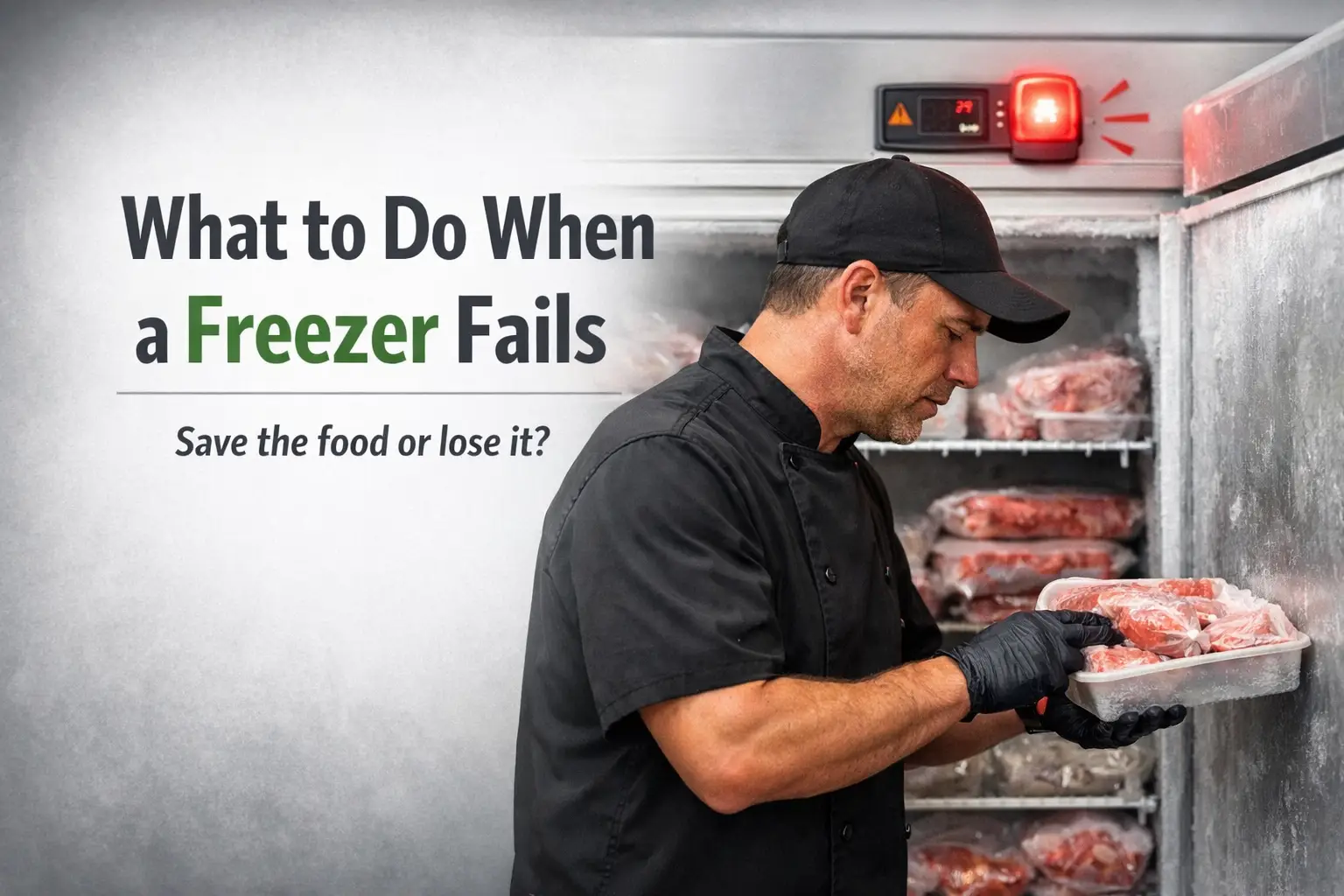
Know what to do when a freezer fails so you can act fast and record the right details. A calm practical plan for small food businesses under pressure.
Understanding the risk when a freezer fails
Why temperature control matters
Good temperature control keeps food out of the hazardous zone and preserves quality. A freezer failure lets food drift toward unsafe temperatures, and busy service can shorten the window for action. Recognising this risk early helps, not only in protecting customers, but also in protecting your reputation and bottom line. Knowing how often to record temperatures helps you act decisively.
Immediate safety risks to staff and food
When a freezer stops cooling, staff may inadvertently handle items that are already thawing or beginning to thaw. Thawed foods exposed to warm service environments can enter the danger zone quickly, increasing the chance of bacterial growth and foodborne illness. Visible thawing, liquid release, and freezer burn are all indicators to reassess what is safe to keep. See cross-contamination explained for causes and prevention.
Regulatory expectations and best practice
Operationally, you should follow your HACCP plan and document any deviations. Best practice includes isolating the unit, recording temperatures and times, and applying consistent criteria to decide what to keep, move, or discard. Well-documented decisions support inspections and internal reviews. For UK legal responsibilities, see the law and your responsibilities.
First steps to contain the incident
Isolate the unit and secure the area
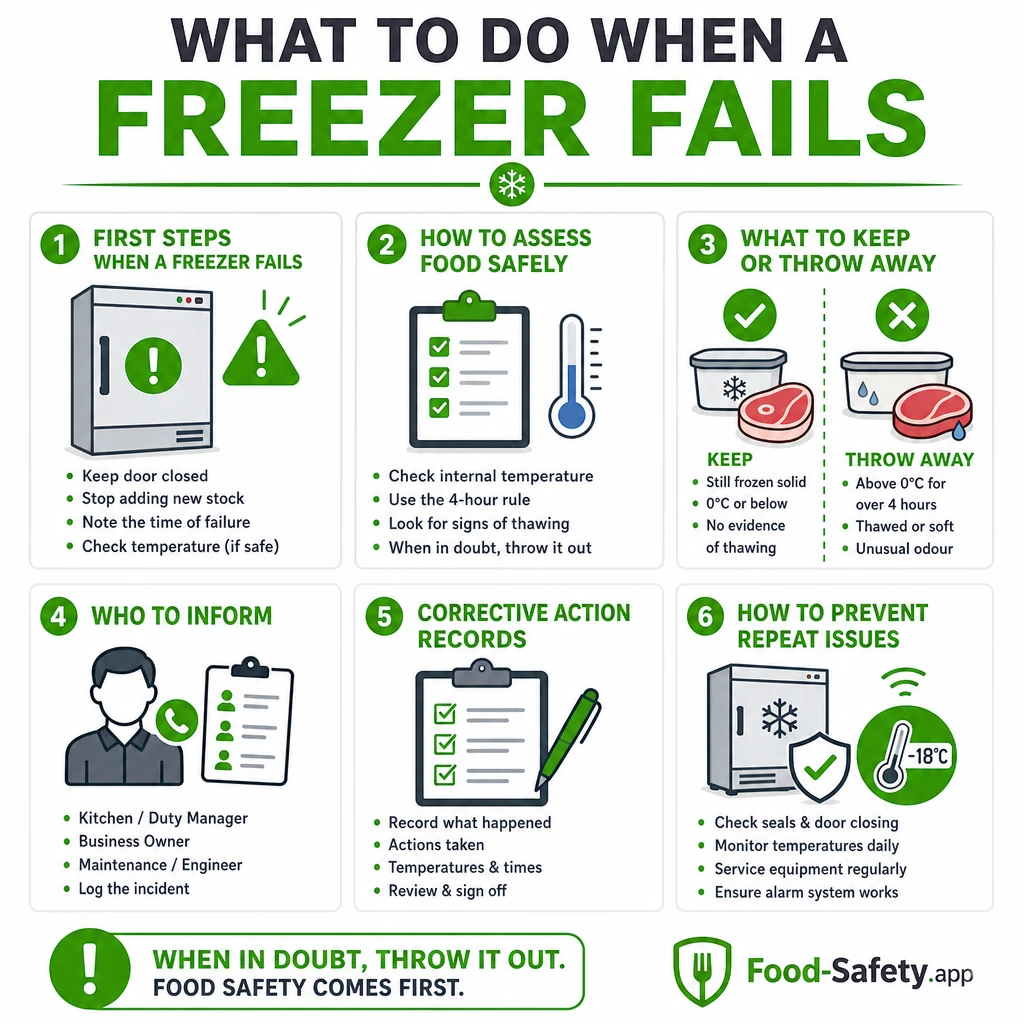
Close the freezer door, label items as out of service if needed, and restrict access to staff. Move items away from the area to a functioning cold hold, if available, using clean containers and protected storage. Reducing traffic around the unit limits repeated openings and temperature fluctuations.
Check the temperature and record the time
Take and record the current temperature reading of the unit, the time you found it, and the observed state of the contents. Note any alarms, error messages, or audible issues from the equipment. This information forms the basis for later decisions and audits.
Minimise door openings and stop staff from opening the freezer
Limit access to the affected area and remind staff to avoid unnecessary openings. Each door opening can raise temperatures and accelerate spoilage risk for vulnerable items. Use a temporary plan to route product handling away from the unit until a resolution is in place.
Assessing the food you have on hand
High‑risk foods and their safety profile
Pay particular attention to raw and ready‑to‑eat items such as raw meat, poultry, seafood, dairy, and prepared salads. If these items have thawed or begun to thaw, they generally require discard unless your HACCP plan explicitly allows safe repositioning with evidence of safe cold storage.
Partially thawed and refrozen items
Partially thawed items may be salvageable in some cases, but refreezing can compromise quality and safety. Use your established decision criteria to determine whether to keep, repackage, or discard such items, and document the rationale clearly.
Packaging condition and signs of spoilage
Inspect each item for damaged seals, unusual odours, colour change, or liquid separation. Packaging integrity is a strong signal of safety risk. Items with signs of spoilage or compromised packaging should be discarded.
Deciding what to keep, move, or discard
Use a clear, repeatable framework to assess each item. Consider the state of the food, whether it remains frozen solid, and the risk associated with thawing. When in doubt, discard to protect consumers and avoid costly recalls.
| Food category | State on assessment | Recommended action |
|---|---|---|
| Ice cream and frozen desserts | Solid or still frozen | Keep and monitor; reseal and label remaining storage time |
| Raw meat and poultry | Partially thawed or thawed | Discard if signs of spoilage or time out of safe storage are suspected |
| Seafood | Partially thawed | Discard if there’s any sign of spoilage or off odour |
| Ready‑to‑eat frozen items | Solid | Keep if packaging intact and no thawing signs |
| Other frozen items | Solid | Keep; monitor and plan for future checks |
Informing the right people and keeping records
Who to notify
- Head chef or senior kitchen manager
- Duty manager or operations lead
- Owner or proprietor
- Maintenance team or contractor
- Suppliers if stock is affected or replacement orders are needed
Record the incident
- What failed and when it was discovered
- Items affected, their state, and evidence of spoilage
- Decisions made (keep, move, discard) and the rationale what food safety records should a small business keep
- Corrective actions taken and any equipment issues identified cross-contamination training that staff remember
- Follow‑up tasks, maintenance actions, and verification steps
For practical planning resources, explore free HACCP plans for your food business.
Preventing recurrence and improving routines
Practical scenarios and lessons
- Overnight freezer breakdown discovered during opening checks
- Delivery stock moved into a working freezer after a unit starts warming up
- Ice cream, raw meat, and ready‑to‑eat items needing different decisions
- Power cut versus equipment fault: how the response may differ
Effective incident logging supports inspections, staff training, and future prevention. Food-Safety.app is a food safety management system for catering businesses.
Enhance your food safety plan
Strengthen your food safety plan with practical tools and templates from Food-Safety.app to help manage incidents, protect customers, and demonstrate due diligence.