Food safety refresher training should not be something you leave until an inspection is looming or somebody has had a near miss with a dodgy salad. In a busy commercial kitchen, food safety refresher training is what keeps good habits sharp, standards consistent, and risk lower when the pressure is on. Staff change, menus change, equipment changes, and even your best team members can get a bit “I’ve always done it this way” if no one checks in. The good news is that refreshers do not need to be a grand event. Done properly, they are short, practical, and very useful.
Table of contents
Why food safety refresher training matters
In catering and hospitality, food safety is not just about passing an inspection. It is about protecting customers, protecting your reputation, and stopping small mistakes turning into expensive ones. The standard of work in a commercial kitchen often depends on habits: handwashing, temperature checks, cleaning routines, allergen controls, date labels, and avoiding cross-contamination. If those habits slip, even for a week, problems can build up fast.
Refresher training helps staff remember the “why” behind the routine. That matters because people are more likely to follow a process when they understand what could go wrong. It also gives managers a chance to correct drift before it becomes normal. A tiny shortcut during prep can quickly become the new house style if nobody spots it. Kitchens are brilliant at creating systems, and equally brilliant at quietly inventing new ones when no one is looking.
In the UK, food businesses are expected to make sure staff are supervised, instructed, and trained appropriately for the work they do. The practical level of training needed depends on the job, the risk, and the person’s experience. Other countries may have different rules, so this guidance is written for UK food businesses. For a structured approach to preventive controls, see HACCP principles explained.
When staff need food safety refresher training
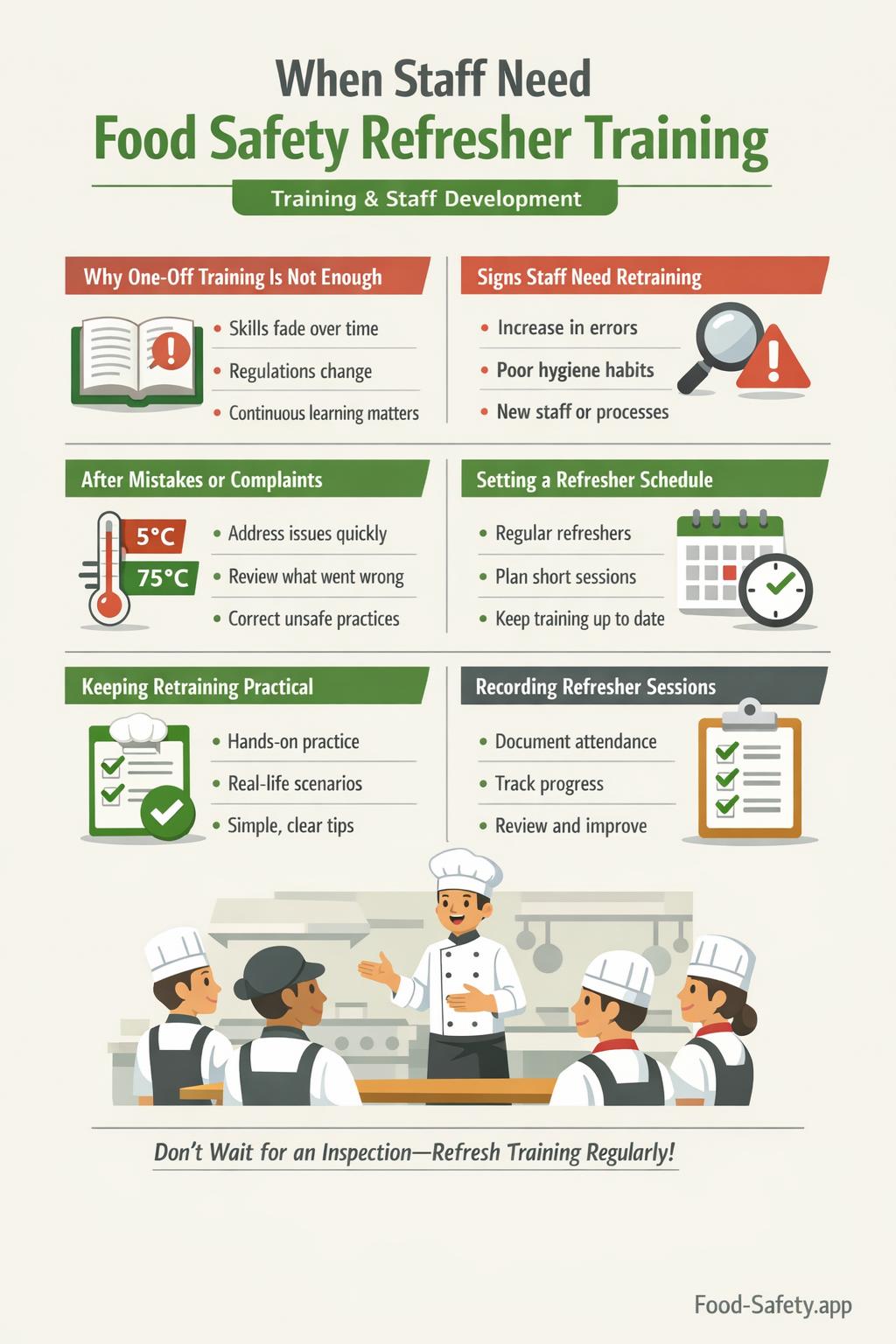
There is no single magic date that suits every business, but there are clear moments when food safety refresher training is especially sensible. Waiting until an annual review can be too slow in a fast-moving kitchen. A better approach is to trigger refreshers when something changes or when standards start to wobble.
1. When new risks or processes are introduced
If you add a new menu item, change suppliers, bring in a new piece of equipment, or introduce a different service style, staff may need a refresher. For example, a new dish with raw and cooked components may need tighter cross-contamination controls. A new blast chiller or vacuum packing process can also bring new steps that staff must understand properly.
2. When staff return after time away
People coming back from long sickness, maternity leave, seasonal breaks, or extended holiday may need a recap. Even experienced staff can lose confidence with allergen procedures or temperature logging if they have been away for a while. A short refresher helps them get back into the rhythm without guesswork.
3. When someone changes role
A front-of-house team member moving into prep, or a commis chef stepping into breakfast service, may suddenly need a different level of food safety knowledge. Different tasks bring different risks. Serving plated desserts is one thing; handling raw chicken at 7am while the toaster is on fire and breakfast orders are piling up is another.
4. After mistakes, near misses, or complaints
If there has been a temperature control failure, an allergen complaint, incorrect date marking, or a contamination scare, do not just fix the issue and move on. Use it as a trigger for refresher training. Keep it constructive, not theatrical. The goal is to improve practice, not frighten people into saying “yes chef” at a volume that can be heard in the car park.
5. When audits or inspections find gaps
If your checks show repeated non-compliance, refresher training should happen quickly. That might include cleaning schedules being signed but not done, fridges running too warm, or staff not following handwashing rules properly. The point is not to blame the team. It is to fix the system and make expectations clearer.
6. When the team changes
High turnover, seasonal recruitment, agency staff, and new starters all create training pressure. Even a strong kitchen can lose consistency when half the team has less than three months’ service. Refreshers keep the whole team aligned so the standards do not depend on one heroic supervisor who knows everything and sleeps badly.
Signs food safety refresher training has gone stale
You do not always need a formal review to spot when training is fading. The clues are usually sitting in plain sight, often next to a half-labelled tub in the chiller.
- Handwashing happens only when reminded.
- Date labels are inconsistent or unreadable.
- Fridge temperatures are checked, but no one reacts to trends.
- Allergen information is passed around verbally instead of being confirmed.
- Cleaning tasks are “done” but not actually completed to standard.
- Staff rely on memory for critical controls rather than written processes.
If you see one of these once, it may be a slip. If you see it repeatedly, training is no longer landing properly. The response should be practical: observe, correct, retrain, then follow up.
What to cover in a food safety refresher training session
A good refresher is short, specific, and relevant to the work people actually do. No one needs a two-hour lecture on bacteria while the lunch rush is waiting and the sauce is breaking. Focus on the highest-risk tasks and the controls staff use every shift.
Core topics worth revisiting
- Hand hygiene and when handwashing is required.
- Cross-contamination prevention, including raw and ready-to-eat food separation.
- Allergen management, allergen communication, and avoiding mix-ups.
- Time and temperature control, including safe cooling, reheating, and chilled storage.
- Cleaning and disinfection routines.
- Date marking and stock rotation.
- Personal hygiene, illness reporting, and excluding when needed.
- Safe use of equipment and thermometers.
Cross-contamination is central to many kitchens; see Cross-contamination and food safety management for practical guidance.
Make it specific to the business
A school canteen will need a different emphasis from a hotel kitchen or takeaway. In a café, the biggest risks may be allergen communication and sandwich prep. In a roast dinner operation, the pressure points might be hot holding, carving, and cooling leftovers safely. In a takeaway, packaging, delivery times, and temperature control during dispatch can become the weak spots.
Allergen management is critical; see Allergen management made practical for UK food businesses.
Use recent examples from the business
Without naming and shaming, talk through real situations the team has seen: a salad garnish left out too long, a pan of soup cooled too slowly, or a commis using the same board for raw chicken and cooked vegetables. Concrete examples help staff see how good practice prevents problems.
For more on allergen labeling in practice, see Clear allergen labelling on packaged food.
For more general guidance on food hygiene basics, the Food Standards Agency is a helpful place to check current UK advice.
How to make food safety refresher training stick on a busy shift
The best refreshers are not classroom-heavy. They are short, practical, and repeated where the work happens. In a busy service, attention is scarce. That is normal. So make the training fit the environment instead of pretending the kitchen has paused for a lovely little seminar.
Use toolbox talks
A five- to ten-minute toolbox talk before service can be more effective than a long session once a month. Pick one topic, one example, and one action. For example: “Today we are focusing on allergen checks for desserts. Here is the current process, here is where mistakes happen, and here is what to do if the label does not match the recipe.”
Demonstrate, don’t just tell
Show the correct handwashing technique, the correct thermometer use, or the right way to separate raw and ready-to-eat foods in the fridge. People remember what they can see. They remember even more if they are asked to do it themselves while someone checks and corrects them.
Keep it role-specific
FOH staff do not need the same detail as a prep chef, but they do need to know enough to give accurate allergen information and escalate concerns. KP staff need cleaning standards and chemical safety. Chefs need temperature control, contamination prevention, and workflow discipline. One size fits nobody for long.
Include corrective actions
Every refresher should end with a clear “what good looks like” and what happens if standards slip again. That might mean rechecking temperatures every hour, relabelling stock immediately, or repeating the task under supervision. The aim is to turn knowledge into consistent behaviour.
Recording food safety refresher training and following up
Training only counts if you can show what was covered and whether it worked. Records do not need to be fancy, but they should be clear. Note the date, topic, who attended, who delivered it, and any actions agreed. If somebody needs a one-to-one follow-up, write that down too.
Good follow-up matters because training is not a one-and-done event. Watch the next few shifts. Check whether the issue improved. If not, revisit the process rather than blaming the person straight away. Often the problem is unclear signage, poor layout, rushed rotas, or equipment that makes the “right” method awkward.
It also helps to build refresher training into regular management routines: weekly checks, shift handovers, cleaning audits, allergen reviews, and pre-service briefings. That way, training becomes part of running the business rather than a panic response when someone from environmental health is due to appear.
For how to document training, see Training records.
Common mistakes to avoid
- Only retraining after something goes wrong.
- Using the same generic refresher for every role.
- Making sessions too long and too infrequent.
- Skipping practical demonstrations.
- Failing to follow up on repeated errors.
- Assuming experienced staff no longer need reminders.
Experience is valuable, but it can also create overconfidence. The most seasoned chef in the building can still make a mistake if the line is hectic, the kit is awkward, or the label printer has decided to stage a protest.
Final thoughts on when staff need food safety refresher training
The best time for food safety refresher training is before poor habits become normal. Use changes in menu, staff, equipment, incidents, or standards as your cue. Keep refreshers short, practical, and tied to the work people actually do. Focus on the controls that matter most in a commercial kitchen, then check whether the behaviour changes on the next shift, not just in the meeting room.
If you build refreshers into everyday management, you will get better consistency, fewer avoidable mistakes, and a team that knows what good looks like even when service is flying. For businesses that want to keep training records and actions tidy in one place, Food-Safety.app is a food safety management system for catering businesses. The main thing, though, is simple: do not wait for an inspection to remind you to refresh the basics.
For guidance on creating a strong safety culture in your kitchen, see Build a strong food safety culture that works.
Strengthen your kitchen safety culture
Regular, practical refreshers reinforce good habits and reduce risk across busy shifts. Use real incidents, concise toolbox talks, and role-specific guidance to keep standards top of mind. Track progress, close gaps quickly, and build a culture where every team member knows what good looks like.