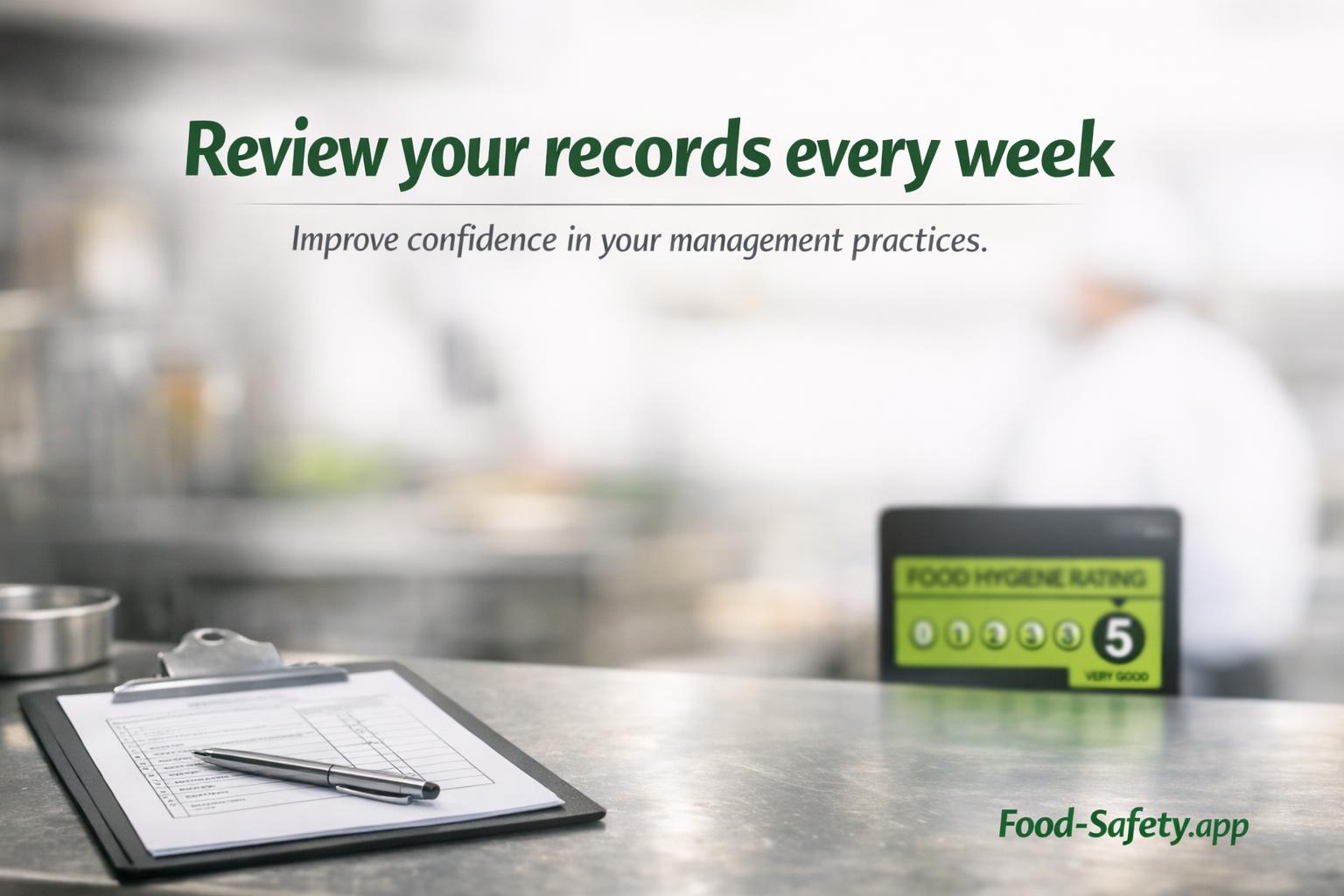
When confidence in management slips, food safety scores often fall with it. The confidence in management area is not just about being tidy in the office or having a polite manager on shift; it is about whether the business can show that food safety is controlled day to day, records are kept properly, staff are supervised, and problems are dealt with before they become repeat issues. In a busy professional kitchen, weak systems quickly show up in poor evidence, inconsistent checks and staff who are left guessing. A HACCP-based approach underpins many of these controls.

This matters across restaurants, cafés, hotels, school canteens, takeaways and caterers. Even if cleaning standards look good, poor control of paperwork, training, monitoring and corrective action can still pull a business down. The good news is that confidence in management is usually fixable with clearer routines, better oversight and simpler records that actually get used on shift.
The exact rules and scoring approach can vary between the UK nations and may differ in other countries, but the underlying expectations are similar: managers must be able to prove that food safety is being managed, not assumed. For general UK guidance, the Food Standards Agency is a useful place to check current advice.
What confidence in management means in practice
Confidence in management is really about control. Can you show that food safety is being managed consistently, even when it is a lunch rush, a wedding function or a short-staffed school service? Can a supervisor explain what happened when a fridge temperature was off, a delivery arrived warm, or a label was missing? Can the team show that someone checked, acted and recorded the result?
In a professional kitchen, good management confidence usually shows up in simple ways:
- Daily checks are completed on time and signed off properly.
- Staff know who is responsible for what on each shift.
- Training is up to date and covers the actual menu and service style.
- Problems are fixed quickly and the fix is recorded.
- The paperwork matches what is happening on the pass, in the prep area and in storage.
Inspectors are not looking for perfection. They are looking for evidence that management understands the risks and controls them in a sensible, consistent way.
Why businesses lose marks on confidence in management
Many businesses assume they will lose marks because of cleaning issues, but confidence in management often drops because the control system looks weak. That can happen even when the kitchen appears clean and busy staff are trying hard.
Records are incomplete or too generic
A signed sheet that says “all ok” every day does not show control. If a fridge was running warm, if a delivery needed checking, or if a cook-cool-reheat process was used, the record should show what was found, what was done and who did it. Generic tick-box sheets make it hard to prove management is watching the detail.
Managers know the procedure, but the team does not
If only the head chef or operations manager understands the process, control depends on one person being present. In a busy service, that is risky. If the duty manager is off-site, or the chef is on prep and cannot leave the pass, basic decisions still need to be made correctly by trained team members.
Checks are done, but nobody reviews them
A temperature sheet is only useful if someone notices trends. Repeated fridge issues, recurring cleaning gaps or the same shift missing sign-offs suggest weak management review. Businesses often lose confidence marks because records exist, but there is no evidence of follow-up.
Corrective action is not clear
When something goes wrong, the team may fix it informally but not record it. That leaves a gap. If a delivery is rejected, an item is relabelled, or food is moved to another fridge, the reason and action should be clear enough for someone else to understand later.
Policies do not match the operation
A written system that looks fine on paper can still fail in practice. A hotel breakfast kitchen, a school canteen and a late-night takeaway all face different pressures. If the policy does not reflect the actual menu, staffing and equipment, managers may be judged as not fully in control.
Records that prove control
Strong confidence in management depends on records that are simple enough to use in a rush and detailed enough to show real control. The best records in a professional kitchen are usually short, clear and checked every day.
For allergen controls in records, see Allergen management.
Daily records that matter
- Fridge and freezer checks.
- Cooking, cooling and reheating checks where used.
- Cleaning schedules for high-risk areas and equipment.
- Delivery checks, especially for chilled and frozen food.
- Opening and closing checks.
- Allergen controls, such as label checks and separate storage where needed.
What a good record shows
- The task was done at the right time.
- The result was checked, not guessed.
- The person who completed it is named or initials are clear.
- Any issue has a follow-up action.
- A manager reviewed the record where necessary.
Keep records where the team actually works. If a sheet lives in an office drawer, it will not help during service. Many operators now use digital records, but paper is fine if it is completed properly and reviewed. What matters is not the format, but whether the system works in a real shift.
Supervision and training on busy shifts
One of the fastest ways to weaken management confidence is to assume training happened once and that is enough. In a commercial kitchen, staff turnover, new menus, temporary staff and peak trading all create gaps. Good supervision closes those gaps.
Train for the job people actually do
Dishwashers, porters, prep chefs, front-of-house teams and supervisors all need different levels of food safety knowledge. A bakery café, a pub kitchen and a care home kitchen will not need identical training, even if some topics overlap. Focus on the tasks people really carry out, such as cooling, cross-contamination control, allergen handling and safe storage.
Use short refreshers before service
Quick reminders at the start of a shift can make a big difference. For example:
- Which fridge is full and which one is reserved for ready-to-eat foods.
- Which ingredients contain allergens and where they are stored.
- What to do if a probe, label printer or fridge fails.
- Who signs off the end-of-shift checks.
Supervision should be visible
Management confidence improves when supervisors walk the kitchen, check the work, and correct issues before service slips. That might mean checking labels during prep, watching a cooling process, or making sure a delivery is received correctly. Quiet oversight is not enough if it is never recorded or followed through.
Corrective actions that inspectors expect to see
When something goes wrong, the strongest businesses do not just fix the immediate problem. They also show what they changed so it is less likely to happen again. This is a major part of confidence in management.
Examples of practical corrective action
- A fridge was not holding temperature, so food was moved, checked and the unit was repaired or replaced.
- A label was missing on ready-to-eat food, so the item was discarded or relabelled according to your procedure, and the team was reminded of the rule.
- A cleaning task was missed, so it was completed immediately and added to the handover notes.
- A member of staff did not know the allergen process, so they received targeted retraining before working the station again.
The key point is that the action should be proportionate, prompt and recorded. A business looks much stronger when it can show a pattern of problem-solving rather than repeated excuses.
Handover and shift control
Many problems start at handover. In a busy kitchen, one team finishes a prep rush while another starts service, and important details get lost. That is why shift control is a major part of management confidence.
Use a clear handover routine
- What is in each fridge and when it was prepared.
- What stock needs using first.
- Any equipment issues.
- Any cleaning still to be finished.
- Any allergen concerns or customer requests that must be passed on.
For school canteens and hotel kitchens, handover matters even more when there are split shifts, multiple prep areas or different teams on different parts of the operation. The manager should be able to see what was handed over, what was checked and what was resolved.
Simple checklist for stronger management confidence
If you want to tighten this area quickly, start with the basics below.
- Review all daily records at the end of each shift, not just when there is a problem.
- Make sure every record has a clear action section for issues found.
- Assign one person each shift to check that essential records are complete.
- Keep training focused on the actual menu, equipment and service style.
- Use handover notes for anything that carries into the next shift.
- Check patterns weekly, such as repeated fridge faults or missed cleaning tasks.
- Update procedures when the operation changes, not months later.
- Keep records easy to read, easy to find and easy to review.
These steps do not need to be expensive or complicated. Most businesses improve fastest when they reduce paperwork clutter, assign clear responsibility and make sure the records match the way the kitchen really runs.
Temperature control
Also consider temperature control practices: Temperature control.
Conclusion
Businesses lose marks on confidence in management when they cannot show clear control, not just when cleaning is poor. In practical terms, that means weak records, patchy supervision, missing follow-up and handovers that leave staff uncertain. The fix is usually straightforward: tighten your daily checks, make records specific, review them properly, and make sure corrective actions are visible and followed through.
For example, understanding Food hygiene ratings and inspections can help contextualise how these practices influence external assessments.
For catering and hospitality businesses, the strongest position is a system that works during busy service, not just on a quiet afternoon. If your team can show what happened, what was done and who checked it, management confidence becomes much easier to demonstrate and much less likely to let the business down.
Improve your food safety and management confidence: