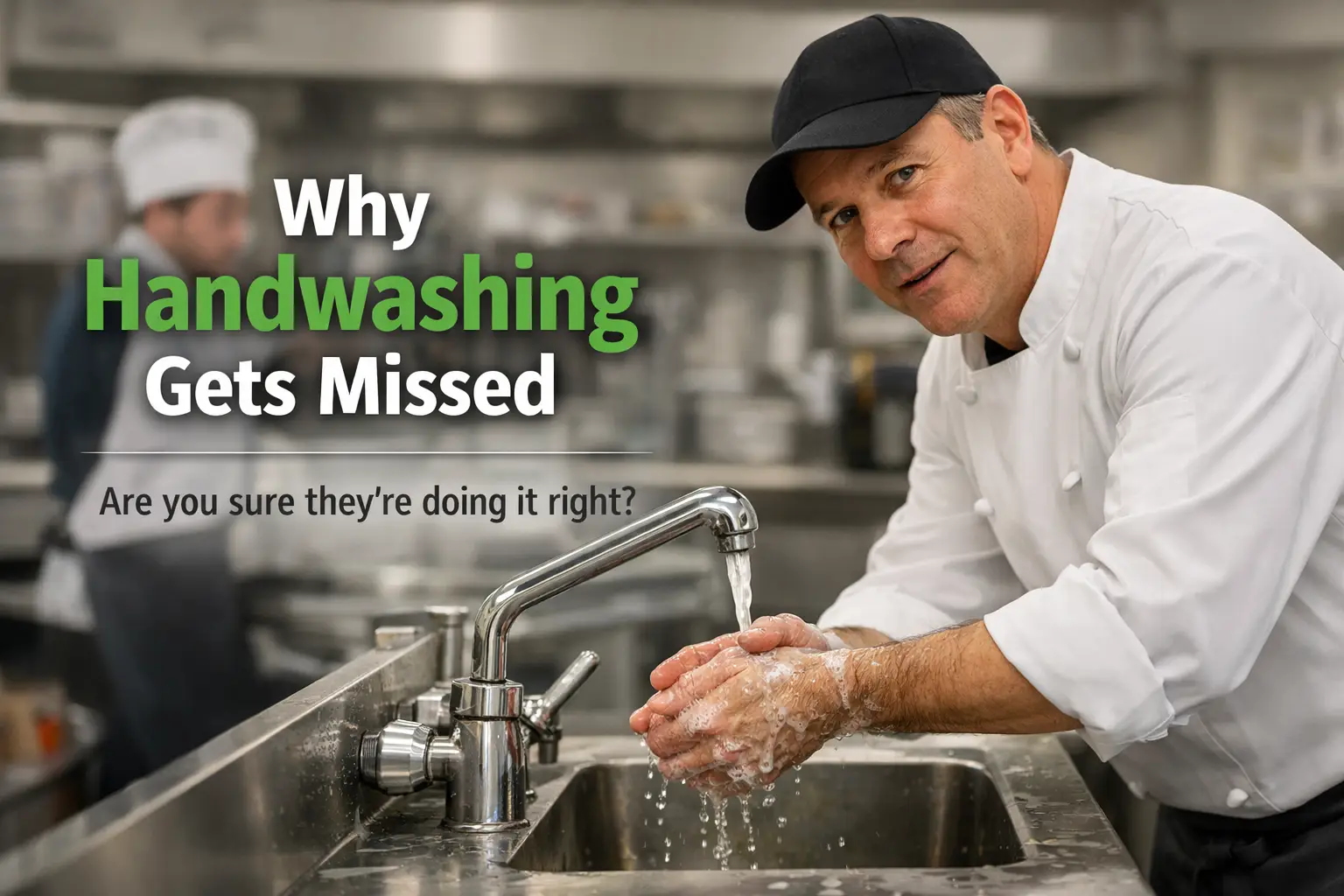
Handwashing training often gets ignored until standards slip. This guide shows how to teach it clearly and keep it happening under pressure.
Understanding why handwashing gets missed in busy catering settings
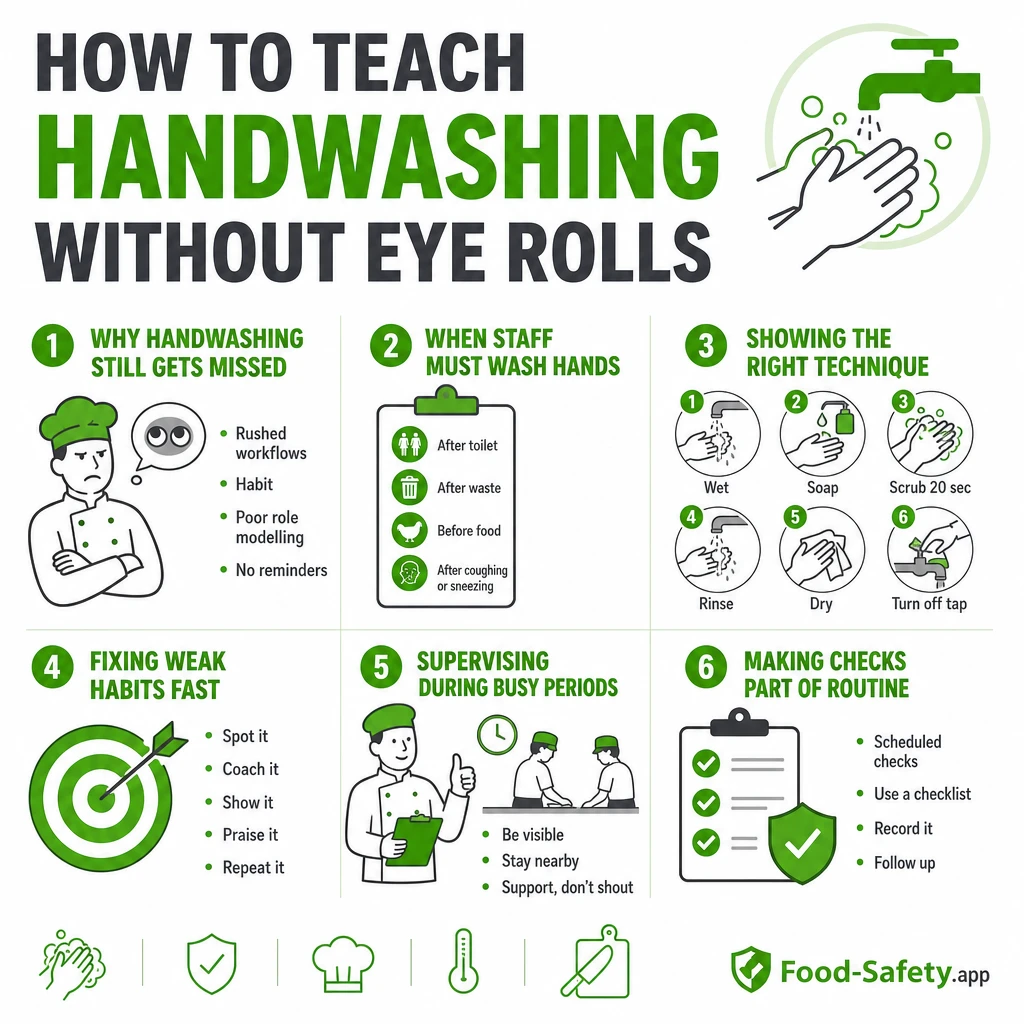
In a professional kitchen, competing demands collide: prep speed, service tempo, and the pressure to complete orders. That mix can push hand hygiene down the line unless habits are embedded into routine. Recognising the common triggers helps you design practical fixes that fit real shifts rather than idealised drills. 4 Cs of food hygiene provide practical grounding.
Rushing during prep
During peak prep, staff prioritise getting salads, garnishes or sauces ready. Hands may be moving quickly between tasks, and a moment of silence is more valuable than a wash break. Making handwashing a visible, non-optional step at key moments reduces this risk.
Staff assuming gloves replace handwashing
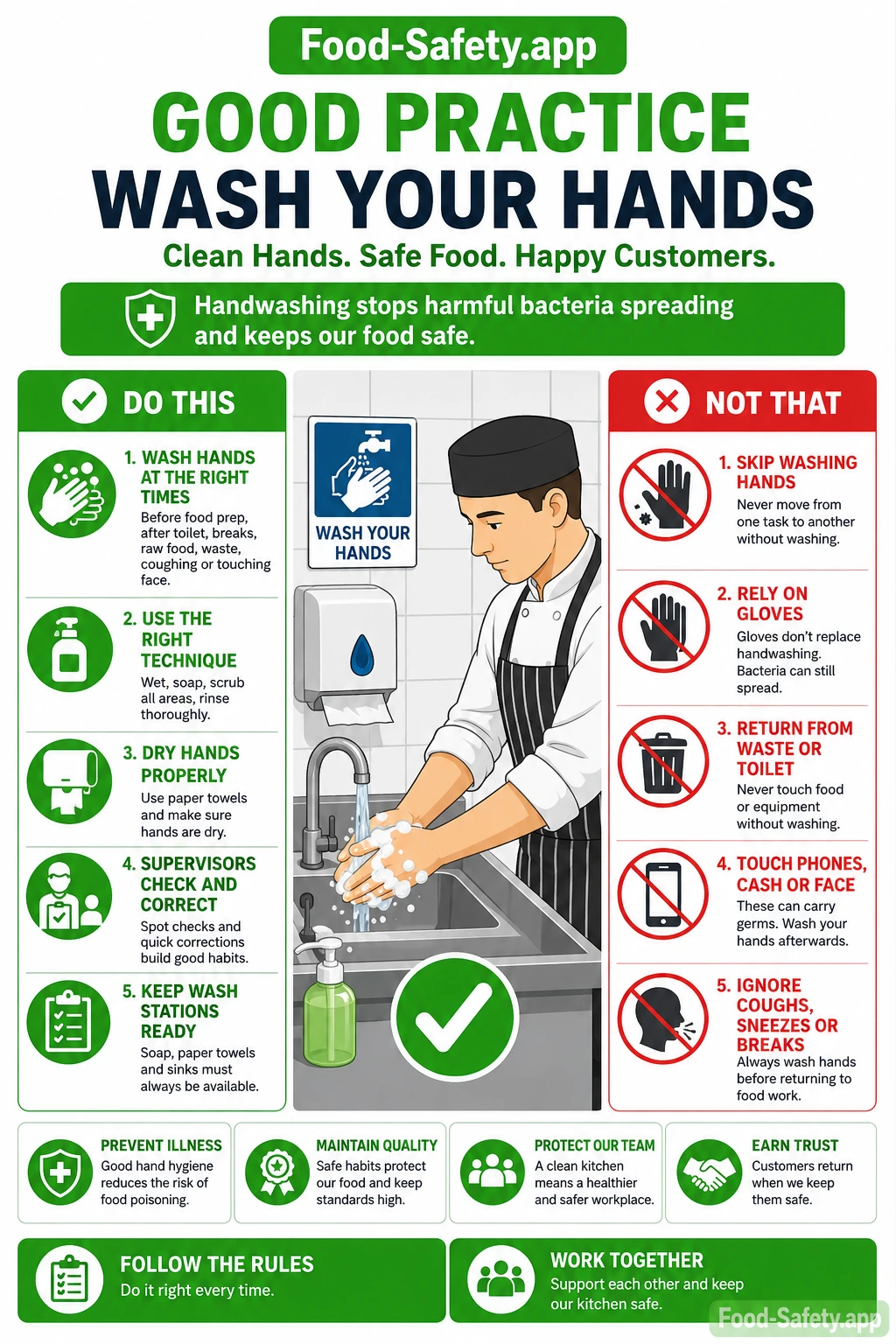
Gloves are a barrier, not a replacement for hand hygiene. It’s essential to wash hands before donning gloves and after removing them. This helps prevent cross-contamination from changes in task or material contact.
Poor supervision at peak times
Supervision often loosens when service is at full tilt. Quick prompts from line leaders and clear expectations help keep handwashing on track during the busiest moments.
When staff must wash hands
Handwashing moments are not optional; they are micro-checkpoints in service routines. Clear rules help teams act consistently, even under pressure.
Before food prep
Wash hands before starting any food handling, especially when switching between raw and ready-to-eat items. This prevents cross-contamination at the source and supports training records that stand up.
After toilet use
Always wash hands immediately after using the toilet, before returning to work, and before resuming any food handling.
After handling raw food, waste, cash, phones, cleaning chemicals, allergens, or touching face/hair
Multiple touch points require handwashing. Establish a habit to wash after handling raw meat or seafood, after bin duty, after handling money or phones, after contact with cleaners, after allergen exposure, and after touching the face or hair.
After breaks, smoking, coughing or sneezing
Cold and flu season or busy shifts increase the need for fresh hand hygiene. Wash hands after breaks, smoking, coughing or sneezing to protect customers and colleagues.
Showing the right technique
Technique matters as much as timing. The standard sequence is wet, soap, scrub, rinse, dry, with attention to nails, jewellery, and proper drying.
Wet, soap, scrub, rinse, dry
Apply clean running water, lather with soap, scrub all surfaces of the hands (including between fingers and under nails) for at least 20 seconds, rinse thoroughly, and dry with disposable towels. Use a fresh towel to turn off taps to avoid re-contaminating washed hands.
Nail checks, jewellery rules, paper towels, and drying properly
Keep nails short and clean; avoid rings and bracelets during service when feasible. Use disposable paper towels for drying, and ensure hands are fully dry before returning to work. A towel-dispenser placed near each wash station supports consistent drying.
For reference on best practice, you can check NHS handwashing basics at NHS handwashing basics.
This aligns with HACCP principles explained.
Fixing weak habits fast
Quick, practical interventions prevent bad habits from taking root. Short, sharp reminders can correct a course without derailing service.
Short refresher demos
Use a 30-second demo at the start of a shift or when a particular station becomes busy. Demonstrations should be visible to all staff, with a focus on real-world steps and timing.
Spot checks and immediate correction
Line leaders should perform rapid checks at critical moments—before service, during peak prep, and after breaks. Correct any lapse immediately and document the action where appropriate.
Using posters and verbal prompts in key areas
Place clear, concise reminders at wash stations and in prep zones. Verbal prompts from supervisors during the rush reinforce correct technique as a standard part of workflow.
Supervising during busy periods
Active supervision keeps expectations consistent across shifts and prevents drift when service is pressed. Assign clear responsibilities and ensure visibility of the process.
Line leaders watching critical moments
During line changes and peak prep, designated leaders watch for the 20-second rule, glove transitions, and proper drying to catch issues early.
Assigning responsibility at shift change and peak prep times
Assign specific staff to monitor clean hands at critical junctions, such as after raw meat handling or post-break periods. Rotating duties keeps attention fresh and fair.
Keeping expectations the same across shifts
Standardise routines so every shift follows the same opening checks, wash station layouts, and reminder cues. Consistency reduces misses and builds reliable habits.
Making checks part of routine
Checks should be simple, regular, and traceable. Build them into opening and closing routines so hygiene becomes part of the daily workflow rather than a separate task.
Opening checks for wash stations, soap, towels and sinks
Start of shift checks should confirm water is running, soap is available, towels are stocked, and sinks are clean. Document findings to establish accountability from the outset.
Closing checks to confirm stations are restocked and clean
End-of-shift checks ensure stations are restocked, waste removed, and surfaces wiped. This prevents build-up and prepares for the next service.
Recording completion for accountability
Use a simple log (paper or digital) to timestamp handwashing checks, staff sign-off, and any corrective actions taken. Digital records can boost inspection readiness and staff confidence.
Practical examples or scenarios
- Chef goes from raw chicken prep to salad prep without washing hands — allergen management.
- Server returns from clearing tables and touches garnish without washing
- New starter forgets handwashing after bin duty during a lunch rush
- Supervisor uses a 30-second correction instead of waiting until the end of shift
Compliance or operational focus
- HACCP support through simple control checks
- Structured records for opening/closing checks
- Cleaning and hygiene task evidence
- Clear staff training records for inspection confidence
Conclusion and next steps
Embedding reliable handwashing habits in a busy catering operation is as much about workflow design as it is about technique. By codifying when to wash, how to wash, and how to supervise during peak times, you create a culture of consistent hygiene without slowing service. Natasha’s Law for small food businesses.
Food-Safety.app is a food safety management system for catering businesses.
Continue improving kitchen hygiene
Continue improving kitchen hygiene with practical, field tested guidance and simple digital tools designed for busy catering teams to meet safety standards consistently.