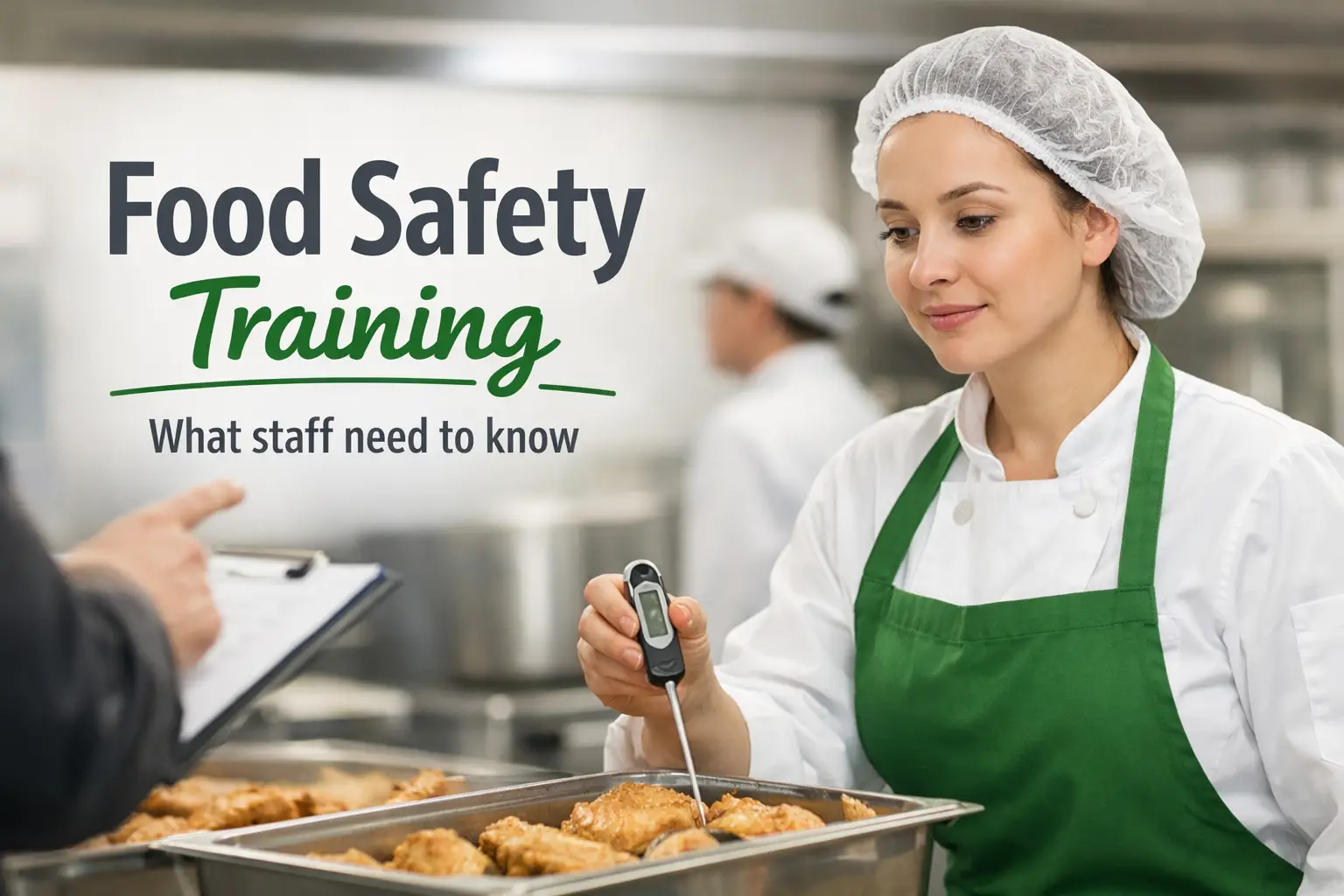
Learn what food safety training staff need and how to deliver it.
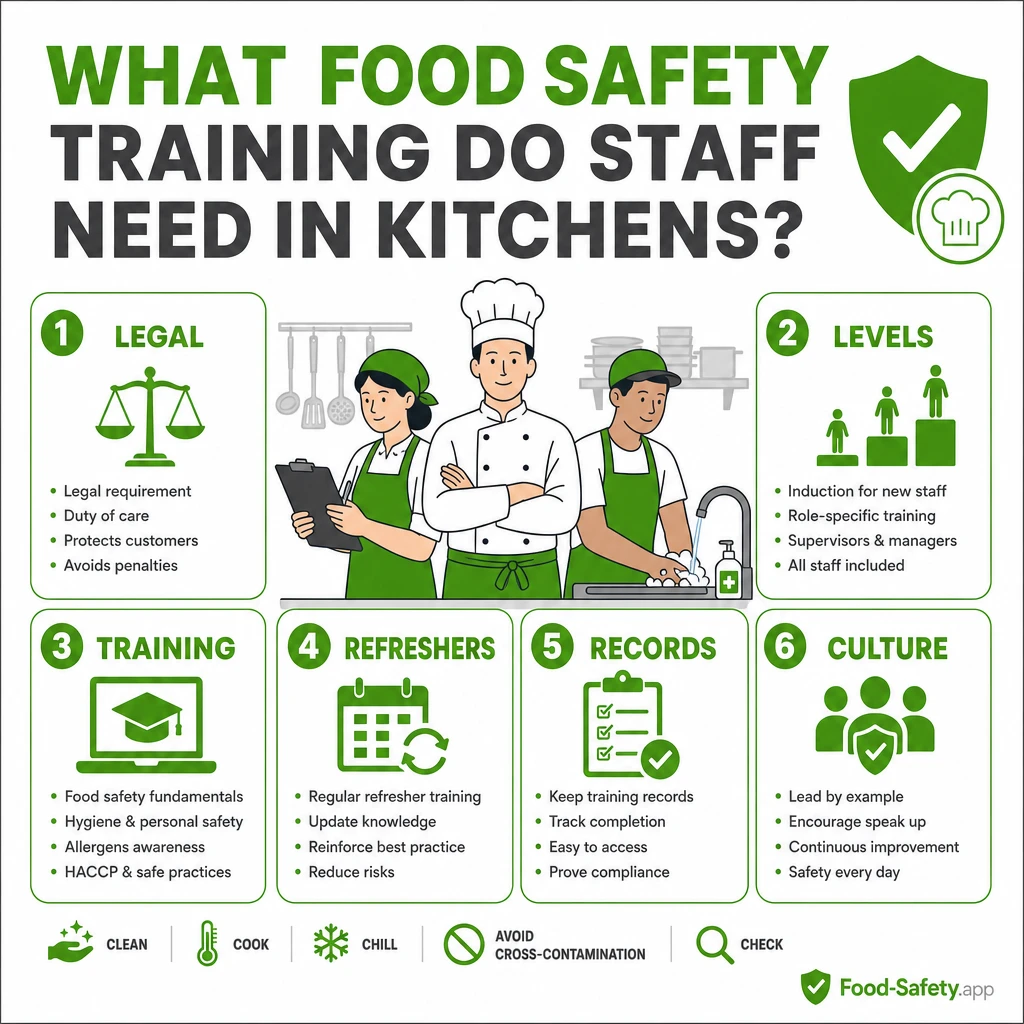
Table of contents
Legal basics: training, supervision and instruction
In the UK, food handlers must be trained, supervised, instructed or guided to a level suitable for their role. Responsibility sits with the business owner and managers to ensure staff receive appropriate training, that it stays current, and that supervision is in place during practical tasks. Documentation, records and clear accountability help demonstrate due diligence during inspections and audits.
Two practical outcomes matter most: a clearly defined training path for every role, and a system that shows who trained whom, when, and what competency was achieved. When things go wrong, these records support corrective action and service recovery.
Training levels by job
| Role | Key training focus | Practical examples |
|---|---|---|
| New starters | Basic hygiene, handwashing, cross-contamination, personal hygiene, cleaning and reporting issues | Induction on cleaning schedules; demonstration of handwashing; buddy-checked onboarding tasks |
| Kitchen assistants and front-line staff | Temperature control, allergen awareness, stock rotation, safe food handling | Using thermometers correctly; identifying allergens on labels; FIFO checks on delivery |
| Supervisors and managers | HACCP understanding, checks, corrective actions, monitoring and record keeping | Reviewing HACCP plans; logging corrective actions; sign-off on daily checks |
Role-specific training areas
Food prep and handling
Train staff to minimise cross-contamination risk, manage knives and boards safely, and maintain clean, separate zones for raw and ready-to-eat foods. Practical coaching should cover proper hand hygiene, wearing appropriate protective clothing, and reporting potential hazards immediately.
- Use separate colour-coded cutting boards and utensils; store them separately when not in use.
- Label items with use-by dates and ensure proper storage temperatures.
What are simple food safety tips for busy kitchens?
Delivery checks, cooling, reheating and hot holding
Staff must understand correct temperatures, safe cooling procedures and compliant reheating times. Emphasise reducing time in the danger zone (8–60°C) and documenting temperature checks during delivery, storage, and service.
- Record fridge and freezer temperatures daily; escalate any excursions promptly.
- Tag and segregate food in transit to avoid cross-contact.
How to stop cross-contamination in service
Cleaning, hygiene and opening/closing checks
Cleaning routines must be clear, consistent and verifiable. Opening and closing checks should cover equipment readiness, temperature monitoring, waste management and security checks.
- Follow a shift-start checklist confirming equipment is clean, powered on, and at safe temperatures.
- Close with documented checks and secure key handovers.
Refreshers and record keeping
Refreshers are not optional. Retraining should occur after changes in menu, equipment, procedures, staffing or following an incident. Written records matter for inspections, audits and internal control, and they should be easy to review during routine manager checks.
- Schedule refresher intervals aligned to service peaks and staff turnover.
- Keep concise records showing who completed training, dates and competency outcomes.
Culture and team safety
A strong safety culture makes it easier to report mistakes and follow procedures. Encourage open dialogue about near-misses, share learnings from incidents, and promote consistent use of checks and corrective actions. When staff see prompt feedback and fair handling of issues, compliance becomes part of the daily routine rather than a burden.
- Lead by example: managers model the proper use of checks and records.
- Recognise reliable reporting and quick corrective actions to reinforce good habits.
Why confidence in management lets businesses down
Practical routines
- New starter induction steps: welcome briefing, workplace hygiene rules, practical demonstrations, on-shift buddying, and a completion sign-off.
- Daily checks: temperature logs, clean-as-you-go reminders, and front-line allergen notes on boards.
- Weekly reinforcement: rotate training topics to cover seasonal menu changes and new equipment handling.
- Incident response: document the issue, isolate risk, implement corrective actions and review the training impact.
Getting started in your kitchen
Use a simple rollout plan to introduce role-based training without overwhelming teams. Start with the core three roles, then expand to role-specific modules as your menu and equipment evolve.
- Map every role to its essential training elements.
- Create short, practical training modules tied to daily checks.
- Set a fixed refresher cadence and update records after each change.
- Assign a responsible supervisor to oversee training adherence and record keeping.
- Pilot the plan in one kitchen, then roll out across sites with adjustments.
- Review outcomes and refine the modules to improve consistency and efficiency.
Regulatory references
For baseline guidance on training and food safety expectations, consult reputable authorities.
Food Standards Agency guidance on food safety training for businesses
Food-Safety.app is a food safety management system for catering businesses.
Food safety training resources
Access practical guidance and tools to implement role based training, record keeping and HACCP practices across your kitchens today across multiple sites