Make cleaning records more than a tick box by linking them to real standards follow up actions and clear proof that cleaning is actually being checked.
Table of contents
- Why cleaning records matter for food safety
- Linking each task to a real control point
- Who, when and what to check
- Designing useful cleaning records for your operation
- Handling failures and corrective actions
- Spotting trends and improving routines
- Practical workflows for opening, closing and audits
- Putting it into practice in a busy kitchen
Why cleaning records matter for food safety
Clear cleaning records demonstrate that hygiene controls are active every shift, not just a one-off task. When records show who cleaned what, where, and when, managers gain real confidence that high-risk areas are protected. This is essential for inspections, internal audits, and the daily management of risk in a busy service. A good record turns routine cleaning into verifiable compliance and continuous improvement.
Evidence for inspections
During audits, inspectors expect to see records that corroborate your hygiene controls. A well-structured record highlights critical points—fridge seals, sink cleanliness, and utensil hygiene—along with dates and signatures. Use clear language and avoid vague notes so the reviewer can quickly verify action and accountability. Learn about hygiene ratings
Beyond tick boxes
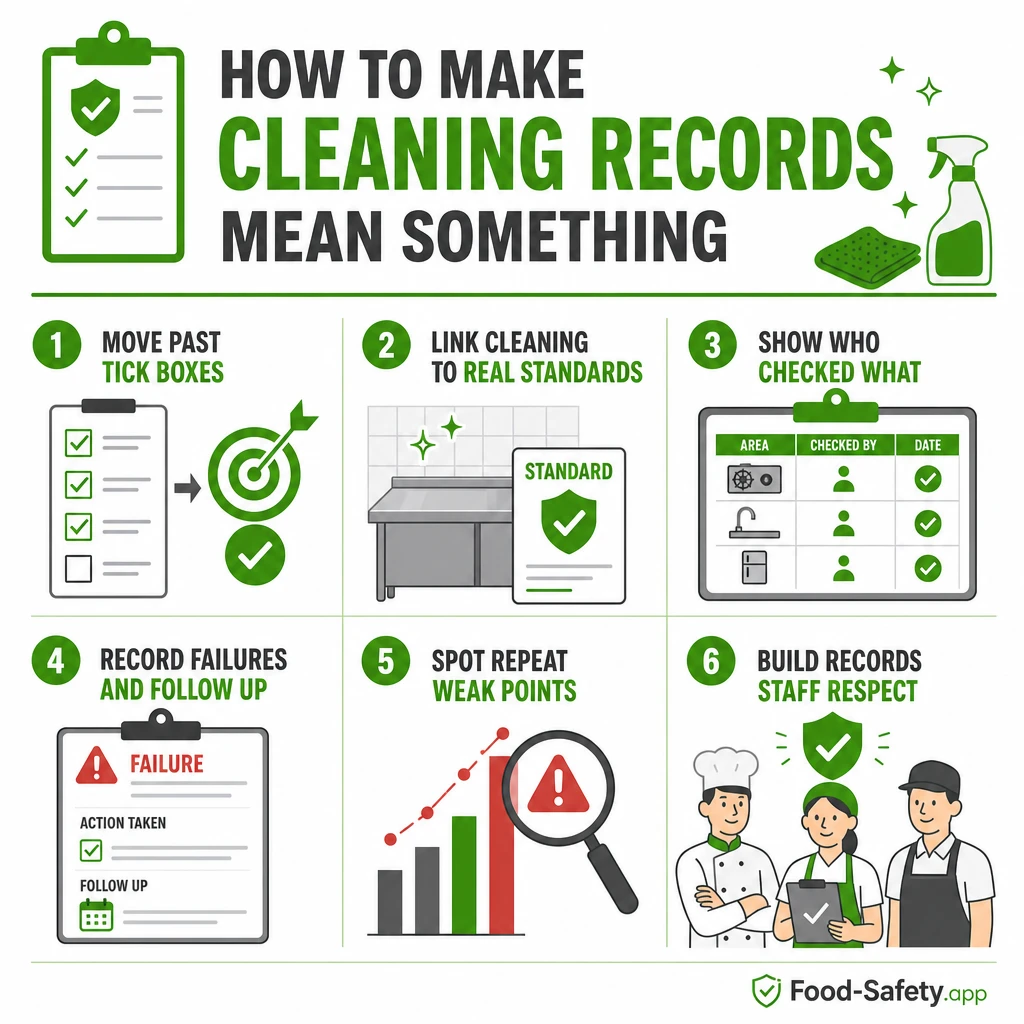
The value is not in ticking a box; it is in what the record reveals. Does a repeated issue indicate a method problem, not a lapse? Do you have a repeated failure pattern that requires a procedural change or retraining? Your record should raise questions as well as confirm compliance.
For official guidance on hygiene practices, see the Food Standards Agency guidance on cleanliness and hygiene. It provides baseline expectations that you can mirror in your records.
HACCP in food safety management provides a framework.
Linking each task to a real control point
Every cleaning task should map to a real control point where contamination could occur. This makes records meaningful and action-focused rather than generic.
Fridges and temperature control
Record door seals, airflow, and interior temperatures after each cleaning cycle. If a seal is damaged or a thermometer drifts, note the corrective action and recheck the next shift. temperature recording guidelines.
Prep areas and high-risk equipment
Link tasks to surfaces that contact ready-to-eat ingredients. Include details such as the remove/replace protocol for cutting boards, slicers, and centrifuges after heavy use or spill events.
Handwash stations
Track soap levels, paper towels, and the cleanliness of sinks and taps. A clogged drain or missing paper towels is a red flag that prompts immediate action and follow-up checks.
Who, when and what to check
Public confidence hinges on clear accountability. A robust cleaning record captures who completed the task, the exact time, and what was checked.
Sign-offs and timestamps
Include a name or initials, a timestamp, and a brief note on what was inspected. If a task spans shifts, ensure the handover includes the last check and the next slated check.
Allergen training can help ensure consistency across shifts and teams.
Responsible person and area
Assign a responsible person for each zone and task. When it’s clear who is accountable, follow-up actions are faster and more effective.
What was checked
Record specific checks, such as surface cleanliness, residue absence, drain condition, or equipment exterior cleanliness. Vague notes like “area clean” should be replaced with measurable criteria such as “no visible residue; wipe clean to the edge of bench.”
Designing useful cleaning records for your operation
Generic lists waste time and reduce usefulness. Tailor cleaning records to your operation with practical fields and local terminology.
Custom cleaning tasks
Develop task sets that reflect your menu, equipment and layout. For example, a salad prep area may require a dedicated deep-clean protocol after peak service, with steps for sanitising worktops, bowl rims, and chutney jars.
Avoid generic lists
Replace broad lines like “clean kitchen” with specific tasks such as “wipe and sanitise slicer blade, check blade sharpness, and record sanitiser concentration.” Details minimise ambiguity and speed review.
Example fields to include
- Task description
- Location or equipment
- Frequency (opening, closing, after service, weekly)
- Responsible person
- Time completed
- Check results (pass/fail) and notes
- Corrective action taken (if any)
What records should small businesses keep?
Consider a simple table to visualise key fields. The table below shows a compact example you could adapt for a specific area:
| Task | Location | Frequency | Completed by | Time | Check | Notes |
|---|---|---|---|---|---|---|
| Clean fridge door seals | Behind service line fridge | Daily | J. Patel | 09:15 | Pass | Seal intact; temp check within range |
| Sanitise salad prep area | Cold prep island | After service | N. Smith | 14:30 | Pass | Residue noted on scraper handle; re-cleaned |
Handling failures and corrective actions
Recording failures clearly is a strength, not a weakness. A structured approach to corrective actions shortens resolution time and supports learning across shifts.
Log failures clearly
When a task is not completed to standard, capture the exact issue, location, time, and who observed it. Include a brief description of the risk affected and any immediate containment measures taken.
Legal responsibilities apply to how you manage failures and corrective actions.
Define corrective actions
Document the required action, the person responsible for the correction, and a target completion time. Whether it’s a re-clean, a maintenance visit, or a staff retraining, specify the next check to confirm completion.
Recheck and verification
Schedule a verification check after the corrective action. A second sign-off confirms the issue is resolved and helps prevent repeat failures.
Spotting trends and improving routines
Patterns across days and shifts reveal where a preventive approach is needed. Regular review of full history helps identify repeat weak points and systemic issues.
Review full history
Periodically export or review the complete record over a week or month to spot recurring failures in a zone or with a specific task.
Identify repeat issues
Notes that indicate residue, repeated misses on a particular surface, or persistent equipment wear point to a process or design flaw rather than a one-off lapse.
Turn insights into action
Translate findings into improved methods, updated cleaning tasks, or adjusted schedules. Communicate changes clearly to the team and re-train where necessary.
Allergen training can help ensure consistency across shifts and teams.
Practical workflows for opening, closing and audits
Structured daily routines make records easier to complete and review. Clear workflows support service continuity and audit readiness.
Opening checks
Begin with fridge temperatures, handwash station readiness, and clear work surfaces. Log the checks before service begins and sign off at the start of the day.
During service
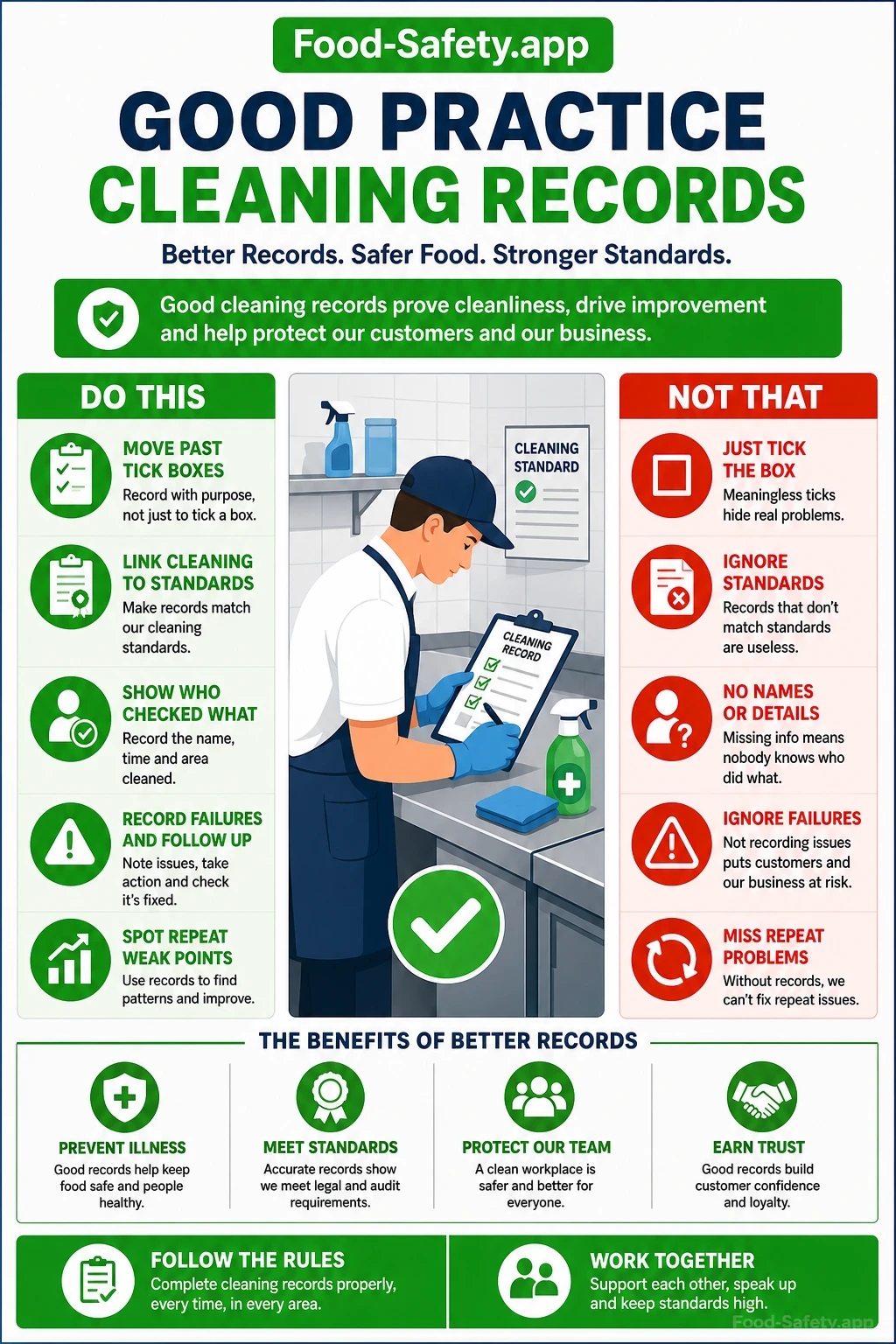
Keep lightweight checks for hot zones or high-risk equipment. Quick spot-clean logs can prevent drifting hygiene standards between opening and closing tasks.
Closing checks
Close by confirming all high-risk areas have been cleaned, equipment is stored, and any defects or maintenance needs are logged for the next shift. Close-out records ensure the kitchen is inspection-ready each morning.
Defect reporting and corrective actions
Defects should be recorded with a clear description, immediate containment steps, and the planned follow-up. Integrating this with your cleaning records creates a single, traceable trail for managers.
Putting it into practice in a busy kitchen
To maximise usefulness, implement a practical approach that fits your team and service level. Start with a core subset of tasks that clearly map to control points, then expand as you gain confidence and data.
Food-Safety.app, a food safety management system for catering businesses.
Explore more about cleaning records
Expand your knowledge with practical guidance on maintaining effective cleaning records that support food safety across operations.