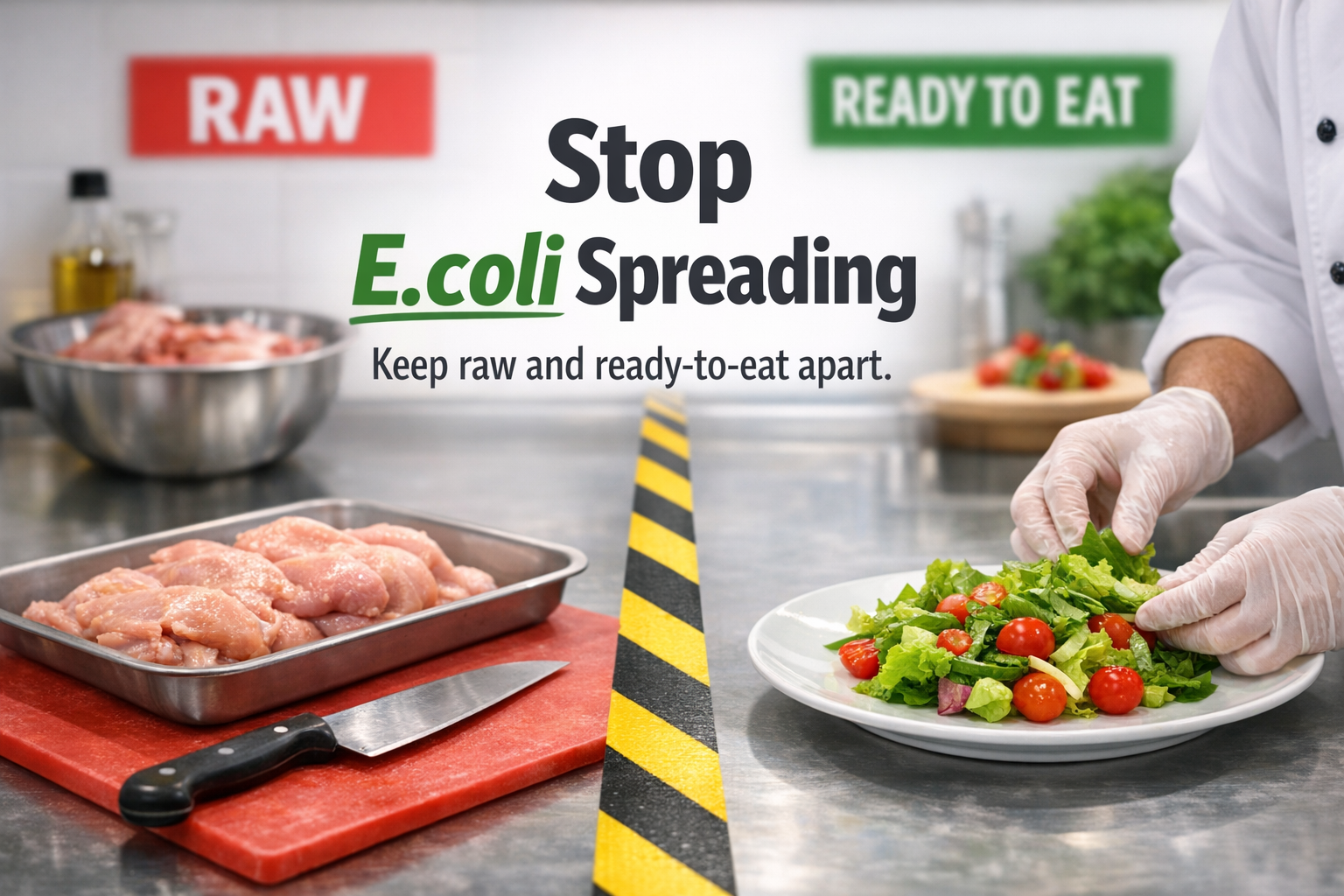
E coli mistakes in catering can put ready-to-eat foods at risk in busy kitchens, where service pressures and shared spaces drive cross-contamination. This article helps chefs and managers spot everyday errors, explains why they matter for customer safety, and outlines practical steps to tighten routines and maintain records that stand up to inspection.
Table of contents
Why E coli matters in catering
E coli can cause serious illness, particularly in settings serving ready-to-eat foods where there is no kill step before eating. There is little margin for error, and a single lapse can put customers at risk and trigger a formal inspection. For practical purpose, treat cross‑contamination as the dominant risk in every service.
Cross-contamination from hands, cloths, or equipment is a frequent cause of outbreaks in catering. For authoritative guidance on reducing cross-contamination risks, see the Food Standards Agency cross-contamination guidance.
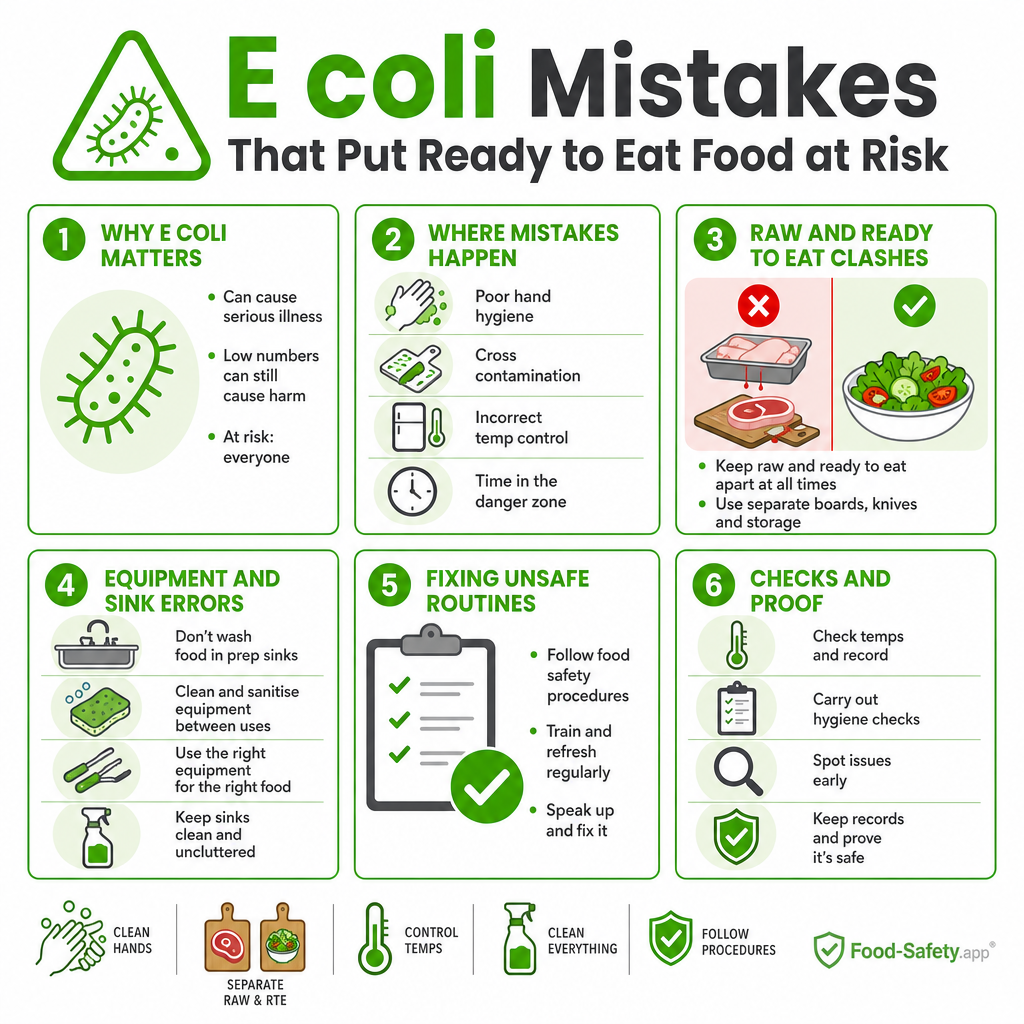
Where mistakes happen
Poor handwashing and sanitising routine
Hands are the primary vehicle for E coli transfer. In busy shifts staff may rush, skip steps, or use only a quick rinse. Built-in routines and visible reminders help ensure proper washing with soap, warm water, and thorough drying.
Dirty cloths and shared wiping cloths
Wiping cloths that sponge up spills across surfaces can move bacteria between zones. Use dedicated cloths for different areas and ensure cloths are laundered regularly.
Shared equipment and work surfaces
Shared boards, knives, and mixers can carry contamination from raw to ready-to-eat foods if not cleaned between tasks. Colour‑coded systems and frequent cleaning between steps minimise risk.
Unsafe fridge storage and cold chain lapses
Inadequate separation or mismanaged shelving allows raw items to drape over ready-to-eat products. Proper storage order and clear space for raw items help keep temperatures and contact safe.
Cross-contamination during prep
Prep in a single area that mixes raw and cooked items creates ongoing risk. Where space is limited, schedule separate tasks or time blocks to avoid contact between raw and ready-to-eat foods.
Raw and ready-to-eat clashes
Raw meat near salad prep
Allocating the same surface to raw poultry and salad components increases contamination risk. Establish separate prep zones or clearly defined work zones that rotate by task and time.
Unwashed veg and salad preparation on shared boards
Produce can shed soil and bacteria; washing does not replace proper surface hygiene. Clean and sanitise surfaces between handling raw ingredients and ready-to-eat components.
Sandwich making and raw surfaces
Assembled sandwiches should never be prepared on a board that previously handled raw meat without cleaning and sanitising first.
Cooked food handled on the same surface as raw
Cooked items must be kept away from raw drips and juices. Use separate surfaces or ensure complete sanitisation before touching cooked foods.
Equipment and sink errors
Wrong sink use
Using the same sink for cleaning equipment, vegetables, and washing hands without proper separation invites cross‑contamination. Assign dedicated sinks and label them clearly.
Unclean probes and thermometers
Probe tips can transfer bacteria between foods if not cleaned after every use on raw products. Calibrate and clean probes between tasks, and separate probes for raw and cooked items when possible.
Dirty chopping boards
Boards that carry stains or odours indicate insufficient cleaning. Use colour coding and regular sanitising routines to prevent surface contamination.
Damaged fridges and poorly set temperature controls
Faulty seals or inconsistent cooling create unsafe storage conditions. Report defects early and maintain temperature controls within established ranges.
Badly set temperature controls
Inadequate temperature control can allow pathogenic growth. Record checks and prompt corrective action keep the cold chain intact.
Fixing unsafe routines
Colour-coded equipment
Colour-coded equipment and more: assign colours to boards, knives, and containers to separate raw from ready-to-eat tasks. Train staff to follow the coding and audit compliance regularly.
Separate prep areas
Where possible, provide distinct zones for raw and cooked items, including dedicated sinks or surfaces to minimise contact points.
Cleaning between tasks
Implement a simple rule: if you move from raw to ready-to-eat, clean and sanitise the surface before the next step. Use checklists to confirm completion.
Clear allergen and hygiene rules
Define two sets of hygiene rules that cover allergens and general cleanliness. Communicate updates at shift handovers and training sessions.
Checks and proof
What to record to show controls are working
Document opening and closing checks for prep areas, cleaning schedules, temperature logs, probe calibration records, and any defects reported. Include who did the task and when it was completed.
What inspectors expect to see
Inspectors look for consistent records, traceable actions, and timely responses to faults. Ensure records are legible, stored safely, and routinely reviewed during HACCP reviews.
Practical examples or scenarios
- Raw chicken trimmed near salad prep, then the same board used for sandwiches.
- A probe not cleaned after use on raw meat, then used for cooked product checks.
- Cloths left in sinks and wiping down ready-to-eat surfaces with the same cloth.
- Chilled foods stored above raw items in the fridge.
- Staff moving between tasks without handwashing or glove changes.
Suggested compliance or operational focus
- Opening and closing checks for prep areas
- Cleaning schedules and custom cleaning tasks
- Temperature monitoring for cold storage and cooking
- Probe calibration records
- Defect reporting for broken sinks, fridges, or equipment
- Training records and refresher checks
- HACCP review of cross-contamination controls
How Food-Safety.app helps teams
Food-Safety.app, a food safety management system for catering businesses.
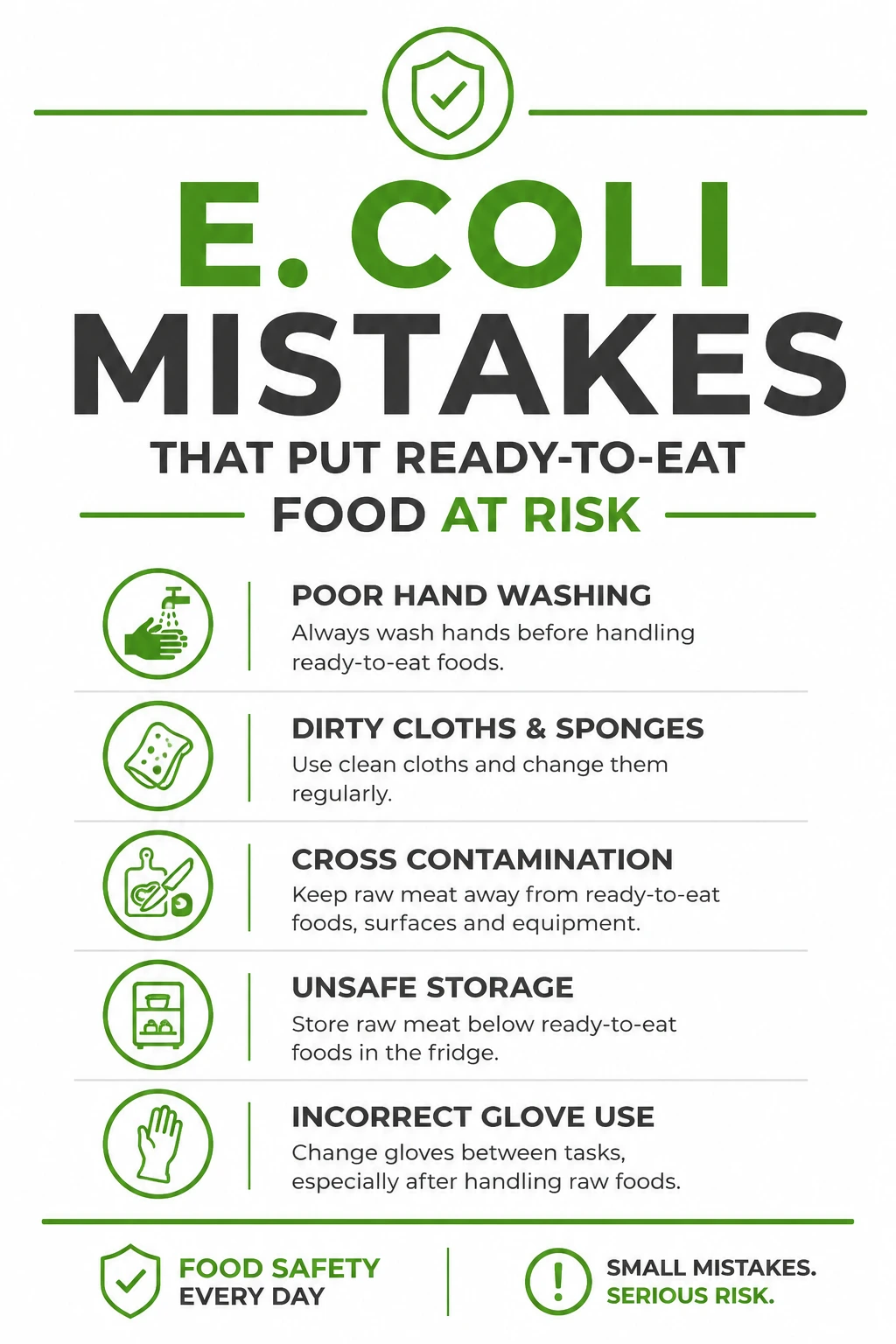
Explore Food-Safety.app for your team
Discover how Food-Safety.app can help your catering operation stay compliant with smaller teams, improve record keeping, and prepare for inspections with easy to use tools.