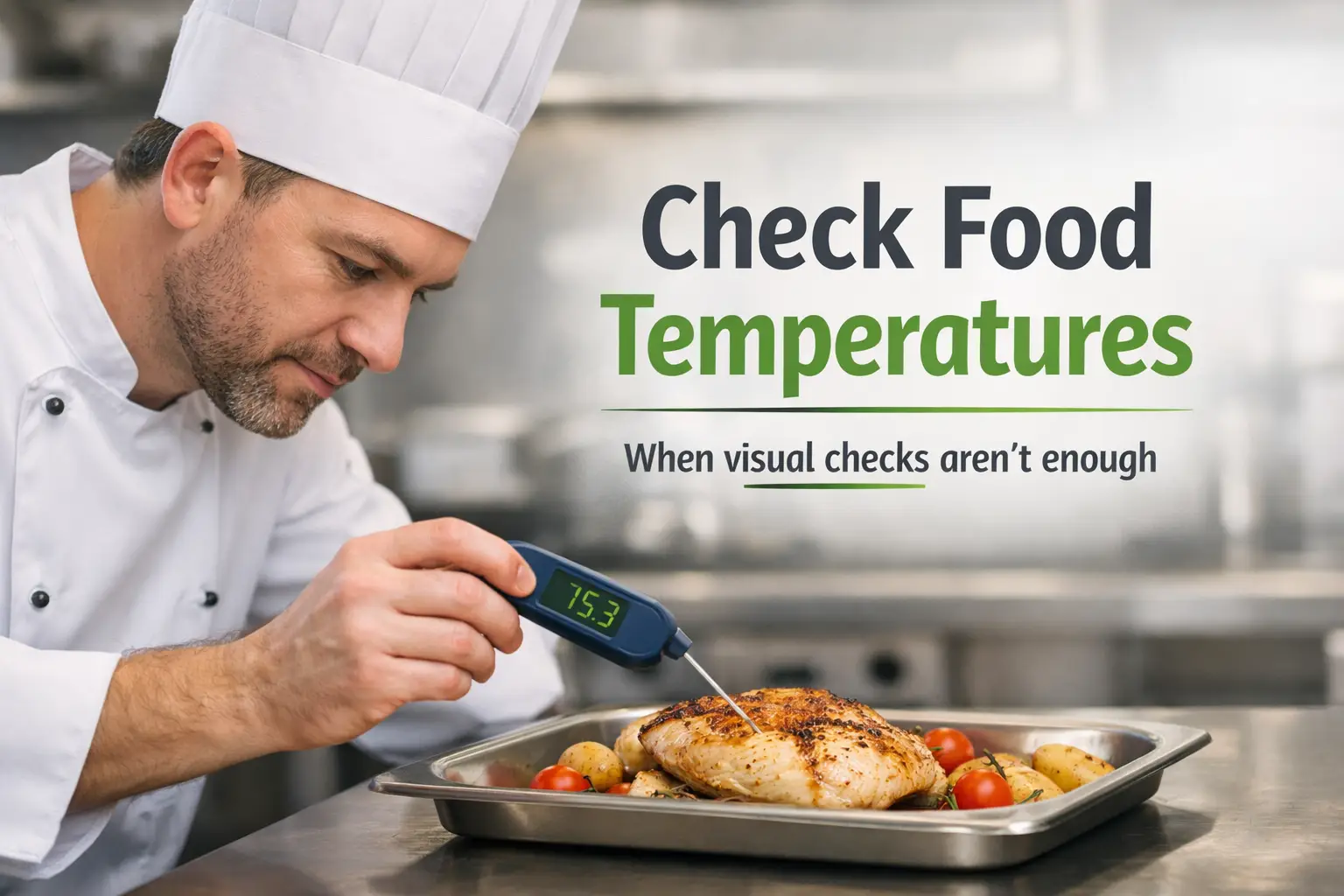
Learn how to use a temperature probe properly so cooked food is checked safely recorded clearly and corrected fast when a reading shows a problem.
Table of contents
Why probing matters
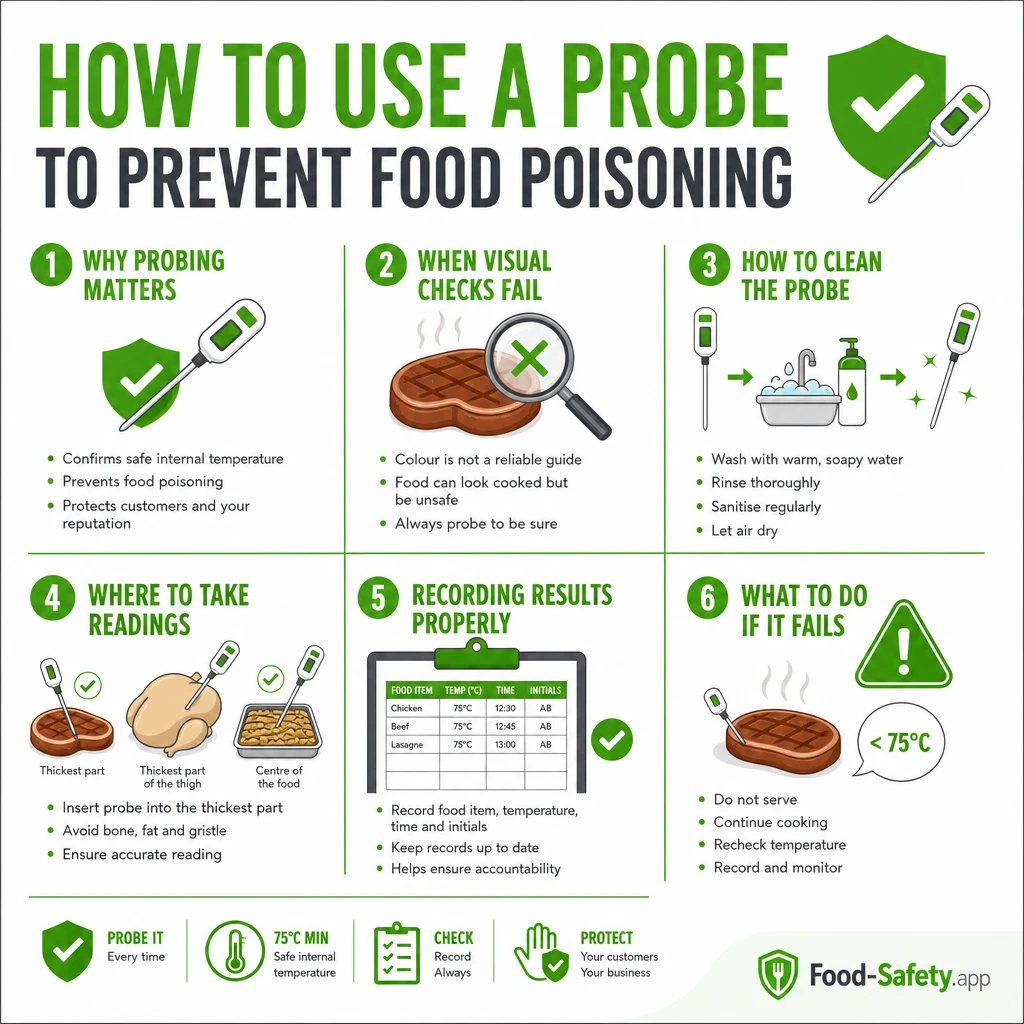
Relying on appearance or aroma can be misleading. Visual checks miss issues like cold centres, thick cuts that cook unevenly, and rapid heat loss in large batches. A properly used probe provides objective data, helping you confirm that cooking has reached a safe interior and that hot or cold processes stay within acceptable ranges. This data supports HACCP records and strengthens inspection readiness in busy service periods.
Visual checks versus readings
Visual cues can be deceiving, especially with roasts, stews, or poultry portions. Readings from a probe prove you are meeting safe temperatures inside the product, not just on the surface.
When to probe during the food lifecycle
Cooking
Probe the thickest part of meat, the centre of filled dishes, and the main mass of soups or stews. Take multiple readings if portions vary in size to confirm consistent cooking across the batch.
Cooling
Check after cooking to ensure the product cools promptly and reaches safe temperatures during the cooling phase. Use readings to verify that cooling time targets are being met and that food gets cold quickly enough to stay out of the danger zone.
Reheating
Before hot holding, probe to confirm the interior has reached a safe temperature again. Reheating should restore an even heat throughout the item, not just the exterior surface.
Hot holding
During service, take readings at intervals to verify that hot-held items stay above critical temperatures for the duration of service. This protects both safety and quality.
Delivery checks
On receipt or at point of delivery, probe products arriving from suppliers or being handed over to customers to verify cold chain integrity or adequate heating on arrival.
Where to take readings
- Take readings from the thickest part of the food
- Test the centre of the product when feasible
- Avoid bone, bone-in joints, fat seams, or the edges of trays
- For soups and stews, probe near the pot’s core or the deepest vessel section
- When testing multiple portions, sample representative items to reflect batch consistency
How to clean and care for probes
- Wash the probe thoroughly with soap and warm water between uses
- Sanitise the probe after washing, following your establishment’s sanitiser guidelines
- Dry completely before storing and before re-testing during a batch change
- Between foods, re-check the probe to prevent cross-contamination
What to do if a reading fails
If a reading indicates undercooking, rework the food where possible or extend cooking until readings are consistently within safe ranges. If rework isn’t possible, discard the item and investigate equipment issues, such as oven performance or thermostat calibration. Document the incident and review procedures with the team to prevent recurrence.
Immediate actions
Pause service for affected items, isolate the product, and perform a quick re-check after reprocessing. If still unsafe, dispose and escalate to a supervisor for the corrective action log.
Do small food businesses really need HACCP?
Calibration matters
Regular calibration is essential because inaccurate probes give false reassurance and create compliance risks. Calibrate using the manufacturer’s method or a known reference before each shift or after any impact that could affect accuracy. If there is doubt about any reading, recheck with a second probe or a fresh calibration routine.
Recording results
Keep simple, traceable records for each check. Include:
- Time and date
- Food item
- Temperature reading
- Action taken (e.g., extend cooking, discard, or escalate)
- Person completing the check
Manual logs create a clear trail for internal audits and inspections. If your kitchen uses a digital system, replicate the fields in a consistent format for every entry.
10 food hygiene mistakes small kitchens still make
Practical examples and scenarios
- Chicken breast looks cooked but the centre reads below safe temperature; extend cooking and re-test.
- Soup held hot during service drifts below the safe holding range; reheat to restore and re-check.
- Chilled delivery arrives warm; initiate rejection or escalation and document the decision.
- Probe used on raw and ready-to-eat foods without cleaning; cross-contamination risk arises; clean and re-test before subsequent use.
- Fridge suspected to be running warm; log a defect, perform corrective action, and monitor with additional probes.
How to clean to reduce allergen cross-contact
Compliance and operational focus
Align probe routines with HACCP temperature controls and due diligence. Maintain clear manual records with timestamps for traceability, log corrective actions when limits are not met, keep calibration records, and use the data to support internal audits and external inspections. For guidance on accepted practices, refer to official sources such as the Food Standards Agency.
How to check fridge temperatures properly
Putting it into practice in your kitchen
Adopt a simple, repeatable probe routine that fits your service tempo. Start with a short daily checklist: assign two staff to perform post-catch checks, designate a cleaning station, and set a standard template for recording readings. Use a single thermometer for consistency, clean between batches, calibrate weekly, and review any reading failures in daily briefings. A clear, capable process saves time and strengthens safety culture.
Food-Safety.app, a food safety management system for catering businesses, offers a practical way to log probe readings, record corrective actions, and keep calibration records in one place. It supports offline use, automatic timestamps, PDF exports, and no-login access for busy kitchens.
Learn more about probe practice
Discover how Food-Safety.app can help you log probe readings, record corrective actions, and keep calibration records in one place to improve kitchen safety and inspections.