Small food businesses need a clear recall plan before problems happen. Learn what details to keep who to contact and how to act fast.
Table of contents
Recall vs withdrawal: when to remove stock from sale and when to contact customers
A withdrawal removes stock from sale that has not yet reached customers, while a recall targets products already distributed or out in the market. In a busy service, decisions must be rapid and supported by documented reasoning. Understanding the difference helps you act deterministically and keeps customers safe.
- Assess the risk with the available information and consult the supplier if needed.
- Stop sale immediately and quarantine affected stock with clear segregation.
- Check batch codes, use-by dates, and delivery records to identify the scope.
- Determine whether customers may already hold the product based on sales and delivery data.
- Decide if a withdrawal is sufficient or if a broader recall is required; log the decision and rationale.
- Prepare initial customer communications if a recall is warranted.
A catering kitchen finds a chilled dessert batch label issue before service: product withdrawn, not sold; document the action and keep affected stock out of circulation. A sandwich shop receives a supplier alert after an item has already been sold: escalate to recall steps and notify customers as needed. A banquet prep team discovers allergen labelling on one batch is wrong: isolate stock, check remaining portions, and notify affected customers.
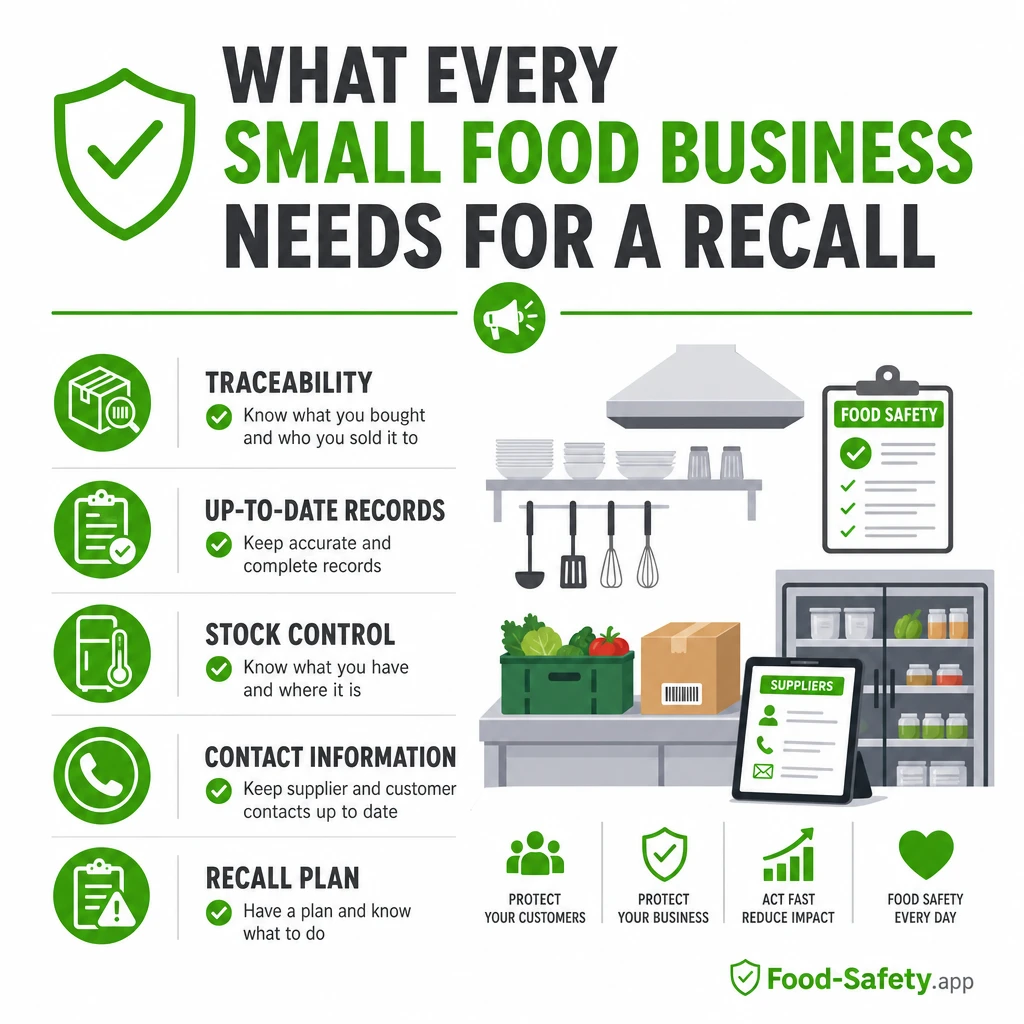
Batch control and traceability
Batch codes, use-by dates, supplier details, and delivery records are the backbone of fast recalls. If a batch is implicated, you can identify affected stock in minutes rather than hours.
What to record in the batch file:
| Data item | Why it matters | Where it’s stored |
|---|---|---|
| Batch code | Traceability to the supplier and production run | Stock system, storage logs |
| Use-by date | Ensures time‑sensitive safety checks | Packing, storage sheet |
| Supplier details | Helps with root cause and supplier communication | Procurement records |
| Delivery date | Cross-checks with delivery notes | Receiving log |
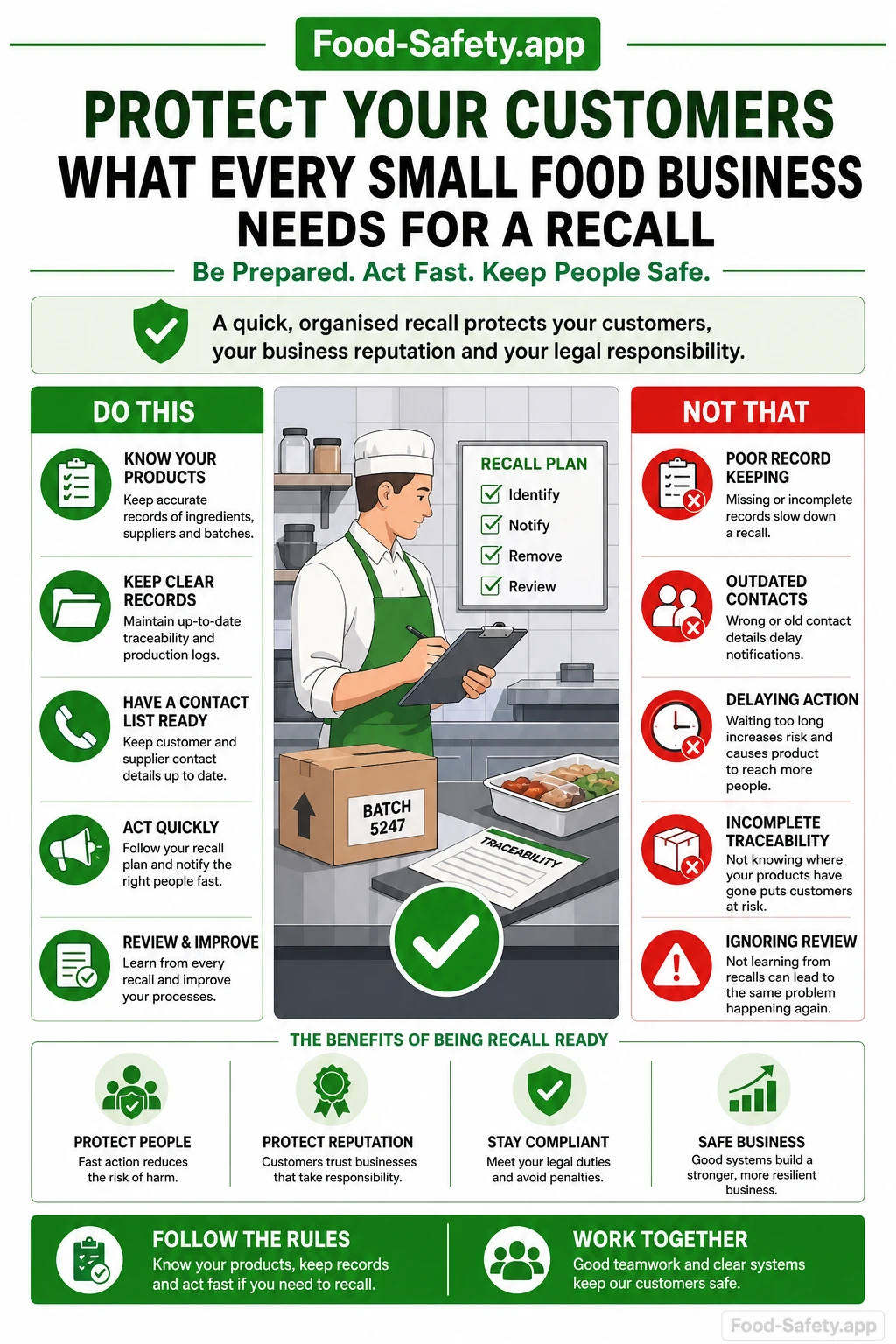
Traceability basics
Linking goods in checks, stock use, and sales records helps you identify with precision which items are affected, and HACCP records support due diligence.
Match stock movement (in, out) to batch codes; align production or prep records with batch usage; cross-check sales data to identify customers who may have had the product.
Example: a batch used in multiple service periods can be flagged across the system; you pull the batch number from recent tickets and isolate all servings tied to that batch.
Internal response: roles and actions
Good practice assigns a clear recall owner, a small crisis team, and shift supervisors who brief staff quickly. cross-contamination training that staff remember.
In practice:
Internal response: roles and actions
Good practice assigns a clear recall owner, a small crisis team, and shift supervisors who brief staff quickly. cross-contamination training that staff remember.
Identify a recall coordinator and notify key staff; Stop use of affected stock; Isolate and quarantine all packaging and finished products tied to the batch; Review temperature records for the affected period to rule out safe use or re‑processing; Brief the team with a short, factual message and a single point of contact for questions; Document actions in the defect log and prepare communications for customers if needed.
Customer communication
Keep messages clear, factual, and fast. Include what happened, the batch details, the risk, and what customers should do. See records for guidance on what you should keep.
- State what you know, what you do not know yet, and what you will do next.
- Provide a contact point and an expected timeline for updates.
- Offer guidance on returns, refunds, and any needed precautions.
Sample lines you can adapt:
- “We have identified a potential issue with batch B123 of product name. We have withdrawn this batch from sale and are contacting customers who may have received it.”
- “Please do not consume any remaining stock from this batch. If you have any, return it to the place of purchase for a refund or disposal guidance.”
Documentation and records
Maintain a single, auditable trail of actions. This supports inspections and demonstrates due diligence. Hygiene rating scores considerations.
- Defect reporting and corrective actions log with dates and responsible people.
- Temperature logs for cold storage, cooking, cooling, and reheating during the incident window.
- Defect notifications to suppliers and customers, plus record of responses.
- Allergen records and menu item controls that link to implicated batches.
- Staff training notes and a named recall contact list.
Recall records table (quick reference):
| Field | Example | Notes |
|---|---|---|
| Recall issue | Allergen mislabelling | Describe precisely |
| Batch involved | B123 | Check linked stock |
| Resolution | Stock isolated | Document actions |
Lessons after the incident
Post‑incident review should identify root causes, corrective actions, and changes to prevent repeats. Common outcomes include updated supplier controls, revised labelling checks, enhanced temperature monitoring, and improved staff briefings.
- Root cause analysis: what failed, why, and how to fix it.
- Corrective actions: changes to procedures, packaging, supplier communications, or processes.
- Prevention: updated checks, training, and record maintenance to improve inspection readiness.
Official guidance can help structure your investigation. For official guidance on recalls and withdrawals, see the Food Standards Agency guidance linked here: recalls and withdrawals guidance.
Food-Safety.app is a food safety management system for catering businesses.
Further resources for recalls
Access practical guidance and tools to strengthen your recall plan, streamline communications, and maintain customer trust through every stage of a recall or withdrawal.