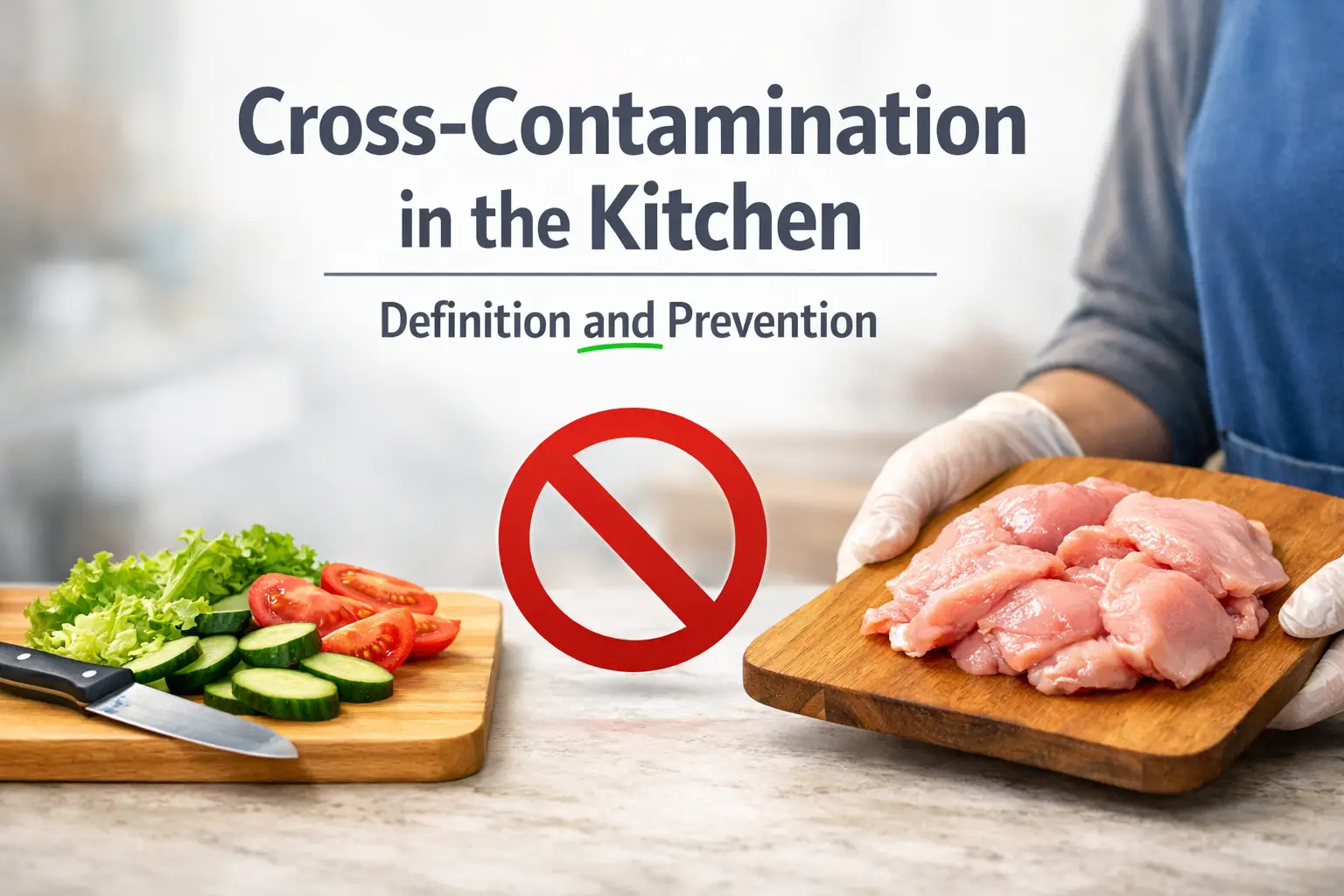
Understand what cross contamination is and how to prevent it in your kitchen, with practical guidance that supports safer daily food handling and preparation.
- Definition and main types of cross contamination
- Why cross contamination happens in a busy kitchen
- Prevention basics for a commercial kitchen
- Monitoring and habits that support safety
- Practical scenarios to learn from
- Compliance focus and operational insights
- Industry guidance and practical checklists
- A quick wrap-up and next steps
Definition and main types of cross contamination
Definition
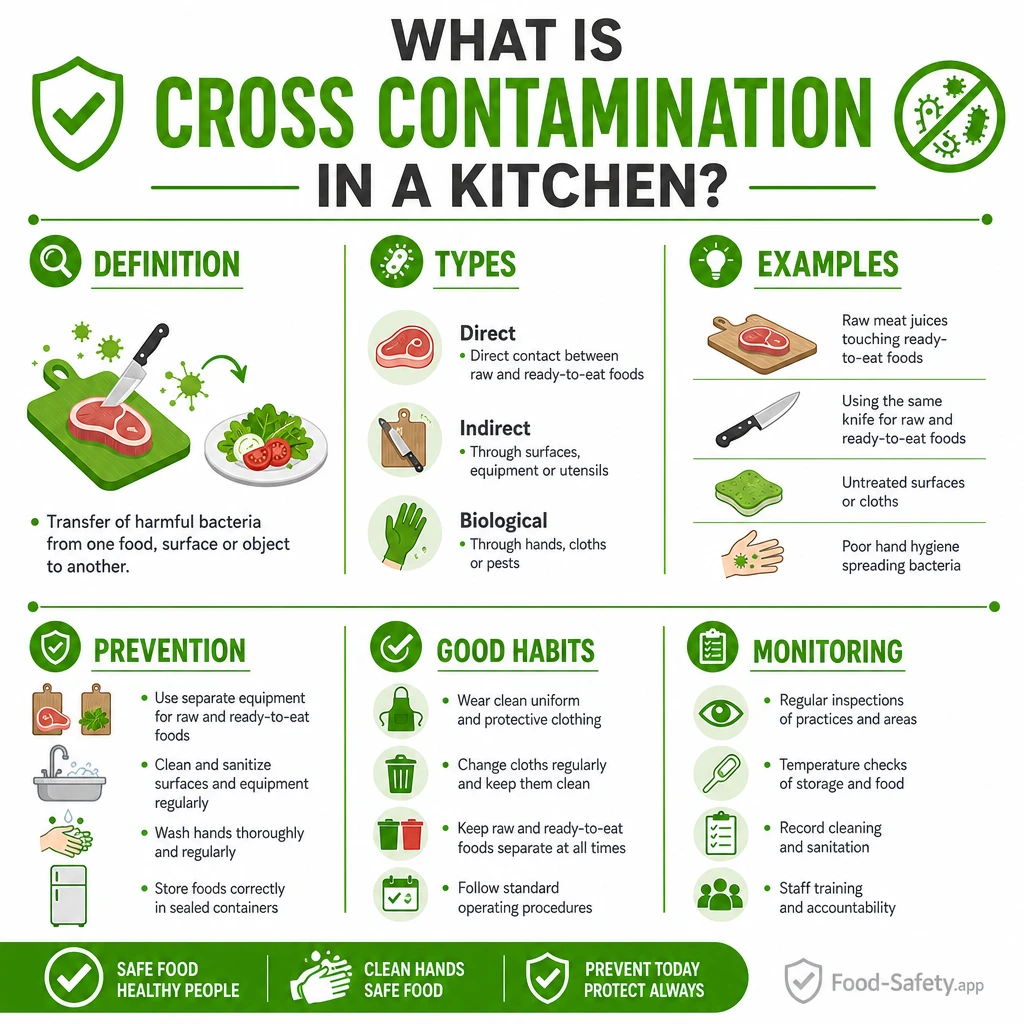
Cross contamination is the transfer of harmful bacteria, allergens, or dirt from one food, surface, utensil, or person to another. It can occur quietly during routine tasks and is not limited to raw meat handling.
Main types
- Raw-to-ready-to-eat food contamination: A pathogen moves from raw meat, poultry, or seafood to foods served without further cooking.
- Allergen cross-contact: Residue or shared equipment transfers allergen traces from one item to another, risking an allergic reaction.
- Contamination from equipment, hands, cloths, probes, and storage areas: Dirt and microbes spread via unclean tools or surfaces or through improper storage hierarchy.
Why cross contamination happens in a busy kitchen
Common causes
Cross contamination commonly occurs because of rushed preparation that shortens cleaning and separation steps, poor separation between raw and cooked or ready-to-eat items, shared equipment without cleaning between tasks, inadequate cleaning and sanitising, incorrect or inconsistent storage, and weak hand hygiene among staff.
Prevention basics for a commercial kitchen
Colour-coded equipment
Assign colour-coded boards, utensils, and surfaces to separate raw and cooked items. Change boards immediately when contact with high-risk foods occurs and sanitise between uses. See how cleaning stops allergen cross-contact.
Separate prep areas
Designate distinct zones for raw and ready-to-eat food prep. Use separate towels, containers, and bins to avoid cross-contact across stations. Allergen training for new and agency staff helps prevent mix-ups.
Correct fridge storage
Store raw foods on the bottom shelves away from ready-to-eat items. Use covered containers and label items with dates to prevent accidental mixing. Check fridge temperatures the right way.
Hand hygiene and cleaning between tasks
Wash hands after handling raw foods, after using the toilet, and before handling ready-to-eat items. Clean surfaces and equipment between different tasks, with emphasis on cutting boards and knives. Cross-contamination in food safety explained: causes, examples and prevention.
Allergen controls
Maintain separate utensils and containers for allergen-containing foods. Clearly label common allergens and train staff to avoid cross-contact during service.
Safe probe use
Use dedicated probes for different foods or sanitise between checks. Calibrate thermometers regularly and document temperatures after checks. Cross-contamination training that staff remember helps reinforce this practice.
| Area | Control | Frequency |
|---|---|---|
| Chopping boards | Colour-coded and dedicated per raw or cooked | End of shift |
| Fridge storage | Raw items below ready-to-eat; date labelling | Daily |
| Handwashing | Wash before starting, after raw handling | Continuous |
| Thermometers | Calibration and sanitising | Weekly |
Monitoring and habits that support safety
Opening checks
At the start of each shift, confirm fridge and freezer temperatures, review yesterday’s cleaning tasks, and verify that critical controls are in place before service begins.
Cleaning logs
Maintain a simple log of cleaning tasks, who performed them, and the timestamp. Use a consistent format to support audits and quick reviews during service.
Delivery checks and temperature records
Check deliveries for correct cold chain on receipt and record temperatures. Note any deviations immediately and take corrective action.
Defect reporting and corrective actions
Record defects, isolate affected items, and implement corrective actions with traceable documentation. Review recurring issues to drive continuous improvement.
Practical scenarios to learn from
- Raw chicken stored above ready-to-eat salad in the fridge, risking drip contamination.
- Using the same chopping board for raw meat and sandwich prep without cleaning and sanitising between tasks.
- Allergen transfer from one dessert scoop to another during service.
- Dirty probe used after checking multiple cooked foods without sanitising.
- Wet cloths or shared sanitiser buckets spreading contamination across prep stations.
Compliance focus and operational insights
Linking controls to HACCP
Cross contamination controls are a core part of HACCP plans, with critical control points and monitoring steps that ensure a safe flow from delivery to service.
Record keeping for inspections
Maintain clear records of cleaning, checks, temperatures, and corrective actions to demonstrate due diligence during inspections.
Customising checks for each site
Adapt frequency and responsibilities to the site size, menu, and staffing levels. Train staff and audit compliance regularly to maintain consistency.
Industry guidance and practical checklists
Industry guidance emphasises robust controls across storage, preparation, and service. For official guidance, see the Food Standards Agency guidance on cross contamination helps shape practical kitchen controls.
Explore practical checklists and staff training ideas in toolbox talks that actually help staff learn food safety.
A quick wrap-up and next steps
Preventing cross contamination in a busy service hinges on clear routines, physical separation, and consistent daily habits. Start with the basics: colour-coded equipment, dedicated prep areas, correct storage, strict hand hygiene, and routine cleaning between tasks. Tailor the checks to your site, train staff, and keep records so your operation remains audit-ready and confident in service.
Food-Safety.app is a food safety management system for catering businesses.
Learn more about food safety management
Strengthen your kitchen with practical food safety tools that help manage cross contamination, streamline daily checks, support staff training, maintain accurate records, and keep your catering business inspection-ready with confidence every day.