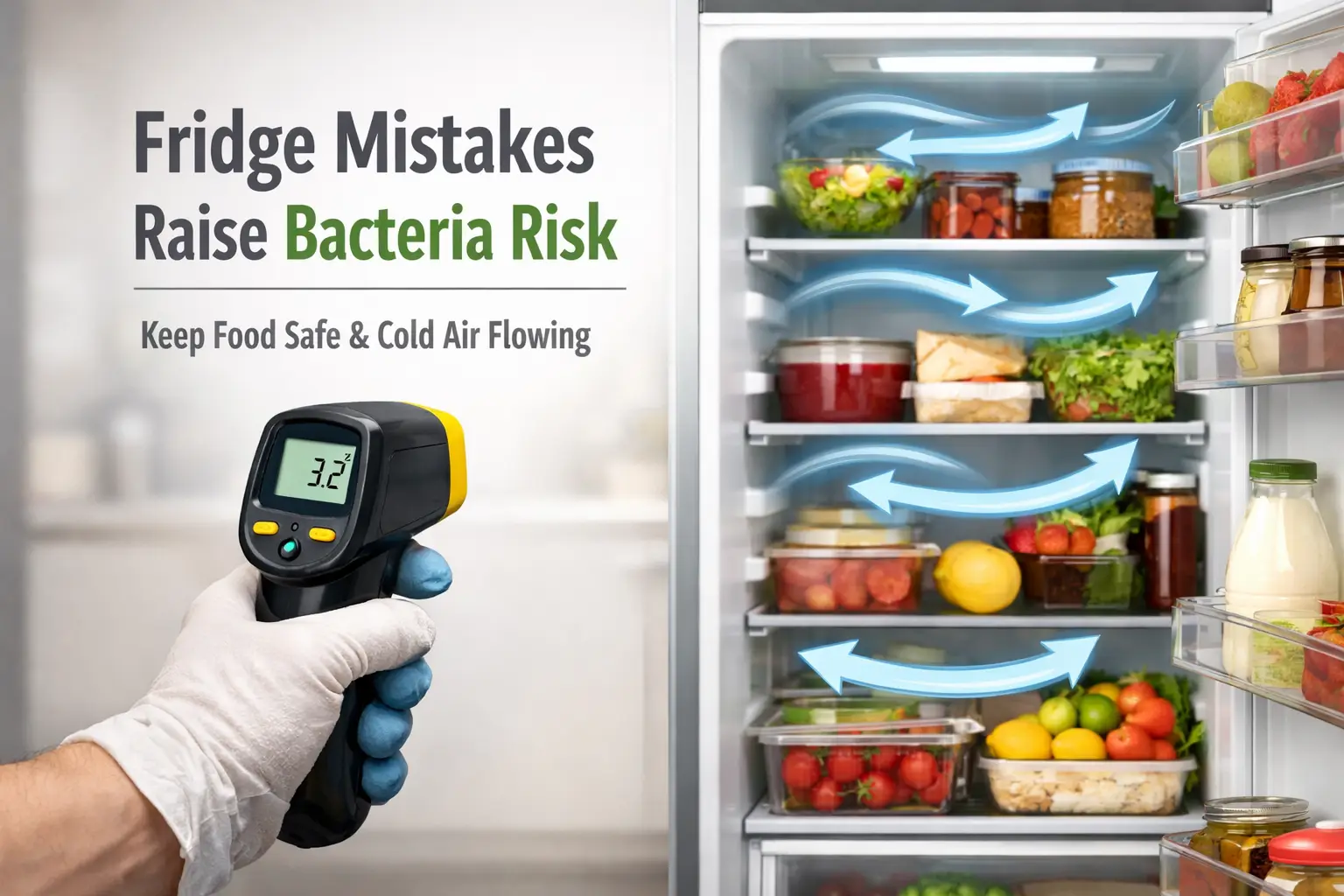
Find the fridge mistakes that raise bacteria risk in busy kitchens and learn simple monitoring actions that help keep chilled food safe every day.
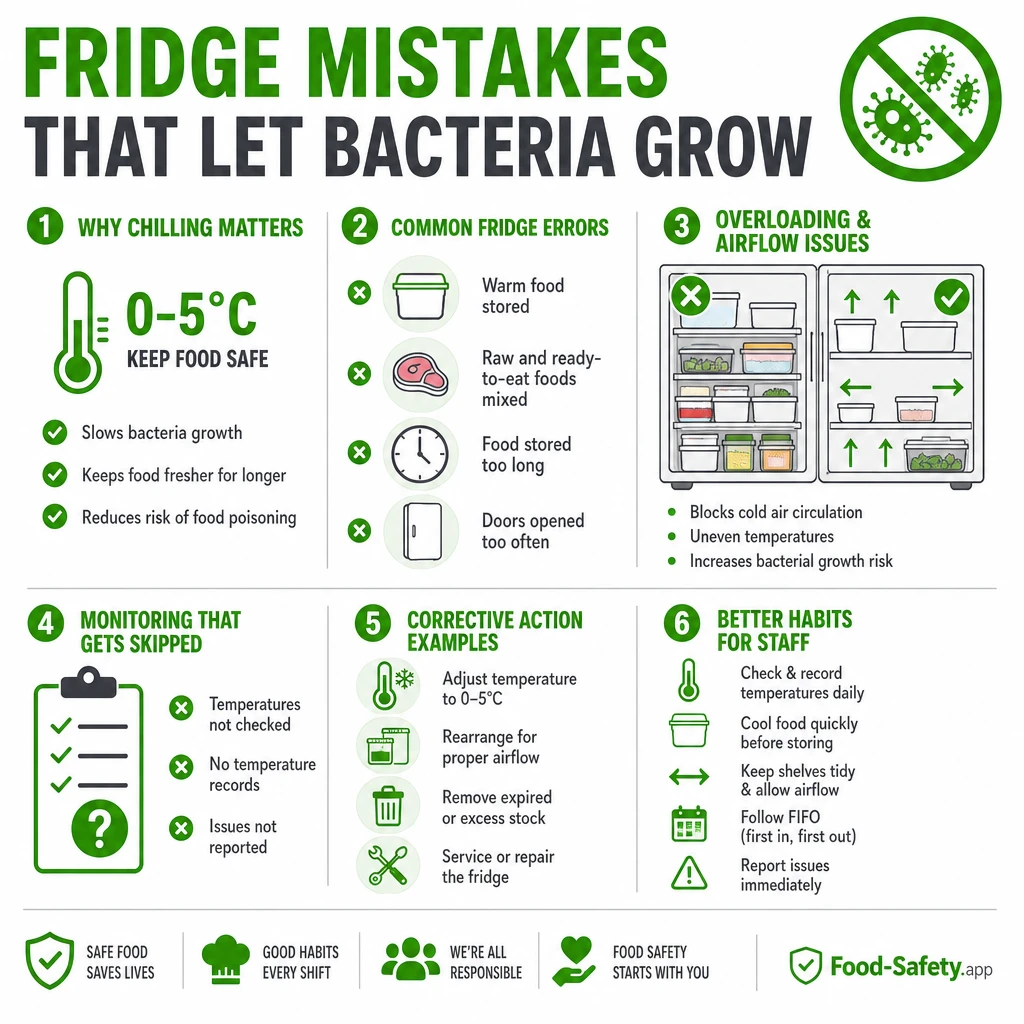
Why chilling matters
Safe cold-holding is the first line of defence against bacterial growth. When foods are kept at appropriate cold temperatures, especially ready-to-eat items、 dairy、 cooked dishes and high-risk ingredients, growth is slowed and the window for contamination is reduced. In a busy commercial kitchen, reliable chilling protects both guests and the operation, supporting accurate stock control, consistent service and smooth inspections.
What good cold-holding looks like
Follows routine, evidence-based checks rather than “it feels cold.” Foods are stored promptly after delivery, protected from cross-contamination, and rotated so that the oldest stock is used first. When in doubt, a quick temperature check confirms the evidence-based checks, not just a hunch.
For authoritative guidance on refrigeration and chilling, see the official guidance from the Food Standards Agency.
Small mistakes add up. Typical errors include rushing to store items after deliveries, leaving doors ajar during service, faulty seals, poor stock rotation, blocked vents, overfilled shelves, and using the wrong fridge for the job (for example, chilling cooked foods in a unit set for long-term storage).
Top offenders you should train against
- Warm food put away too quickly after cooking or delivery
- Doors left open during service or frenzied peak times
- Broken or degraded door seals
- Poor stock rotation and no first-expired-first-out discipline
- Blocked vents reducing air flow
- Overfilled shelves restricting cold air circulation
- Using a fridge or freezer for items it isn’t optimised to store
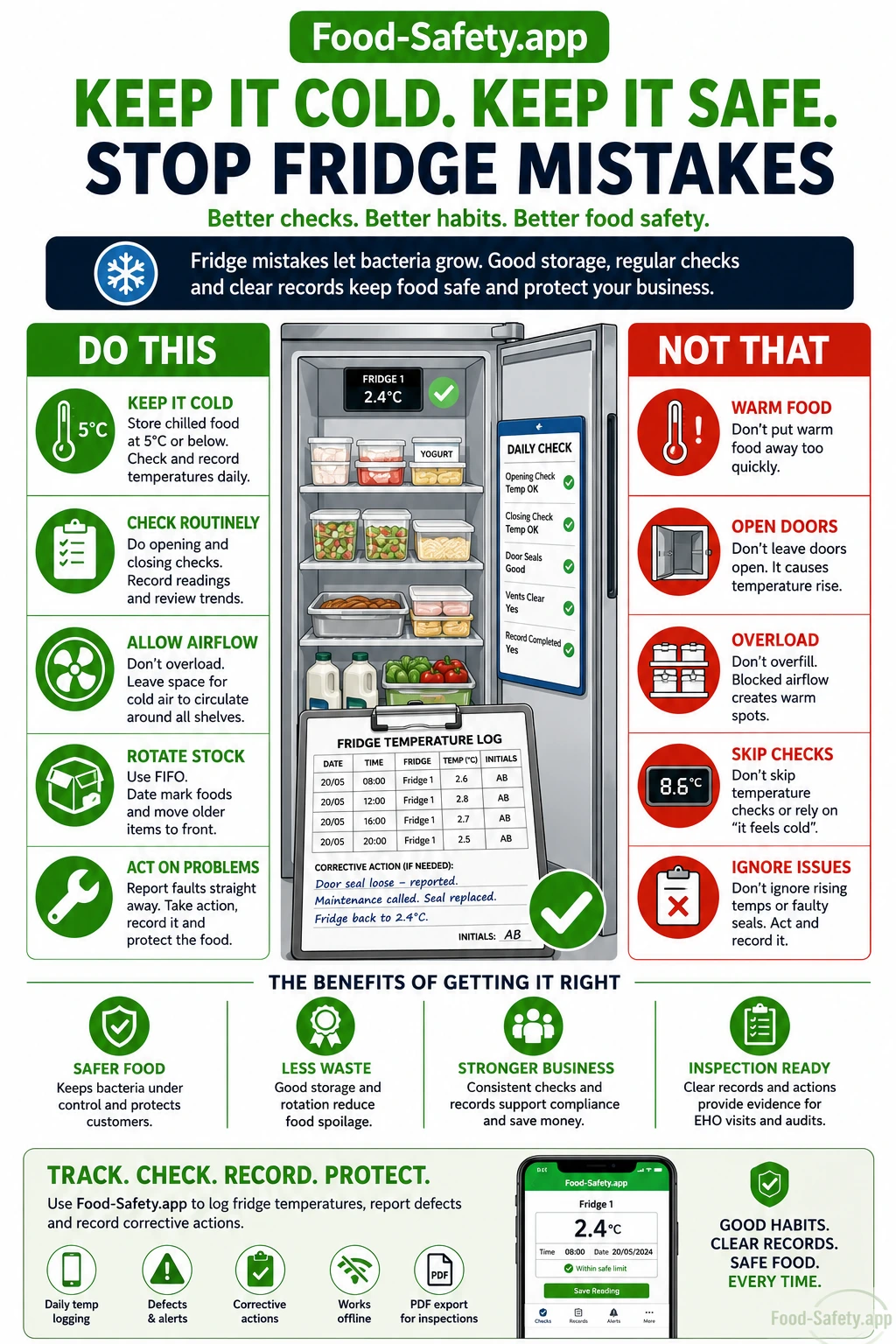
Overloading and airflow issues
When fridges are packed, cold air can’t circulate freely. Warm spots form at the back or near the door where air exchange is weakest. This undermines the entire temperature envelope, allowing some items to drift above safe limits even as others stay cool. Store items to allow air to move around, don’t stack to the door seals, and leave space for shelves to breathe.
Practical airflow practices
- Keep aisles clear and avoid stacking items against vents
- Place high-risk items in the coldest zones away from door openings
- Label shelves to guide correct placement and rotation
Monitoring that gets skipped
Routine monitoring stops when teams rely on perception rather than evidence. Missed temperature checks, no written records, or delayed action on rising readings create a gap between what’s happening and what’s controlled. Even a short service spike can push items beyond safe limits if not addressed promptly.
What good monitoring looks like
- Daily temperature logging with a clear owner for each shift
- Immediate action when readings trend upward, with a documented corrective step
- Regular review of trends to identify equipment faults before failures occur
Corrective actions examples
When a temperature issue is detected, quick, clear actions protect stock and guests. Examples include moving food to a compliant unit, reducing stock to quicken cooling, contacting maintenance if a fault is suspected, discarding unsafe food, and recording what happened along with what was done.
| Action | Why it matters | Who records | Notes |
|---|---|---|---|
| Move items to a different unit | Restore safe temperatures quickly | Shift supervisor | Note time, items moved, and new location |
| Reduce stock temporarily | Improves air circulation and cooling rate | Chef or supervisor | Record quantity removed |
| Isolate the unit and call maintenance | Identify and fix faults promptly | Duty manager | Log fault code and action taken |
| Discard unsafe or compromised food | Protect guests and license | Kitchen manager | Keep traceability notes |
Better habits for staff
Frame routines around checks, ownership and timely action. Clear ownership prevents gaps during busy service. Daily temperature logging should be part of opening and closing duties, with faulty equipment flagged immediately. Regular cleaning of condenser areas and easy-to-access fault reporting speed up recovery and reduce risk. Fault reporting helps keep issues visible and acted on promptly.
Routines that support safe chilling
- Opening checks: confirm fridges are at safe starting temperatures, doors shut, seals intact
- Closing checks: log end-of-day readings, note any deviations and actions taken
- Condenser cleaning: schedule short, regular cleanouts to maintain efficiency
- Fault reporting: raise issues promptly; do not ignore warning signs
Practical scenarios
- A fridge packed after delivery runs warm at the back, and salad items are found above safe temperature.
- A busy prep area leaves the door open during service, causing repeated temperature rise.
- A faulty seal is spotted during a closing check, and the fridge is isolated before food is lost.
- A supervisor records a rising temperature, moves products, and logs the corrective action.
Compliance and records
Focus areas for compliance include cold storage checks and traceability, opening and closing checks, equipment defect reporting, corrective action records, and clear limits for customised fridges and freezers. A robust history and PDF export capability supports inspections and audits, enabled by digital food safety records.
Conclusion
By minimising fridge mistakes, you protect guests and your operation from avoidable risk. Build habits around regular checks, proper airflow, and timely corrective actions. For teams tracking fridge performance and maintaining records, Food-Safety.app, a food safety management system for catering businesses, can help keep evidence organised, save time and stay inspection-ready.
Explore more on Food Safety.app
Discover practical tools and templates to help you stay compliant, train staff, and keep food cooling on track across busy service.