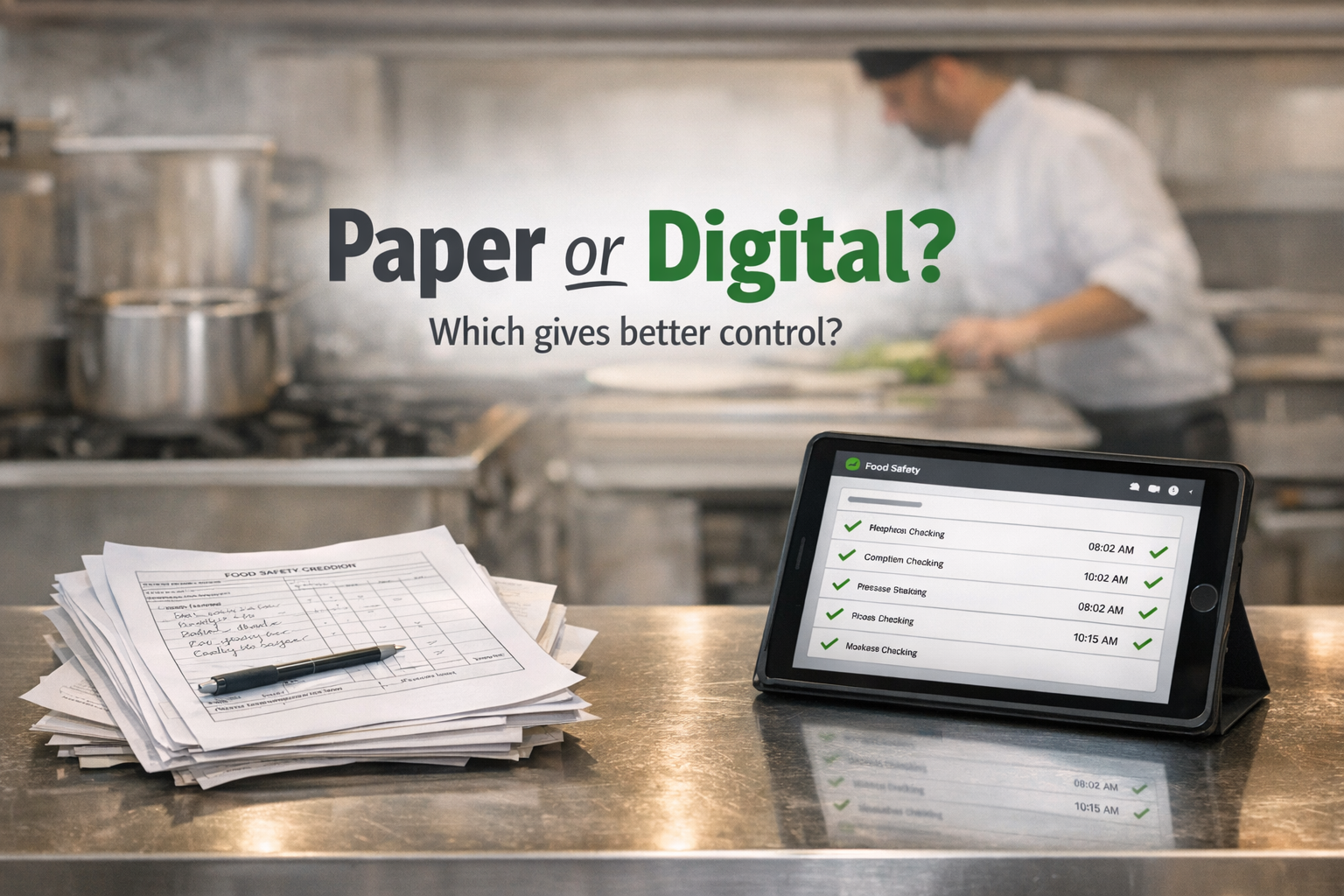
Paper vs digital food safety records determine how quickly a busy kitchen stays compliant, traces issues, and demonstrates due diligence during an inspection. The choice shapes how checks are captured, how errors are corrected, and how easily evidence can be retrieved. This article compares practical cafe-to-kitchen scenarios to help managers decide which system fits their operation.
Paper vs digital: what each system does well and where it causes problems
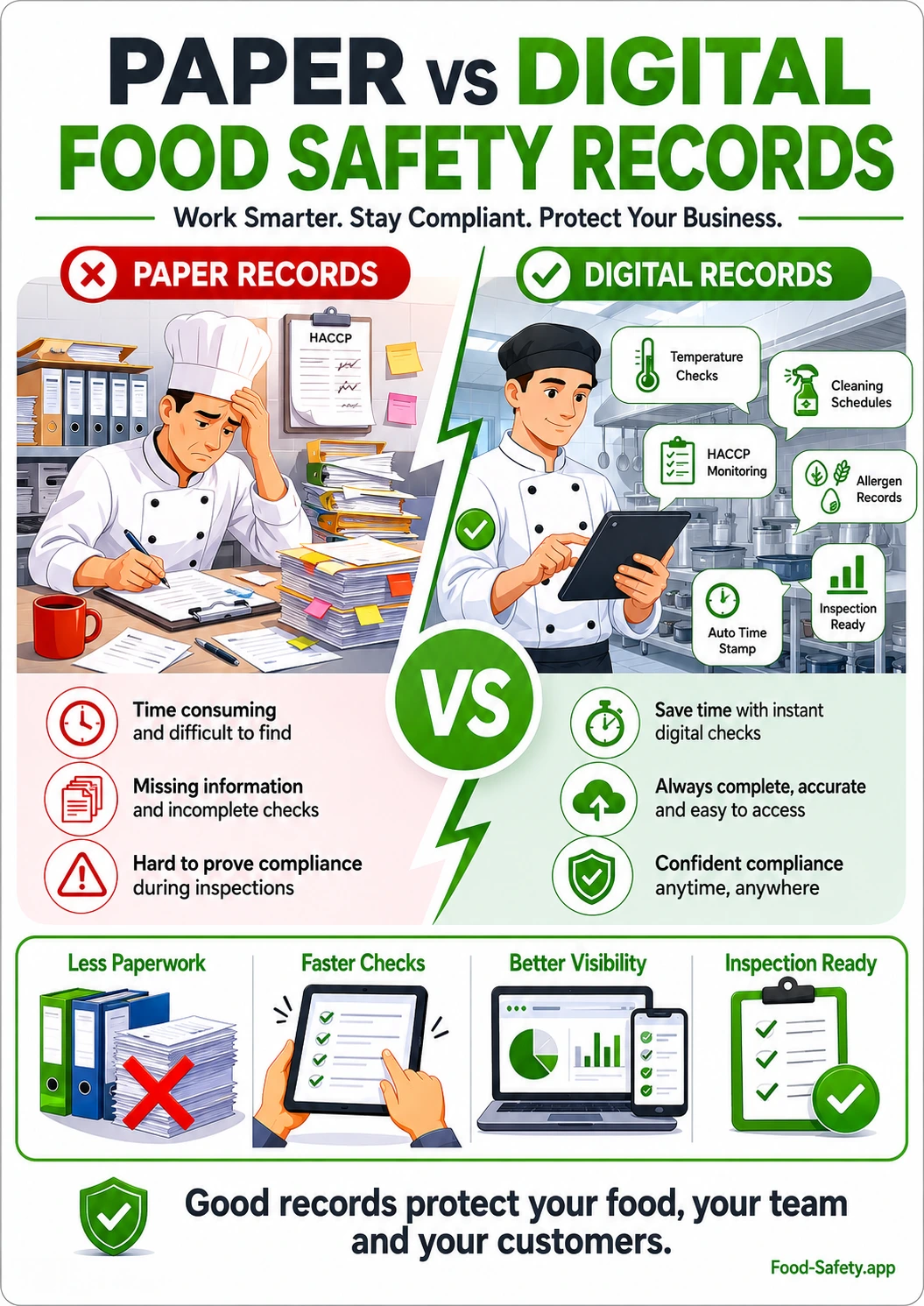
Paper records are inexpensive and quick to deploy but can become bulky and prone to misfiling. Digital records offer structure, reminders, and easy searchability, with an auditable history. A practical mix, using paper for immediate checks and digital where speed and retrieval matter, often works best for cafe-to-kitchen operations.
| Aspect | Paper | Digital |
|---|---|---|
| Speed of entry | Fast if routines are simple | Often faster with guided forms |
| Handwriting clarity | Subject to legibility | Consistent, machine-printed text |
| Audit trail | Limited, manual follow-up often needed | Automatic history and timestamps |
| Storage and access | Physical filing; space can be an issue | Digital storage; quick search |
Speed and accuracy
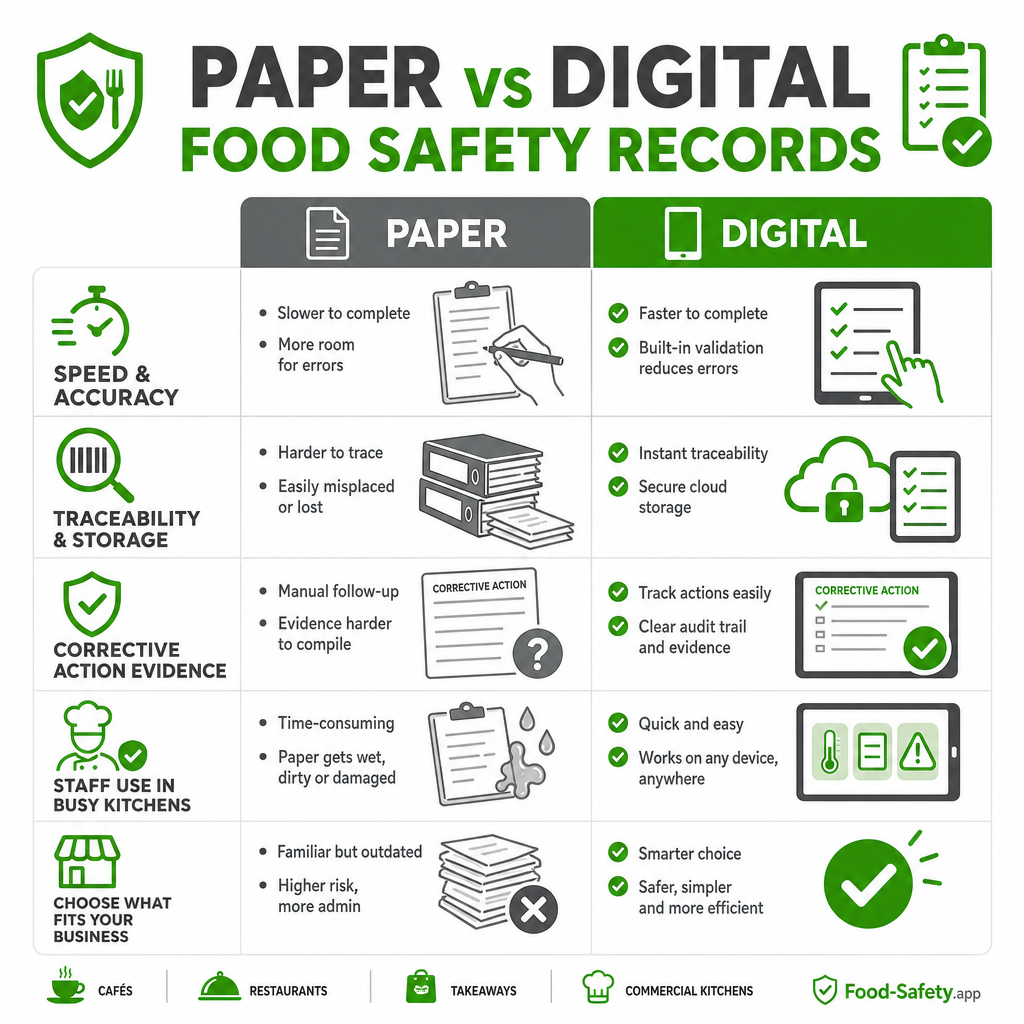
In busy service, manual paperwork is prone to missed entries, faded notes, and late checks. Digital records help by enforcing required fields, timestamps, and standardised formats. To maximise speed and accuracy regardless of system, adopt practical routines:
- Pre-printed checklists with short, binary responses, such as pass, fail, yes, or no.
- Single-step entries for critical checks, including temperature, date, time, and initials.
- Defined time windows for entries, such as temperature checks every two hours during service.
- Regular bite-sized training refreshers focused on the most common errors.
Actionable tip: design your process so staff can complete entries in under 20 seconds during peak times, reducing the temptation to skip or rush through checks.
Where staff repeatedly miss checks during pressure periods, it may also be worth reviewing wider routines such as why staff still get handwashing wrong, because missed records and missed hygiene steps often come from the same operational pressure.
Traceability and storage
Traceability hinges on easy retrieval of records when needed. Paper filing often creates a maze of folders, loose sheets, and mislaid forms. Digital storage centralises records, enables quick searches by date, item, or shift, and makes evidence available in seconds during an inspection.
Practical steps to improve traceability include labelling records clearly with date, shift, and area checked, keeping a consistent archive method, and regularly testing retrieval by running a mock inspection query.
Corrective action evidence
When something goes wrong, such as a fault in temperature control, digital logs can show when the issue was detected, the action taken, and who signed it off. Paper records can capture actions, but delays and handwriting gaps often make the evidence less clear.
Good corrective action records should document the fault, the immediate action, the person responsible, the follow-up check, and the completion status. For official guidance on HACCP and inspection readiness, see the Food Standards Agency HACCP guidance.
Example: a failed fridge check logged digitally shows the exact time, the corrective adjustment, and the follow-up temperature reading, all with an audit trail. Paper equivalents should mirror this clarity, but the risk of missing lines or lost sheets is higher.
Staff use in busy kitchens
Staff experience during service matters as much as the record itself. Digital systems can ease sign-offs across shifts through predictable routes, reminders, and central visibility. Paper can be fast for a single station, but cross-shift handovers and quality checks may require extra steps to locate and verify previous entries.
Practical tips for busy kitchens include assigning a dedicated time block for record checks during shift handovers, using simple standard terms, and keeping a daily log of any issues and actions taken.
What fits your business
Business size and service style influence the choice. Small cafés with limited staff may favour simple paper records for day-to-day checks, with digital backups for peak periods or stock takes. Pubs and takeaways usually benefit from digital forms because they help maintain consistent records across busier shifts.
Small cafés
Limited staff and space favour simple records that are easy to complete and retrieve. If allergen duties are part of the same routine, link the process to Natasha’s Law guidance for small businesses and make sure packaged food checks are recorded clearly.
Pubs and takeaways
Higher throughput benefits from digital forms that speed up entry, while supporting consistent data across shifts and central access for management. Where takeaway food is packaged or labelled, clear allergen labelling on packaged food should sit alongside the record system.
Caterers and event kitchens
Frequent site changes and mobile working make digital records useful, especially for deliveries, travel conditions, setup checks, and multiple control points. If menus change often between events, menu changes that break allergen control is directly relevant to the record keeping process.
Schools and care settings
Consistency and traceability are essential. Digital systems can support standard HACCP logs and audit records across several kitchens and staff teams.
Kitchens with limited storage
Digital records reduce paper clutter and the need for physical filing space, while still providing traceability and recallability when required.
Practical examples or scenarios
A fridge temperature check missed on paper during lunch service
Paper: the missed check risks a compliance gap and delays in corrective action. Digital: the reading is logged with time, and an alert can prompt a recheck and corrective steps.
A delivery arrives warm and the goods in record needs to show condition, action taken, and supplier follow-up
Paper: notes may exist, but retrieval and supplier tracking are slower. Digital: the temperature on arrival, the action taken, and supplier follow-up are recorded in one traceable entry with dates and responsible staff.
A cleaning task signed off on paper but not filed correctly
Paper: the sign-off exists but may be misfiled or difficult to locate. Digital: the task is logged with a clear history, including completion times and rechecks if needed. Where the issue relates to allergen cleaning, how to clean to reduce allergen cross-contact is the more relevant supporting link.
A supervisor preparing for an EHO visit
Paper entries scattered across folders delay response. Digital records provide quicker access to temperatures, allergen checks, cleaning records, and defect log entries, helping demonstrate due diligence at short notice.
Suggested compliance or operational focus
Focus areas to raise inspection readiness and risk control include:
- Food hygiene inspection readiness: quick retrieval and complete records for critical checks.
- Evidence for HACCP and due diligence: consistent, timestamped logs across cooking, cooling, storage, reheating, and hot holding.
- Clear corrective actions and audit trail: obvious links between fault, action, and verification.
- Reliable record storage without paper clutter: structured digital records with easy export formats for audits.
- Ongoing training and shift handovers: a simple, repeatable routine that staff actually use.
Transition and decision support
Moving from paper to digital is a staged choice. Start with high-impact areas where speed, traceability, and corrective actions are most valuable, such as temperature controls, deliveries, and critical cleaning checks. Maintain paper for quick checks if needed, while piloting a simple digital form in parallel to gauge time savings and staff adoption.
During the transition, look at wider service risks too. If records show repeated handling or service issues, practical guidance on how to stop cross-contamination in service may support your team’s day-to-day controls.
Final thoughts and next steps
Whether you keep paper alongside digital or transition fully, the aim is consistent, auditable records that support daily operations and smooth inspections. If you are weighing a move to a central system, consider how your team works across shifts, how you store and retrieve evidence, and how quickly you can demonstrate corrective actions.
Food-Safety.app, a food safety management system for catering businesses, offers offline, timestamped record keeping with full history, PDF export, and customisable checks designed for real kitchen use.
Ready to simplify your food safety records
Move toward reliable, auditable records that support inspections, daily checks, corrective actions, and smoother kitchen routines.