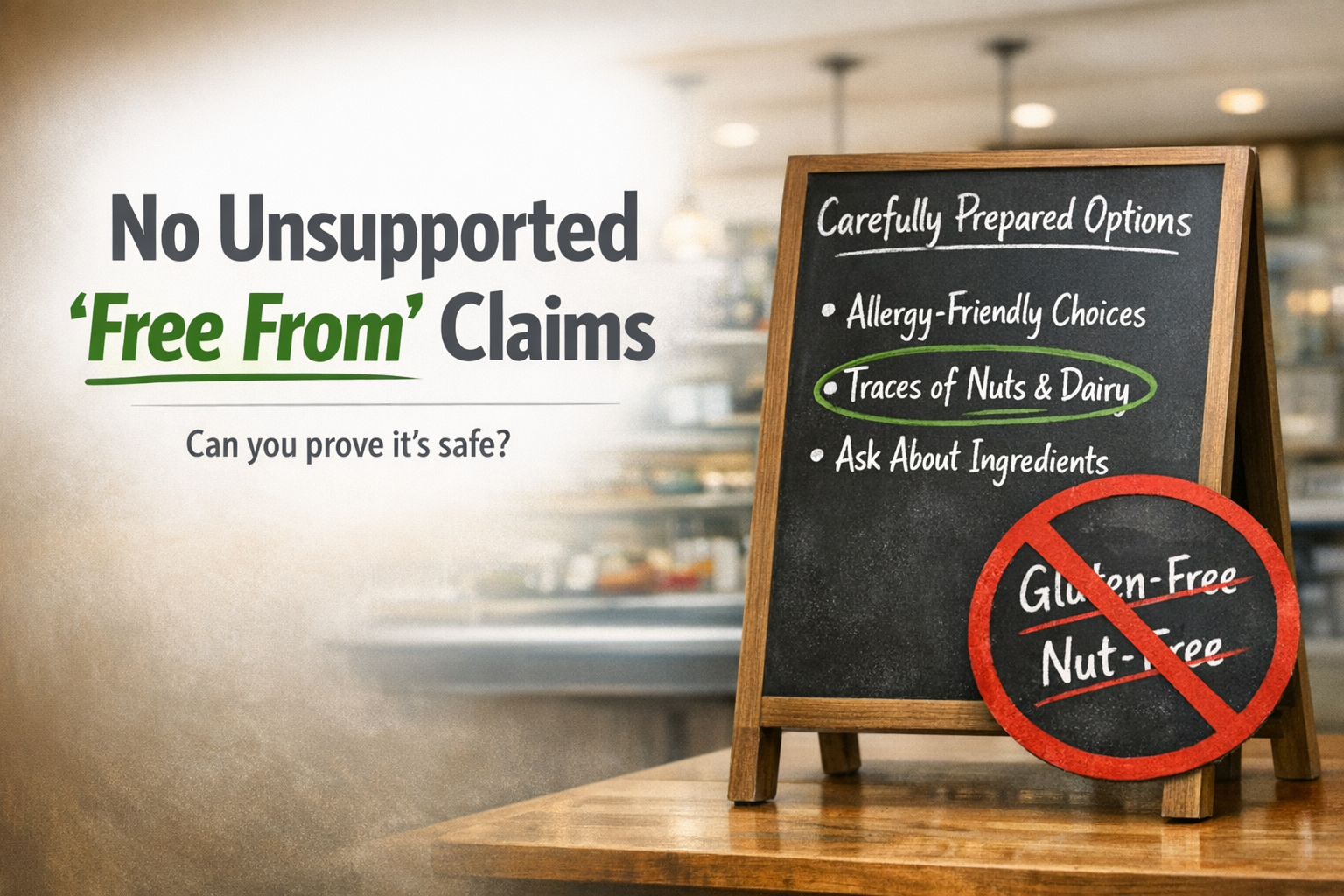
Understanding when free-from claims are safe to use in a busy kitchen is essential for allergen management. This article reveals practical controls, cross-contact risks, and clear wording to protect customers without slowing service. With reliable sourcing, documented recipes, staff training, and robust records, your team can manage expectations and reduce audit questions while keeping operations smooth.
Table of contents
Understanding what “free from” means in practice
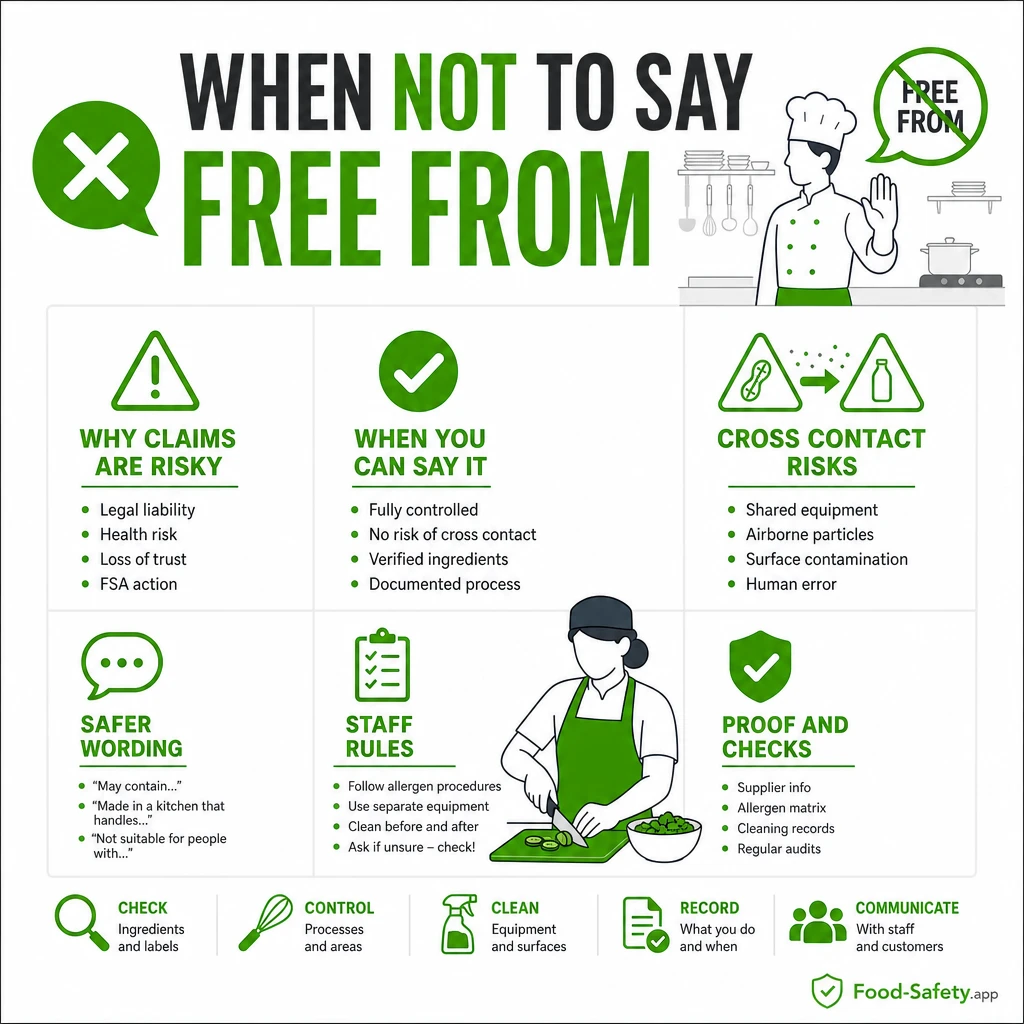
A true “free from” claim implies a deliberate and verifiable absence of a specific allergen in a dish, including avoidance of cross-contact through shared equipment, surfaces, and staff handling. It requires reliable sourcing, clear recipes, and documented controls. In practice, it means more than removing an ingredient; it means demonstrating risk management that can be traced in records and inspections, supported by practical hygiene controls.
Key ideas: accuracy, traceability, and confidence that the absence is maintained under normal service pressures. When any part of the control fails, the claim becomes questionable and should be reconsidered or replaced with a safer wording.
Where cross-contact creates risk
Shared equipment, surfaces, storage, and staff handling
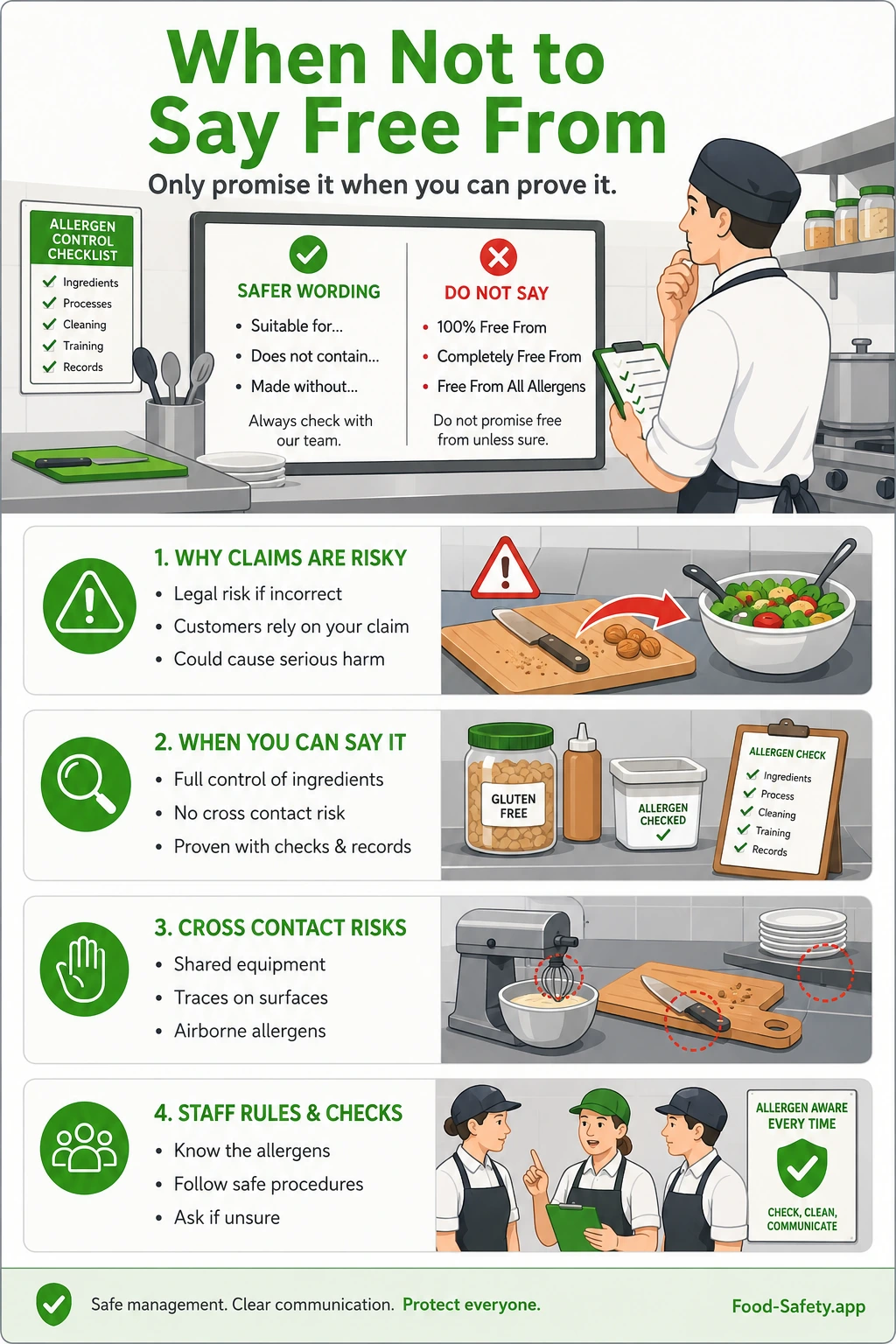
Cross-contact is the main issue that undermines “free from” statements. Shared fryers, ovens, pans, preparation benches, utensils, and storage can introduce unintended exposure. Staff handling, storage practices, and cleaning routines all influence whether a claim remains valid during busy service, peak hours, and multi-item prep. For routines to clean surfaces and reduce cross-contact, see how to clean to reduce allergen cross-contact.
Safer wording options when control is not guaranteed
Examples of safer statements
- Made without X ingredient
- May contain traces of X
- Not suitable for immediate serve to those with X allergies
- Ask staff for allergen information before ordering
These phrases acknowledge potential risk and invite verification, reducing the chance of misleading guests while still providing useful information for decision-making in a catering environment. For safer communication guidelines, see how to stop cross-contamination in service.
Staff roles and governance
Who can approve labels and claims
Only designated staff with oversight of recipes and supplier information should approve “free from” statements. This typically includes the head chef, kitchen manager, or a trained allergen lead who understands cross-contact risks and recipe checks.
How recipes are checked
Recipes must be reviewed whenever ingredients change. Document ingredient lists, child-safe substitutions, and any preparation method that could reintroduce the allergen. Integrate allergen checks into any new menu development or seasonal changes. This aligns with guidance on what counts as a CCP for small kitchens; see what counts as a CCP in a small kitchen.
Proof, checks and records
Written allergen records and supplier specs
Maintain a live allergen matrix for all 14 recognised allergens, linked to each menu item. Keep supplier specifications and product datasheets on file and ensure they are reviewed when deliveries change.
Regularly review cleaning schedules, equipment usage, and staff training related to allergen handling. Records should show who approved each claim, what checks were performed, and when reviews occurred. Digital records can help streamline this process; see what are digital food safety records and how do they help.
For official guidance on allergen information, see Food Standards Agency allergen guidance.
Recipe checks, cleaning controls, and reviews
Link menu items to their allergen information, and verify that cleaning controls prevent cross-contact between allergen-containing and allergen-free preparations. Schedule regular reviews of recipes, supplier deliveries, and staff training updates to maintain accuracy and audit readiness.
Practical examples or scenarios
A gluten-free dessert made in a kitchen that also handles wheat flour
Even if a dessert recipe is gluten-free, if the same oven, spatulas, and trays are used for wheat products, a “free from” claim cannot be guaranteed. Implement dedicated equipment or create a strict clean-down protocol with documented checks before serving gluten-free items.
A dairy-free soup using a cream-free recipe but cooked in shared pans
Using the same pans to cook dairy-containing stock can reintroduce dairy traces. Consider separate cookware or a clearly documented method that confirms no dairy is present after cleaning, or adjust the wording to reflect the risk.
A “nut-free” sandwich counter where trace risk cannot be ruled out
In a high-traffic counter with nut-containing products nearby, a full nut-free claim may be unsafe. Use “made without nuts” only if recipes and surfaces are fully isolated; otherwise, use a safer statement and communicate risk to staff and customers.
A special request from a customer needing direct chef confirmation before serving
When a guest requests a dish be nut-free or dairy-free, obtain direct confirmation from the chef and record the decision. If there is any doubt about cross-contact, guide the guest to a safe alternative and document the communication.
Operational routines and checklists
Opening checks
- Review the day’s allergen-sensitive orders and service plan
- Verify supplier deliveries with allergen information
- Confirm cleaning and equipment separation for relevant items
- Brief staff on any changes to recipes or labeling
During service
- Maintain separation of allergen-free prep areas where possible
- Use dedicated utensils and colour-coded tools if feasible
- Log any ingredient substitutions and updated allergen information
Closing checks
- Update allergen records for any changes in ingredients or suppliers
- File completed allergen checks and incident notes
- Review any customer feedback related to allergen statements
How Food-Safety.app helps
Food-Safety.app is a practical tool to support allergen management in busy kitchens. It helps teams store allergen records, link menu items to allergens, review full history, and export PDFs for inspections. It works offline, needs no login, and helps kitchens keep safer, clearer allergen records.
In the final analysis, use careful wording, solid supplier controls, and robust records to keep “free from” claims credible. Regular training and clear governance are essential to turn policy into practice in a real catering environment.
Further guidance and tools
Discover practical guidance to strengthen allergen controls, keep accurate records, and stay audit ready with Food-Safety.app across busy service environments.