
Registering a food business in the UK is a legal requirement for anyone who handles, prepares, stores, or sells food for profit. This practical guide explains who must register, the 28‑day rule before trading, and how to avoid delays when opening a new site or changing ownership, including home kitchens, mobile units, pop-ups, market stalls, and delivery‑only operations, with actionable steps you can start today. For allergen and labeling context, see Natasha’s Law for small food-businesses.
- Who must register as a food business in the UK
- The 28 day rule: register at least 28 days before trading
- Which setups still need registration
- Taking over an existing business: why registration still needs checking and updating
- Changes that must be reported
- Common mistakes that delay opening
- What to expect after registration
- Practical examples or scenarios
- Suggested compliance or operational focus
- Digital tools to support registration and records
Who must register as a food business in the UK
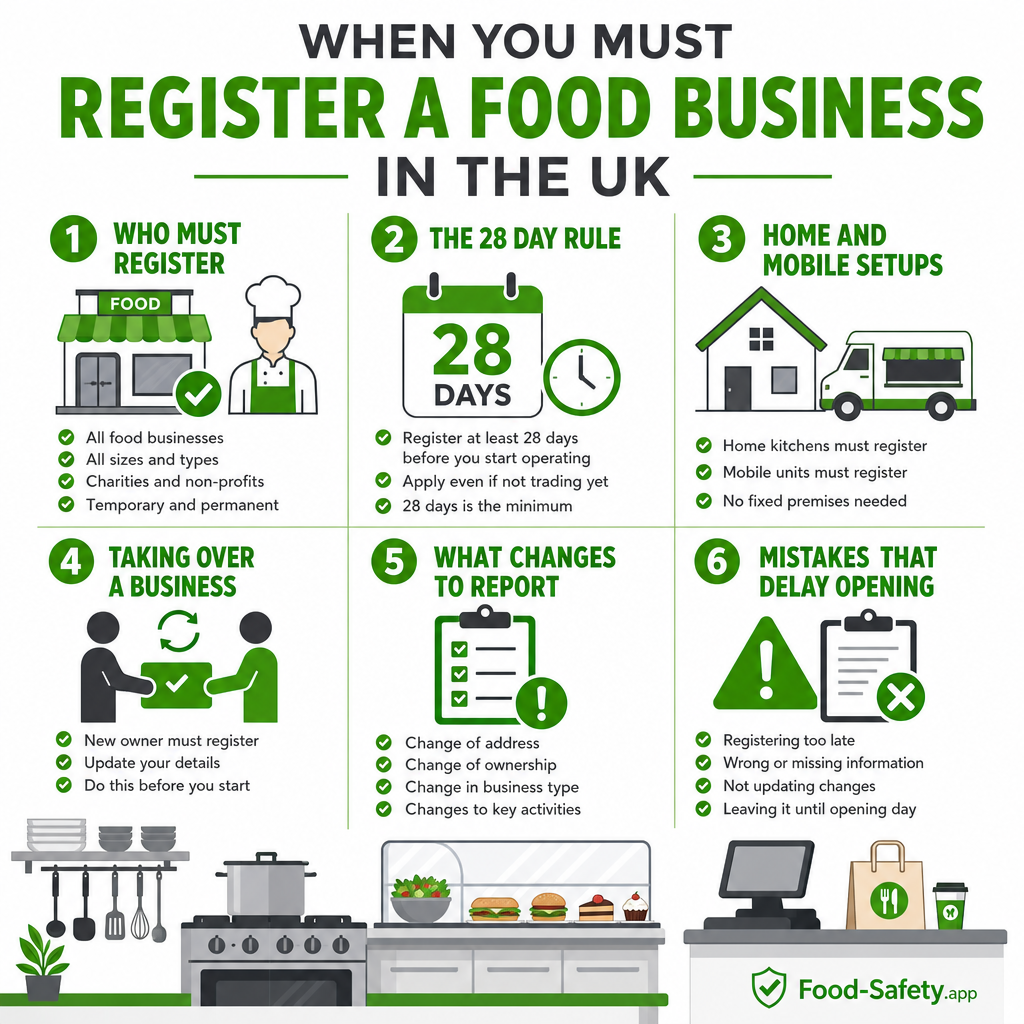
Anyone who handles, prepares, stores, or sells food for profit or reward must register their food business with the local authority that covers the business location. Registration helps authorities understand where food is produced and how it is handled, which supports safe practice and timely inspections. It applies even if you operate from a home kitchen, a shared facility, a mobile vehicle or a pop‑up. If you’re moving between sites or changing the scope of your activity, you must keep the local authority informed. For allergen and labeling context, see Natasha’s Law for small food-businesses.
Key concept to understand is the food business operator (FBO) responsibility. The FBO is accountable for hygiene controls, records, training, and communicating changes to the local authority. If you operate more than one site or vehicle base, you may need to register multiple premises and ensure each site is correctly linked to the right local authority. For official guidance, see the Food Standards Agency on registering a food business in the UK: FSA guidance on registration.
In practice, registration is about ensuring you have a clear address for the premises, an identifiable operator, and a defined scope of activity. It is not a “licence” to operate; it is a formal registration that prepares you for inspection and ongoing compliance. Simple safety tips for busy kitchens.
The 28 day rule: register at least 28 days before trading
The 28 day rule is a practical deadline designed to ensure your local authority has time to assess risk, collect a few basics, and plan an initial inspection if needed. Start registration well in advance of your planned opening date, especially if you anticipate high demand or multiple sites. When staff need food safety refresher training.
How to plan around the rule:
- Register as soon as your business concept is confirmed, not when you are ready to trade.
- Provide accurate details for each site or vehicle base, including address and intended activity.
- Prepare basic records that authorities will expect at inspection, such as cleaning schedules and temperature checking routines.
Timing is part of trade readiness. If you’re opening a pop‑up or seasonal operation, consider registering early even if you expect a short window of operation. Delays often come from missing information or changes after registration, which can trigger re‑check requests from the authority.
Which setups still need registration
Registration applies to a wide range of operation formats. Here are common setups and what to consider for each:
Home kitchens
Home kitchen operations that sell food for profit usually require registration, even if the work is done outside typical business hours or in spare rooms. Separate work areas, dedicated equipment for commercial use, and clear separation from personal cooking help demonstrate suitability for inspection. For general hygiene practices, see Simple tips for busy kitchens.
Mobile caterers
Vehicles, trailers, and portable kitchens used for events or contracts should be registered with the local authority that supervises the base location or where you primarily prepare or store food. Ensure documentation covers vehicle hygiene, temperature control, and waste handling. Cleaning to reduce allergen cross-contact.
Pop-ups and market stalls
Temporary trading formats can still fall under registration, especially if you cook, serve, or sell food that requires safe handling. Provide predictable schedules, a defined point of operation, and details of any gear that facilitates safe service in different venues. For risk awareness in small kitchens, see Salmonella risks in small kitchens.
Market stalls and shared spaces
Stall locations within markets or shared kitchens may be linked to a central site or multiple authorities. Confirm the correct local authority for each site to avoid gaps in compliance or reporting obligations.
Delivery-only kitchens
Ghost or delivery‑only kitchens produce and dispatch food for delivery without an on‑site dining area. They still require registration if they handle and prepare food for sale. Clear processes for hygiene, allergen management, and delivery checks are essential.
Seasonal operations
Seasonal businesses can register for the period of operation and provide a plan for discontinuation or transition. If you re‑open later, confirm how the registration status will be updated or refreshed to reflect the change in activity. Salmonella risks in small kitchens.
Taking over an existing business: why registration still needs checking and updating
When you acquire a business, you inherit its registration details, but changes in ownership, site address, or trading activity require updates. Notify the local authority of:
- new operator details
- changes to the site or vehicle base
- a shift in the scope or type of food handling
- new opening hours or additional sites
Even if the equipment remains the same, a new owner can trigger a review of risk controls and record‑keeping practices. Clarify who the responsible person is and confirm any outstanding compliance items before opening to the public.
Changes that must be reported
Keep the local authority informed whenever a material change occurs. Common items to report include:
- Premises address or description of the business site
- Change of operator or management contact
- Trading activity or menu changes that alter risk profiles
- Opening hours or peak service times
- Food handling setup, equipment, or storage locations
- Introduction of additional sites or vehicles
Practical examples or scenarios
- A home baker selling at markets and online
- A van-based caterer serving events across different districts
- A chef taking over a café with the same equipment but new ownership
- A business adding a second kitchen or prep unit
- A pop-up operator moving from occasional events to regular trading
Suggested compliance or operational focus
- Check whether the activity counts as a food business before trading
- Confirm the correct local authority for each site or vehicle base
- Keep registration details current whenever the operation changes
- Build food safety records early so the business is inspection‑ready from day one
- Make sure temperature checks, cleaning, allergen records and delivery checks are easy to complete and trace
Digital tools to support registration and records
Food-Safety.app, a food safety management system for catering businesses.
Use it to keep registration-related food safety records organised from the start, with offline logging, automatic timestamps, PDF export, custom checks, allergen and delivery records, and a full history view to support inspections and day-to-day compliance. How to complete the SFBB diary properly.
Learn more about food safety tools
Discover practical tools to simplify food safety records, stay compliant, and prepare confidently for inspections. Access offline logging, automated timestamps, and easy reporting to support day to day operations.