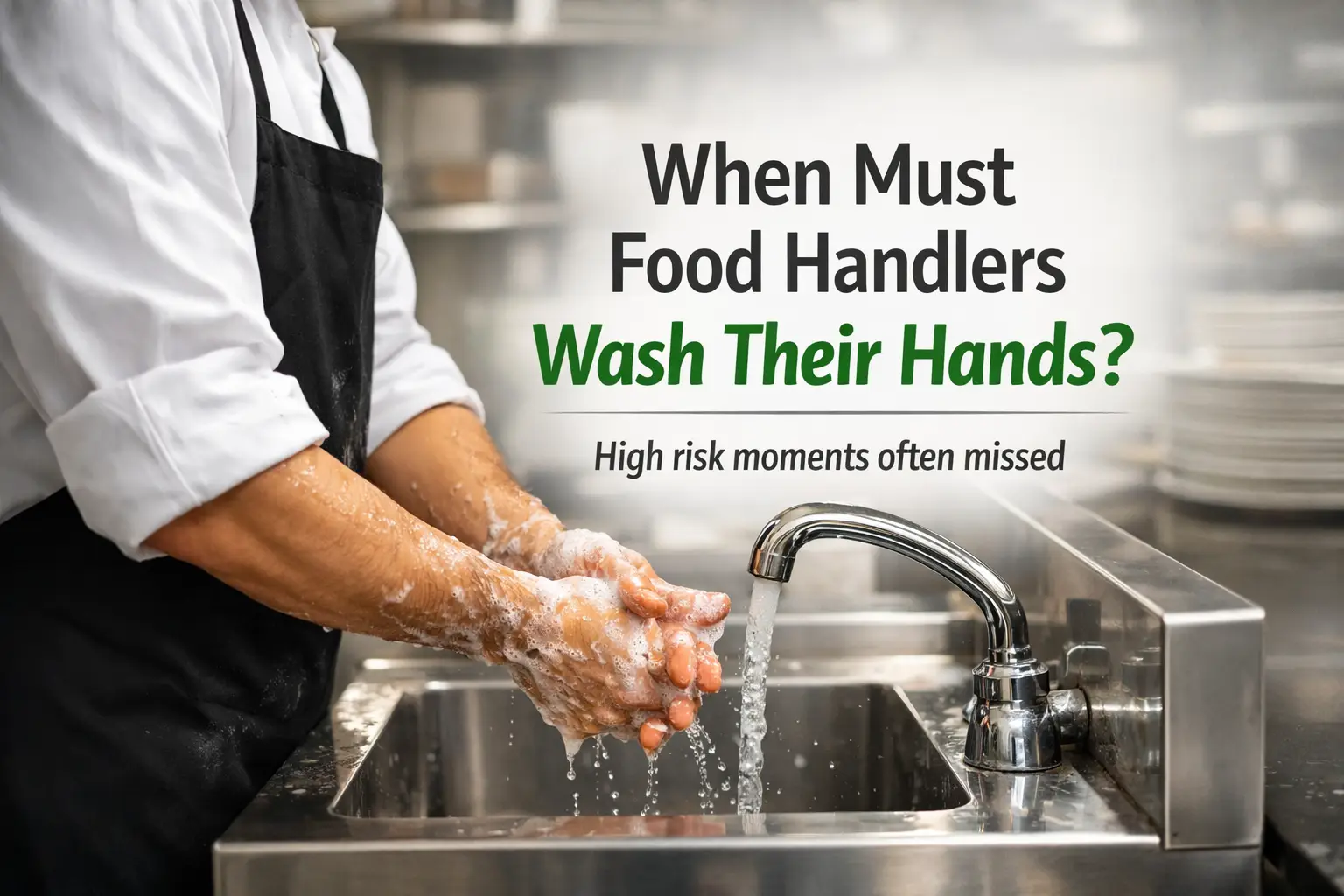
Food handlers should wash and dry their hands whenever contamination could pass from something they have touched to food, equipment or a clean preparation area. The most important moments are before handling ready-to-eat food, after handling raw food, after using the toilet, after touching bins or dirty equipment, after cleaning and whenever staff return to food preparation after an interruption.
This practical guide explains the handwashing moments that are often missed during busy shifts, how gloves should be managed and what supervisors should look for in a working kitchen.
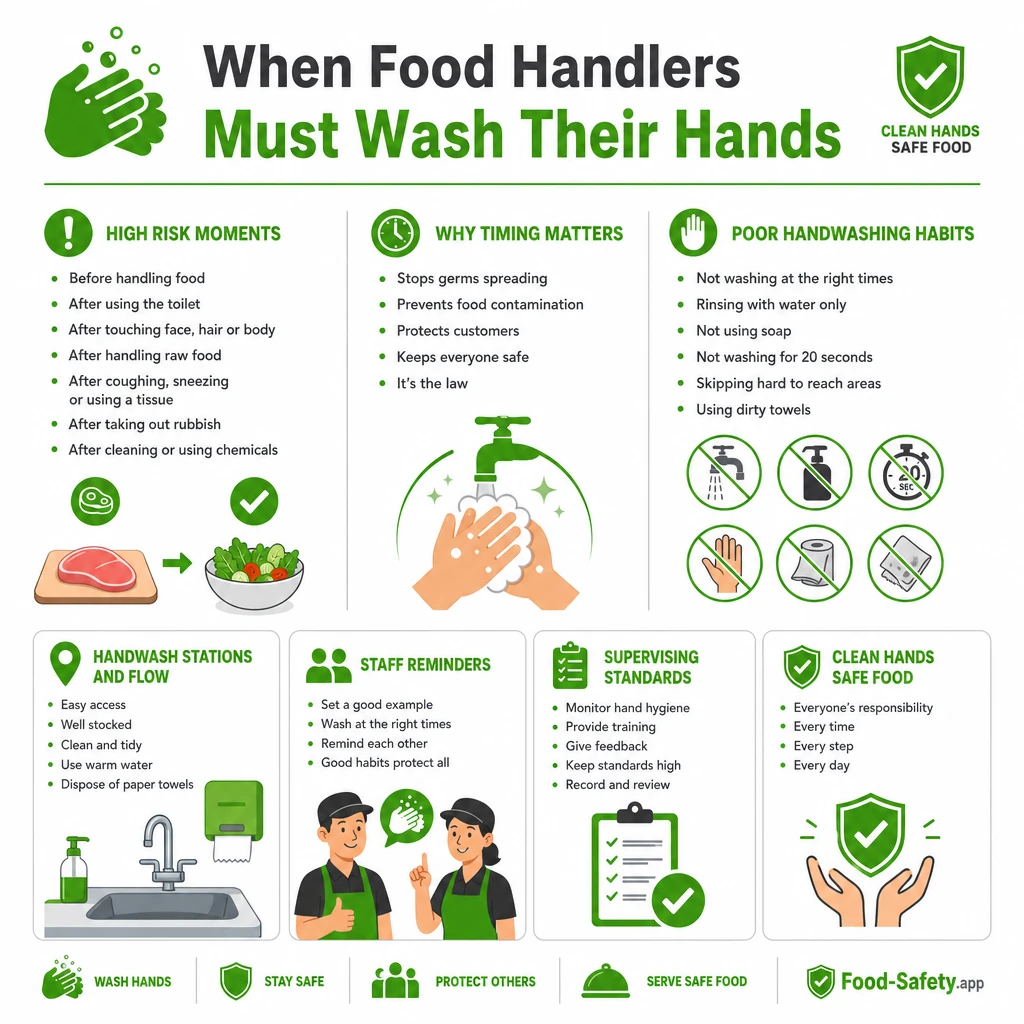
When food handlers must wash their hands
Food handlers should wash and thoroughly dry their hands at the following times:
- Before starting food preparation or handling exposed food.
- Before handling ready-to-eat food such as cooked meat, salads, bread, garnishes and desserts.
- After handling raw meat, poultry, fish or eggs and before touching another food, utensil or work area.
- After handling unwashed fruit or vegetables and any packaging that has been in contact with raw food.
- After using the toilet and before re-entering food preparation.
- After every break, including eating, drinking or smoking breaks.
- After coughing, sneezing, blowing the nose or touching the mouth, face or hair.
- After touching a cut or changing a waterproof dressing.
- After handling waste, touching bins or replacing bin liners.
- After cleaning or handling dirty cloths, mops, brushes, chemicals or equipment.
- After touching phones, door handles, light switches, tills, payment terminals or money.
- After removing disposable gloves and before putting on a fresh pair for a new task.
- After handling deliveries or outer packaging when staff are returning to exposed food preparation.
- Before preparing food for a customer with a declared allergy, alongside the business’s allergen-control procedure.
- Whenever hands may have become contaminated, even when no dirt is visible.
The important point is not to wash according to a clock. Staff must wash at the moment contamination could move from one task to another.
Handwashing is only one part of the control. Work surfaces, utensils and food also need protection. See our guide to preventing cross-contamination in a commercial kitchen.
For the official UK safe method, refer to the Food Standards Agency handwashing guidance.
A simple handwashing decision rule
Long lists are useful for training, but they can be difficult to recall during service. A simpler rule is:
If the last thing you touched was raw, dirty, shared or personal, and the next thing you will touch must remain clean, wash and dry your hands first.
Before changing tasks, ask three quick questions.
1. What did I just touch? Raw food, waste, packaging, money, a phone, dirty equipment or part of my body?
2. What am I touching next? Ready-to-eat food, a clean utensil, crockery, packaging or a disinfected surface?
3. Could contamination pass between them? If the answer could be yes, stop and wash.
This decision rule is particularly useful when an interruption changes the planned workflow. A chef may not intend to handle a phone, delivery box or bin during preparation, but once they do, the handwashing point changes.
Critical moments during a kitchen shift
Before starting or returning to food preparation
Hands should be washed before the first food task of the shift and whenever a member of staff returns after leaving the preparation area. This includes returning from a break, the toilet, a delivery check, a smoking area, the office or front-of-house service.
When moving from raw food to ready-to-eat food
This is one of the highest-risk transitions in a kitchen. Staff must stop the raw-food task, remove contaminated gloves where used, wash and dry their hands, and use clean equipment before touching food that will not receive further cooking.
Cleaning the board but forgetting the knife handle, tap, fridge handle or apron can allow contamination to continue. Handwashing should sit within a complete task-change routine rather than being treated as an isolated action.
After touching shared equipment
Phones, touchscreens, card terminals, till buttons, pens, door handles and light switches are handled by many people. Staff should wash before returning from these items to exposed food or clean food-contact equipment.
After waste, cleaning or dirty equipment
Emptying a bin, loading a dishwasher, clearing used plates or handling a dirty cloth creates a clear contamination point. Staff should not move straight from these jobs to stacking clean plates, garnishing food or packing takeaway orders.
Before an allergy order
Handwashing helps reduce allergen transfer, but it is not enough on its own. Staff must also follow the site’s allergen procedure, use suitable clean equipment, check ingredients and protect the order from contact with other foods.
Managers should make these transitions part of practical onboarding. See how to train staff in food hygiene quickly using demonstrations, repeat-back and short competency checks.
Do gloves replace handwashing?
No. Disposable gloves do not replace effective handwashing. A contaminated glove can spread bacteria, viruses and allergens in the same way as a contaminated hand.
When disposable gloves are used, staff should wash and dry their hands before putting gloves on, use gloves for one defined task rather than wearing them continuously and change gloves between raw food and ready-to-eat food.
Gloves should also be changed after touching money, phones, bins, handles or dirty equipment. Staff must remove and discard gloves immediately if they tear or become contaminated, wash and dry their hands after removing them and never wash or reuse disposable gloves.
A common failure is changing gloves without washing hands. The outside of the old glove may contaminate the hands during removal, and those hands can then contaminate the new pair.
For more examples, see why gloves do not replace handwashing in food safety management.
How to wash hands correctly in a food business
A rushed rinse under the tap is not an effective handwash. Staff need to use warm running water, liquid soap and a hygienic drying method.
- Wet hands thoroughly under warm running water and apply liquid soap.
- Rub palm to palm to create a lather.
- Clean the backs of both hands and rub along the fingers.
- Interlock the fingers and clean thoroughly between them.
- Clean both thumbs and fingertips, including around the nails and the parts commonly missed.
- Rinse with clean running water and dry thoroughly with a disposable towel. Where appropriate, use the towel to turn off the tap before disposing of it.
Drying is part of the handwashing process. Staff should not return to food handling with wet hands or dry them on aprons, reusable shared cloths or work clothing.
Hand sanitiser may be used as an additional precaution where suitable, but it should not be treated as a replacement for proper handwashing with soap and running water.
Real kitchen handwashing examples
1. A raw chicken delivery interrupts salad preparation
What happens: A chef pauses salad preparation to sign for a poultry delivery. One outer box is damp, so the chef moves it into the raw-food store and then returns to the salad bench.
The hidden route: Contamination can move from the delivery packaging to the chef’s hands, the fridge handle, the salad container and serving utensils.
Correct response: Complete the delivery task away from ready-to-eat preparation, wash and dry hands, then return using clean utensils. Any handles touched with contaminated hands should be cleaned and disinfected according to the site’s procedure.
2. A café worker takes payment and adds a lemon garnish
What happens: A barista uses the card terminal and till, then reaches for a lemon slice for a customer’s drink.
The hidden route: Payment equipment is shared throughout the day, while the lemon is ready to consume.
Correct response: Separate payment and garnish duties where possible. If the same person performs both, they should wash and dry their hands before touching the garnish or use a clean utensil without contaminating it.
3. A chef checks a delivery app on a personal phone
What happens: During a busy service, a chef checks an order note on a phone and immediately starts plating cooked food.
The hidden route: The phone has been handled outside the kitchen, placed on different surfaces and touched repeatedly during the shift.
Correct response: Put the phone in its designated location, wash and dry hands, and disinfect any food-preparation surface the phone touched.
4. A kitchen porter empties a bin and stacks clean plates
What happens: A kitchen porter changes a bin liner and then begins unloading clean plates from the dishwasher.
The hidden route: Waste-bin contact can transfer contamination to the rims and eating surfaces of clean crockery.
Correct response: Wash and dry hands after the waste task before touching clean crockery. Position waste tasks and clean-unloading tasks so they do not overlap.
5. A cook changes gloves after forming raw burgers
What happens: The cook removes gloves used for raw mince, puts on a fresh pair and begins assembling cooked burgers.
The hidden route: Hands may become contaminated while the raw-food gloves are removed. Fresh gloves then spread that contamination to cooked food and bread rolls.
Correct response: Remove and discard the raw-food gloves, wash and dry hands thoroughly, then put on a fresh pair only if gloves are required for the next task.
6. An allergy order arrives during normal dessert service
What happens: A server requests a dessert for a customer who has declared a nut allergy while the pastry section is handling a nut-containing garnish.
The hidden route: Allergens may be present on hands, scoops, cloths, containers and the preparation surface.
Correct response: Stop and follow the business’s allergy-order procedure. Wash and dry hands, use suitable clean equipment, verify ingredients and prepare the order in a protected area.
Handwash station checklist for managers
Good behaviour becomes harder when the handwash basin is blocked, poorly stocked or far away from the task. Managers should check the station as part of opening procedures and monitor it during service.
| Check | Expected standard | When to check | Action if it fails |
|---|---|---|---|
| Access | The handwash basin is unobstructed and not being used for equipment, food or cloths. | Opening and during service | Clear the basin immediately and remind staff of its designated use. |
| Water supply | Warm running water is available with suitable pressure. | Opening and after any reported fault | Stop affected food handling, report the defect and use another suitable handwash facility. |
| Liquid soap | The dispenser works and contains enough soap for the shift. | Opening and before peak service | Restock immediately and record recurring dispenser or stock failures. |
| Hand drying | Disposable towels or another approved hygienic drying method are available. | Opening and during service | Restock before food preparation continues at the affected station. |
| Waste bin | A suitable bin is available for used towels and does not obstruct access. | Opening and closing | Empty or reposition it and replace the liner. |
| Cleanliness | The basin, taps, dispenser and surrounding touchpoints are clean. | Opening, scheduled cleaning and after contamination | Clean and disinfect using the site’s approved method. |
| Staff reminders | Handwashing instructions are visible and readable. | Weekly and after layout changes | Replace damaged signs and reinforce the method in a short briefing. |
For a wider start-of-day routine, use the small café opening checklist that prevents problems.
How to supervise hand hygiene without disrupting service
Supervisors learn more by watching task changes than by asking staff whether they know the rules. The highest-value observations happen when a worker is interrupted, moves between stations or changes from a dirty task to a clean one.
What supervisors should watch
Supervisors should watch raw-food preparation followed by ready-to-eat assembly, glove removal followed by a fresh task, and cash, phones or touchscreens followed by food handling.
They should also watch waste handling followed by clean equipment or crockery, cleaning duties followed by food preparation, staff returning from breaks, deliveries or front-of-house duties, and whether hands are dried properly before work resumes.
What to do when a handwash is missed
1. Stop the task immediately.
2. Ask the staff member to wash and dry their hands correctly.
3. Assess what was touched, including ready-to-eat food, utensils, handles and work surfaces.
4. Protect customers by isolating or discarding affected food where contamination cannot be ruled out and cleaning affected equipment according to the site’s procedure.
5. Explain the missed transition so the member of staff understands why washing was required.
6. Record repeated or significant failures and arrange follow-up coaching.
Do not write vague corrective-action notes such as “staff reminded” or “sorted.” Record what happened, what may have been affected, what immediate action was taken and how recurrence will be prevented. See how to record corrective actions that matter.
Look for causes, not only individual mistakes
Repeated failures may show that the workflow is badly designed. A handwash basin may be too far from the raw-preparation area, soap may run out during peak service or one worker may be expected to alternate constantly between the till and food preparation.
Correct the behaviour immediately, but also correct the system that makes the behaviour likely.
Frequently asked questions
Should food handlers wash their hands between every task?
Not every movement requires a handwash. Washing is required when the previous task may have contaminated the hands and the next task involves food, clean equipment or an area that must remain protected. The task-transition decision rule helps staff identify those moments.
Must hands be washed after handling money?
Yes, before returning to exposed food or clean food-contact equipment. Cash, tills and payment terminals are shared touchpoints. Where possible, separate payment duties from ready-to-eat food handling.
Must hands be washed after using a phone?
Yes, before returning to food preparation. Personal and shared phones can collect contamination from hands, pockets, worktops and areas outside the kitchen.
Can hand sanitiser replace handwashing?
No. Hand rubs and gels may be used as an additional precaution where suitable, but they should not replace effective washing with liquid soap and running water.
Should hands be washed after removing gloves?
Yes. Hands can become contaminated while gloves are removed. Wash and dry hands before starting a new task or putting on another pair.
What should staff do if the handwash basin is unavailable?
Stop handling exposed food in the affected area, report the problem immediately and use another suitable designated handwash facility. Do not rely on sanitiser as a substitute for a failed water supply. The fault and the action taken should be recorded.
Does handwashing remove allergens?
Effective handwashing can form part of allergen cross-contact control, but it cannot replace the full allergy-order procedure. Clean equipment, verified ingredients, protected preparation and clear communication are also required.
How often should managers check handwashing standards?
Checks should happen during real task transitions throughout the shift, not only during scheduled audits. Opening checks confirm that facilities are ready, while service observations confirm that staff are using them at the right moments.
Reliable handwashing depends on more than a sign above the sink. Teams need stocked handwash stations, practical training, clear corrective actions and managers who can spot recurring problems.
Food-Safety.app helps catering businesses organise opening checks, cleaning records, defect reports, corrective actions and staff training records in one practical system. This makes it easier to record a failed soap dispenser, document refresher training or show how a hygiene problem was corrected.
Learn more about digital food safety records and how they support busy kitchens.
Make hand hygiene easier to manage across every shift
Reliable handwashing depends on stocked stations, practical training, clear corrective actions and managers who can spot recurring problems. Food-Safety.app helps catering businesses organise checks, records, defect reports and staff training in one practical system, making hygiene issues easier to document, correct and prevent across every shift.